
Choosing the right Roller Conveyor in 2026 requires more than comparing prices and product photographs. Global buyers must examine load weight, package dimensions, transfer speed, frame material, and working conditions. A conveyor moving cartons in a clean warehouse may fail in a dusty factory. Real applications differ.
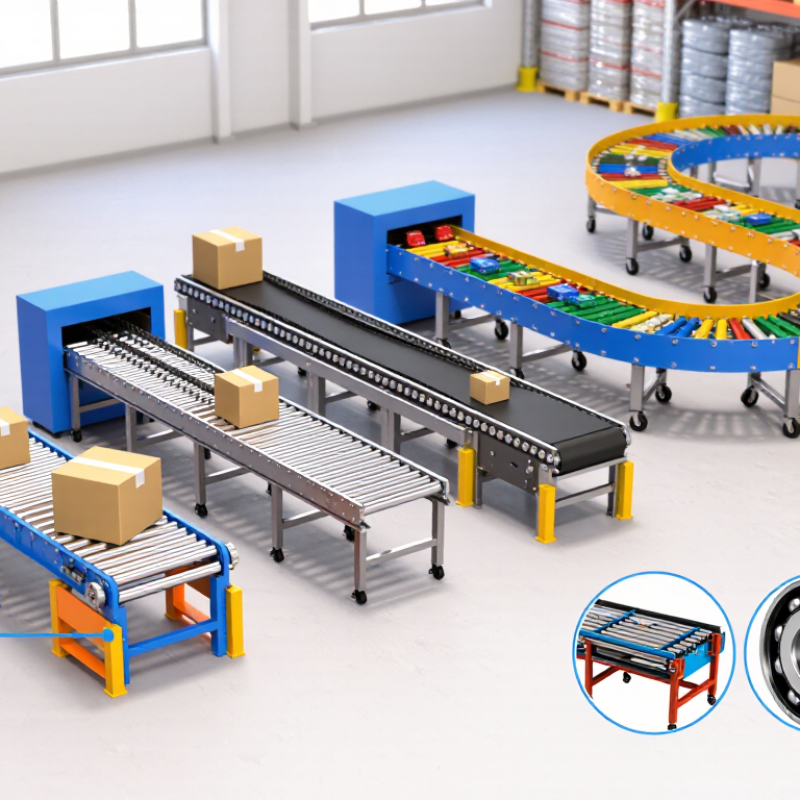
This guide introduces the main roller conveyor types, including gravity, powered, flexible, belt-driven, and chain-driven designs. Each option serves a different purpose. Gravity rollers can move boxed goods across a short packing station with minimal energy use. Powered rollers offer controlled movement for heavier pallets and automated lines. Flexible models can support temporary layouts, although their capacity may be limited.
Details matter.
From practical equipment evaluations, small features often influence long-term performance. Roller diameter, axle design, bearing quality, side-frame strength, and spacing affect smooth transport. Buyers should also check installation requirements, spare-part availability, safety guarding, noise levels, and after-sales support. A low initial price may become expensive when replacement parts are difficult to source.
No selection guide is perfect. Site conditions, local service skills, and changing product sizes can alter the final decision. Therefore, this overview focuses on reliable comparison rather than one universal recommendation. It also encourages buyers to request technical drawings, load tests, maintenance information, and clear warranty terms from qualified suppliers. With careful verification, international purchasers can select a roller conveyor system that fits current operations and leaves room for future growth.
Roller Conveyor Fundamentals and Operating Principles
A roller conveyor moves cartons through rotating cylinders supported by a rigid frame. Each roller carries part of the load, reducing sliding friction and manual handling. Powered models use motors, chains, belts, or line shafts to transfer torque between rollers. Gravity models depend on a controlled slope, typically adjusted according to carton weight and surface condition.
The operating principle is simple, but sizing is not. A carton should contact at least three rollers while moving. Roller spacing, diameter, frame width, and rated load must match the smallest package. In powered systems, speed affects spacing and impact risk. Accumulation zones also need sensors or mechanical controls, preventing cartons from pressing against one another. MHI’s 2024 Annual Industry Report reported that 55% of respondents planned to increase supply chain technology investment, strengthening interest in automated material flow.
In field installations, dust, uneven cartons, and worn bearings often reduce performance before the motor fails. I have seen a small height error create repeated jams at a transfer point. That detail is easy to miss. Operators should inspect roller alignment, chain tension, emergency stops, and guarding during routine checks. ANSI/ASME B20.1 guidance also emphasizes guarding moving conveyor parts and providing accessible stop controls. A practical design leaves room for maintenance, though space is often sacrificed too early.
The chart compares typical operating-speed ranges for widely used roller conveyor configurations. Gravity roller conveyors move loads through slope or manual force, while powered roller systems use motors to provide controlled movement. Chain-driven rollers are suitable for heavier loads, and zero-pressure accumulation conveyors regulate product spacing by starting and stopping individual zones.
Typical industrial ranges shown in metres per minute; actual performance depends on load weight, roller diameter, conveyor length, incline, product surface, motor configuration, and safety requirements.
2026 Best Roller Conveyor Types for Global Buyers
Roller conveyors should be selected by load behavior, not appearance. Gravity roller conveyors suit cartons, totes, and lightweight packages with flat bases. They need a slight slope or manual pushing. For mixed parcel lines, powered motor-driven roller conveyors offer controlled spacing and smoother starts. MHI’s 2024 Annual Industry Report states that 55% of supply chain professionals expected to adopt robotics and automation within one to two years. That trend increases demand for controllable conveyor zones.
Heavy pallets require stronger solutions. Chain-driven roller conveyors handle dense loads, uneven pallets, and frequent transfers. Steel rollers and reinforced frames reduce deflection under pressure. Accumulation roller conveyors are useful when products must wait without stopping the entire line. However, poor sensor placement can create back pressure and carton damage. Small details matter.
Curved tapered rollers help maintain package alignment during direction changes. They work well for cartons, bins, and moderate loads, but oversized products may still drift. Flexible roller conveyors support temporary loading areas and irregular layouts. They are practical, though not always ideal for continuous high-throughput work. A Grand View Research report estimated the global conveyor systems market at about USD 11.1 billion in 2022, with growth projected through 2030. Yet market growth does not remove engineering mistakes. Buyers should verify load weight, base condition, speed, incline, humidity, and cleaning requirements before choosing a roller type. The cheapest frame may become the most expensive weakness.
For global buyers, the best roller conveyor is not always the fastest one. Selection starts with the load: cartons, totes, drums, or uneven pallets. Gravity conveyors suit manual zones and low-energy transfer. Powered roller conveyors support longer routes and controlled spacing. Flexible models help temporary lines, but alignment may change under heavy loads. Check maximum load per roller, not only total conveyor capacity. That difference prevents weak points. Measure twice.
Specify roller diameter, shaft size, frame width, and roller pitch. Small cartons need closer pitch to avoid tipping between rollers. Pallets usually require larger rollers and stronger frames. Usable width should exceed the load width by a practical margin. Speed also matters. Many applications operate between 0.1 and 0.5 metres per second. Variable-speed drives improve control near packing or inspection stations. Do not ignore noise. Request measured decibel data under working conditions, not empty-running estimates.
Global installations need careful electrical and environmental checks. Confirm motor voltage, frequency, control method, and local connection requirements. Stainless steel frames suit washdown areas, while coated steel may fit dry warehouses. Sealed bearings and suitable IP protection reduce service problems in dusty or humid locations. Guarding, emergency stops, and safe access points should match recognized safety requirements. Request drawings, load calculations, spare-parts lists, and maintenance intervals. The first layout is rarely perfect. Engineers sometimes over-specify capacity and increase cost without improving performance. Under-specification is harder to correct after installation.
2026 Best Roller Conveyor Types for Global Buyers
How to Select the Right Roller Conveyor System
Choosing a roller conveyor starts with the product, not the catalog. Measure package length, width, weight, and bottom shape. Flat cartons suit standard rollers. Soft bags may need closer roller spacing. I have seen unstable loads rotate, jam, and damage nearby packages. That small detail is often missed.
Gravity rollers work well for manual movement and short transfer zones. Powered rollers offer controlled speed, accumulation, and better handling for heavier loads. Select roller diameter and pitch according to the smallest package. A useful field rule is to support at least three rollers beneath each load. It is not perfect. Product rigidity can change the result.
Check the operating environment carefully. Dust, moisture, temperature, and cleaning methods affect frame and bearing choices. For global projects, confirm voltage, controls, guarding, emergency stops, and documentation before purchase. Ask for load tests and layout drawings. A short trial with real cartons can reveal noise, slipping, or poor spacing. Do not judge capacity from motor power alone. Consider duty cycles, incline angles, transfer points, and maintenance access. Leave room for inspection. Too little space becomes expensive later.
International Purchasing, Compliance, and Maintenance Considerations
Choosing a roller conveyor begins with the load, route, and operating environment. Gravity rollers suit light cartons and short transfer distances. Powered rollers handle heavier loads and steady production rates. For international purchasing, confirm roller diameter, frame material, belt specifications, motor voltage, and control requirements before requesting quotations. Small differences can create serious installation delays.
Compliance documents should match the destination country. Request material certificates, electrical test reports, safety instructions, and detailed drawings. Check guarding, emergency stops, noise levels, and load ratings with a qualified local professional. Customs classification also needs accurate product descriptions and consistent invoice data. Do not rely on a generic certificate. Requirements may change by application and region.
Maintenance planning should be discussed before shipment. Ask for spare rollers, bearings, sensors, and fasteners. Store these parts in dry, labeled containers. Inspect roller alignment, chain tension, and frame bolts during scheduled service. Dust can reduce bearing life faster than expected. In one installation, the conveyor met its design load, but poor cleaning access caused avoidable downtime. That experience is worth remembering. A maintenance schedule may look complete, yet operators still need practical training and accessible service points. Temperature, humidity, and shift patterns should also influence the final design.
Please enter the details to download, thank you
Get in Touch With Us
Please enter the details to download, thank you