| Operating temperature | Target a tested service range of −40°C to 149°C for demanding indoor and outdoor applications. | Reduces lifting, cracking, adhesive flow, and loss of legibility during thermal cycling. | Request temperature-cycle test records using the final label construction and substrate. |
| Face-stock material | Use polyester for high durability, polypropylene for moisture resistance, or vinyl for flexible surfaces. | Material choice affects tear resistance, dimensional stability, conformability, and outdoor life. | Check technical data sheets for thickness, tensile strength, elongation, and service temperature. |
| Adhesive technology | Select a permanent acrylic adhesive for broad temperature resistance and long-term bonding. | Acrylic systems generally provide strong aging resistance and stable adhesion across temperature changes. | Review peel adhesion, shear resistance, and minimum application temperature data. |
| Minimum application temperature | Prefer a validated application temperature of approximately 0°C or lower for cold-weather installation. | Labels applied to cold equipment may not wet out properly if the adhesive is outside its application range. | Apply samples to clean, cold test panels and measure edge lift after conditioning. |
| Surface compatibility | Confirm suitability for painted metal, stainless steel, glass, ABS, polycarbonate, and low-surface-energy plastics. | Surface energy, texture, contamination, and curvature strongly influence initial tack and final adhesion. | Test on production substrates after cleaning with the intended process. |
| Moisture and chemical resistance | Specify resistance to water, humidity, mild detergents, oils, and commonly used industrial fluids. | Exposure can cause ink fading, face-stock swelling, adhesive softening, or label detachment. | Use immersion, humidity, and chemical-wipe tests with defined exposure time and temperature. |
| Print and color durability | Use UV-resistant inks or protective overlamination where direct sunlight is expected. | Warning symbols must remain readable and visually distinct throughout the intended service life. | Perform accelerated UV exposure and compare contrast, color, and barcode readability. |
| Adhesion performance | Evaluate 180° peel adhesion, quick tack, and static shear rather than relying on one measurement. | Different failure modes determine whether a label sticks immediately, stays attached, or resists sliding. | Request laboratory results based on recognized methods such as ASTM D3330 and ASTM D3654 where applicable. |
| Die-cutting and dispensing | Specify clean edges, stable liner release, and consistent label spacing for manual or automated application. | Poor converting quality can cause liner breaks, adhesive squeeze-out, wrinkles, and production downtime. | Inspect trial rolls for edge quality, matrix removal, roll hardness, and dispensing performance. |
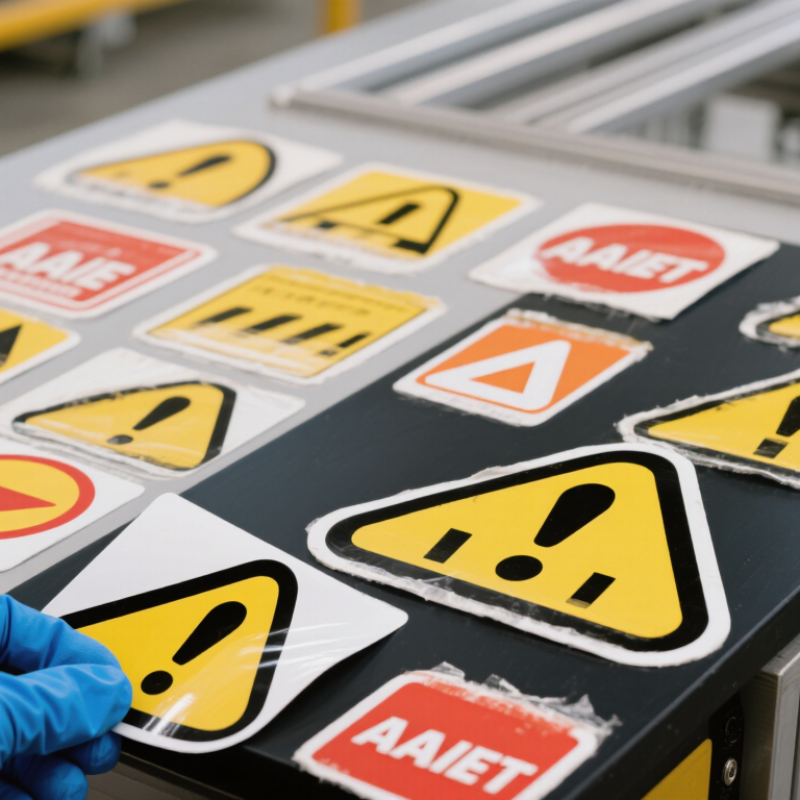
| Warning-symbol compliance | Match symbol design, signal words, colors, and dimensions to the applicable product-safety requirements. | A durable label is not sufficient if the warning is unclear, incomplete, or unsuitable for the market. | Confirm requirements for the destination market and retain artwork approval records. |
| Quality consistency | Require batch traceability, retained samples, defined inspection standards, and documented corrective actions. | Consistent coating weight, color, dimensions, and adhesive performance are essential for repeat production. | Review certificates of analysis, inspection reports, sampling plans, and change-control procedures. |