
Selecting a China-based Trench Gratings supplier is not simply a price comparison. It is a decision about load performance, drainage capacity, corrosion resistance, and consistent production. A grate that looks robust in a catalogue may behave differently beside a forklift route or beneath a delivery truck. Small details matter: bar spacing, frame fit, coating thickness, and how securely the unit seats in wet concrete.
Technical standards offer a stronger starting point than broad marketing claims. EN 1433 classifies drainage channels by load class, from A15 for pedestrian areas to F900 for exceptionally heavy-duty applications. The correct class depends on the site and expected traffic; a higher rating is not automatically the better choice. ASTM International’s standards for cast-iron castings and steel products can also help buyers define material requirements and inspection criteria. These references do not certify a supplier by themselves. Ask for current test reports, material documentation, dimensional drawings, and traceable quality records.
There is one important limitation: no source articles or verifiable expert quotation were supplied for this introduction. Rather than inventing a specialist’s name or words, buyers should seek an attributable comment from a drainage engineer or standards professional before publication. That caution is worthwhile. Supplier rankings and market-size estimates vary by research scope, and neither proves factory capability. Request a sample. Check the finish, measure the openings, and confirm the frame dimensions against the project drawings. Then compare quotations on the same specification—not just on unit price. A careful review may take longer. It can prevent a costly mismatch.
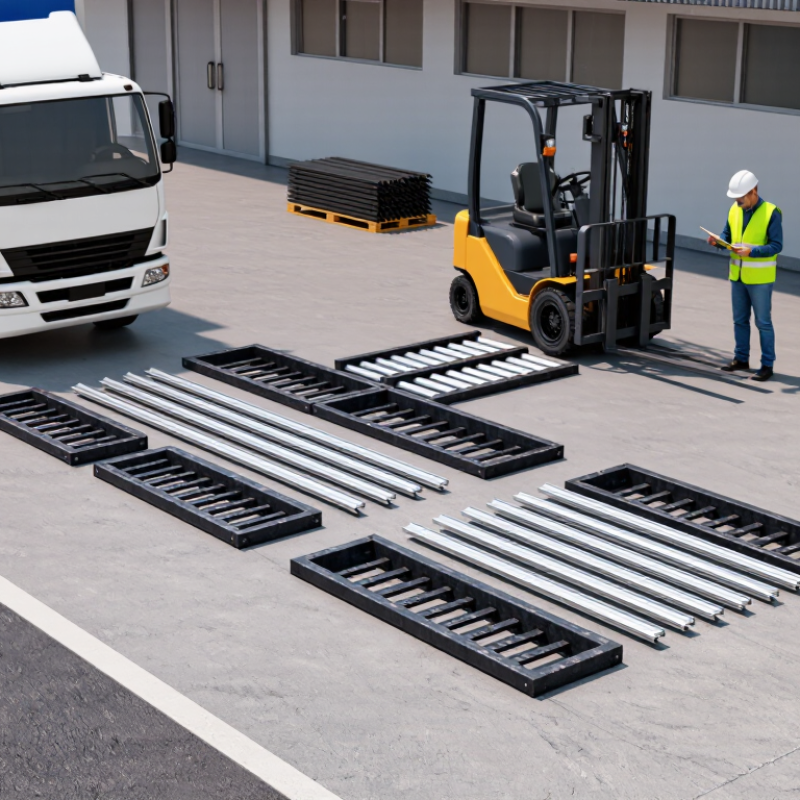
Trench gratings are removable covers fitted over narrow drainage channels. Their openings let rainwater enter while helping keep larger debris, footwear, and small wheels out of the channel. Depending on the site, they may be made from galvanized steel, stainless steel, ductile iron, or molded materials. Load capacity matters: a light-duty walkway grate is not suitable for repeated truck traffic. The wrong choice can bend, rattle, or create a trip hazard.
You will find trench gratings around warehouses, loading bays, commercial kitchens, parking areas, and public walkways. They collect runoff near entrances and direct wash water toward drainage systems. In a busy loading bay, for example, a grate may need to support forklifts and resist frequent impacts. Slot width, channel dimensions, corrosion exposure, and cleaning access all affect performance. Site conditions vary, and specifications can be easy to misread. A careful measurement helps.
Tips: Check the expected wheel loads and confirm the grate fits the channel before ordering. Choose openings that drain freely without trapping heels or debris. Ask for clear load ratings and material details. Then inspect the seating surface; even a strong grate may shift if its frame is uneven.
China Top Trench Gratings Supplier?
Common Grating Materials, Designs, and Load Ratings
Trench grating choice begins with the site, not appearance. Galvanized steel suits many walkways and service areas, while stainless steel offers better corrosion resistance in demanding environments. Ductile iron handles heavy vehicle traffic, but its weight can make lifting and maintenance harder. Aluminum is lighter, though it is not suitable for every load or exposure condition. No material is perfect.
Design affects drainage, grip, and cleaning. Welded bar grates provide open drainage and are common around industrial channels. Close-spaced bars or perforated covers can reduce heel and wheel entry, but smaller openings may collect leaves and grit. Slot-style designs create a cleaner surface, yet narrow slots still need regular inspection. Look closely at the support frame, clear opening, and seating points. A good grate can rattle if it sits poorly.
Load ratings must match the actual location and expected traffic. Ratings such as A15 through F900 are used under EN 1433, with classes intended for different loading situations. They are not a substitute for checking the applicable project specification. Consider wheel loads, vehicle frequency, span, and installation quality. Ask for test documentation and confirm the rating applies to the complete assembly, including its frame. On site, small installation errors matter. The right choice may require a second check.
China Top Trench Gratings Supplier?
How Trench Gratings Are Manufactured and Quality-Tested
A reliable trench grating begins with a measured drawing, not a furnace. Engineers check channel width, support spacing, drainage needs, and expected traffic. Material is then cut, cast, or formed, depending on the design. Workers remove sharp edges and inspect welds, ribs, and bearing surfaces. Small defects matter. A raised edge can stop a grate from seating evenly.
Testing should match the product’s intended use. EN 1433 classifies drainage channels from A15 to F900, with test loads ranging from 15 to 900 kN. These are classification loads, not a promise that every installation can withstand the same conditions. The supporting channel and installation also matter. Quality checks may include dimensional inspection, coating-thickness measurement, and a controlled load test using specified supports. Inspectors record deformation or visible cracking after loading. A number on a test sheet is useful, but the setup must be traceable.
For buyers comparing suppliers in China, ask for the applicable standard, test method, and batch inspection records. Request measurements for slot width and seating fit, not just photographs. Corrosion protection should suit the site’s exposure; a coating can look sound and still be thin at edges. One detail is easy to miss: production tolerances and installation tolerances are not identical. They should be discussed before shipment.
China Top Trench Gratings Supplier?
How to Evaluate Trench Grating Suppliers in China
China’s manufacturing scale offers many sourcing options, but volume alone does not prove product quality. World Steel Association data reported crude steel production of about 1,005 million tonnes in China in 2024. That figure describes the wider industry, not any individual supplier. Ask for project-specific drawings, steel grade certificates, and traceable inspection records. Details matter. Check whether the stated load class matches the vehicle traffic and installation conditions at your site. EN 1433 classifies drainage channels and gratings from A15 to F900; a supplier should explain the test basis behind its proposed rating, not just print a class on a quotation.
Inspect the practical evidence. Request recent load-test reports, dimensional checks, weld inspection records, and galvanizing documentation. ISO 1461 provides requirements for hot-dip galvanized coatings, but a certificate alone cannot show how a finished grating performs in your environment. Ask how the supplier controls bar spacing, bearing-bar depth, edge fit, and coating thickness. A sample can reveal rough cut edges or uneven zinc that paperwork may miss. Compare lead times against production capacity and confirm how packaging protects panels from bending during transport. Some suppliers may answer quickly yet provide incomplete records; that deserves a second look. I would not treat the lowest quote as the safest choice. Check the evidence, then assess whether the supplier can repeat the same quality across the full order.
A low quotation can hide costly mismatches. Before requesting prices, define the clear opening, trench depth, support span, and expected traffic. A pedestrian walkway and a loading-bay entrance need different load capacities. Specify the applicable standard and load class, such as EN 124 where appropriate, rather than asking for “heavy-duty” grating alone. That phrase is too vague. Confirm bearing-bar dimensions, cross-bar spacing, edge details, and whether the grating must be locked or hinged. Small details matter when a panel has to fit an existing concrete channel.
Ask suppliers for material certificates, coating information, dimensional inspection records, and recent load-test documentation. Check that the test sample matches the design you are buying. For galvanized steel, clarify the coating process and acceptance criteria; a shiny surface does not prove consistent protection. Request packing photos and a marked drawing before production approval. It may feel repetitive, but correcting a drawing is easier than correcting a shipment. UNCTAD’s Review of Maritime Transport 2024 reported that maritime trade grew 2.4% in 2023 and projected 2% growth for 2024, amid continued shipping disruption. Build realistic lead-time buffers, confirm port and inland delivery costs, and agree on how shortages or transit damage will be documented. Import plans can still go wrong. Keep one sample for comparison when repeat orders are likely.
Please enter the details to download, thank you
Get in Touch With Us
Please enter the details to download, thank you