Large water pump procurement is not a simple price comparison. A pump must move the required flow and head while handling site conditions, maintenance access, and energy costs. The scale of the market is significant: Grand View Research valued the global industrial pumps market at about USD 67.6 billion in 2023, with continued growth forecast through 2030. This figure covers industrial pumps broadly, not large water pumps alone. Still, it signals a deep supplier base and a crowded field for international buyers.
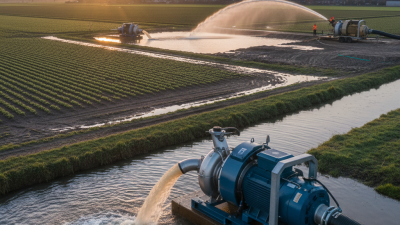
Water demand adds another practical reason to assess suppliers carefully. UNESCO’s United Nations World Water Development Report 2024 states that agriculture accounts for roughly 70% of global freshwater withdrawals. Large water pump systems support irrigation, municipal supply, flood control, and industrial processes, but their performance depends on correct sizing and dependable service. The International Energy Agency’s Executive Director, energy economist Fatih Birol, has described efficiency as “the first fuel.” The phrase is brief. Its relevance is concrete: oversized or poorly matched pumps can waste electricity over years of operation. Buyers should compare verified performance data, materials, testing practices, delivery capacity, and after-sales support—not just catalog claims.
This guide introduces ten Chinese large water pump suppliers for global buyers. It offers a starting point, not a final endorsement. Supplier capabilities change, and published specifications do not always show how a pump performs at a real site. Verify the details directly. A careful review can help narrow the list, though it cannot replace engineering checks for the intended application.
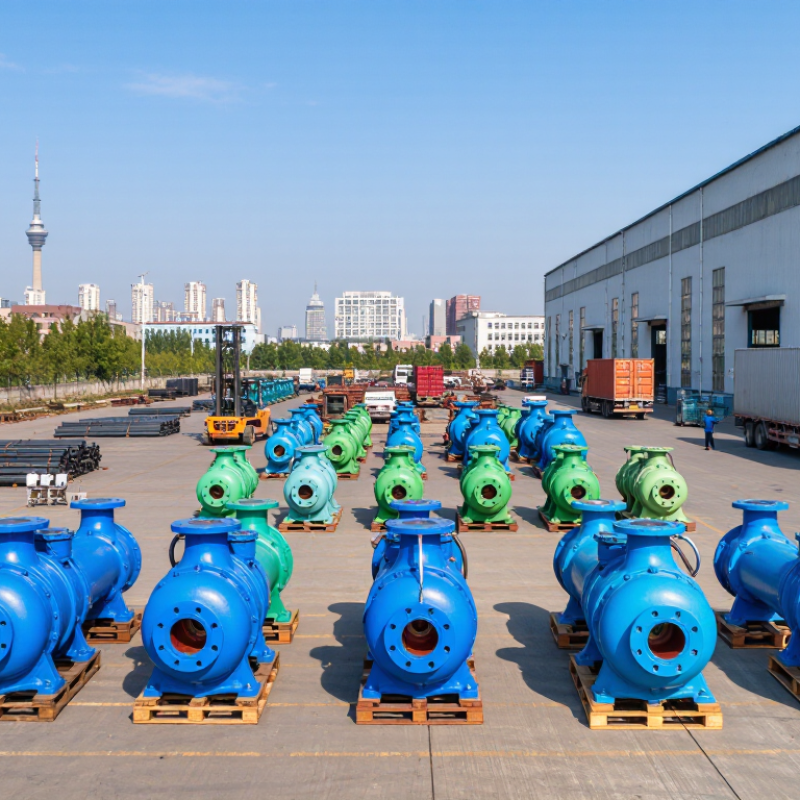
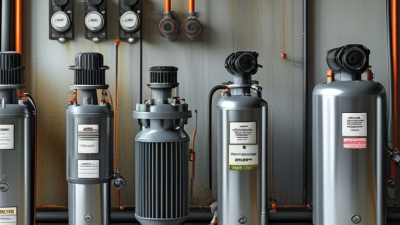
China’s large water-pump industry serves municipal water networks, irrigation projects, industrial cooling systems, and flood-control works. Suppliers offer several designs, each suited to different flow and installation needs. Split-case centrifugal pumps handle high flow rates and allow access to internal parts for maintenance. End-suction models suit simpler installations. Multistage pumps generate higher pressure, while vertical turbine pumps can draw water from wells or reservoirs. Submersible units operate underwater, and axial-flow pumps move large volumes at relatively low heads.
Selection depends on more than the pump category. Engineers compare required flow, total head, water temperature, solids content, and available installation space. Materials matter too: abrasive or corrosive water can shorten service life. Large units may also need custom motor, coupling, and control arrangements. Ask suppliers for certified performance curves and test records, then check that the proposed duty point matches your system. Catalog figures can look reassuring, but they are only a starting point; actual site conditions sometimes change the choice.
Tips: Share a clear duty schedule, including peak and normal demand. Confirm inlet conditions, power supply, and maintenance access before requesting a quotation. Leave room for uncertainty—early project data is not always complete.
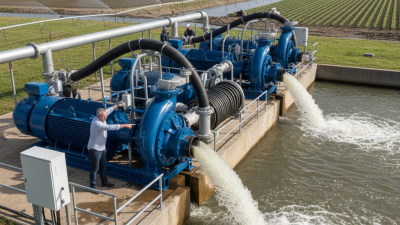
Large water pumps serve applications ranging from high-volume, low-head transfer to high-head pressure delivery. The ranges below are indicative industry reference ranges, not specifications for any particular supplier or model; actual operating limits vary by design and duty point.
Head is the height a pump can raise water, expressed in metres. Consult the manufacturer’s performance curve for model-specific selection.
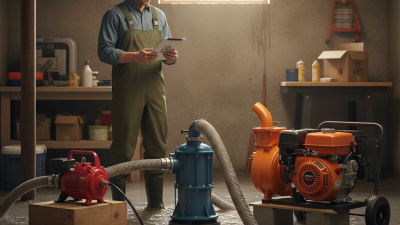
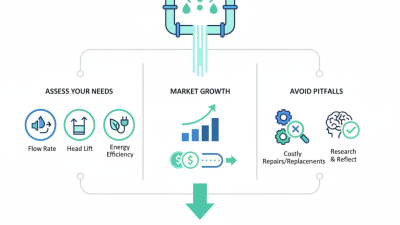
Selecting a large water pump supplier in China starts with your actual operating conditions. Share the required flow rate, total head, fluid temperature, solids content, and daily duty cycle. Ask for a pump curve showing the proposed operating point, not just maximum capacity. Check that wetted materials suit the liquid and site conditions. A mismatch may cause wear, vibration, or poor efficiency.
Review how the supplier controls production and testing. Request inspection records, material details, and test procedures for the pump model under consideration. Confirm whether performance testing covers flow, head, power, and vibration. Ask about motor options, spare-part availability, commissioning support, and typical response times. Factory visits or independent inspections can help verify capacity, though travel and scheduling take effort. Claims on a website are useful starting points, not proof. No checklist removes every risk; installation conditions can reveal problems that specifications missed.
Chinese large-pump suppliers often specialize by duty rather than offering one universal design. This profile covers ten supplier types: axial-flow units for flood control; split-case pumps for municipal water; vertical-turbine pumps for deep wells; submersible pumps for drainage; and multistage pumps for high-pressure service. Other common specialties include slurry pumps for mines, sewage pumps for treatment plants, fire-water packages, irrigation pumps, and export-focused system integrators. These are supplier profiles by capability, not named company endorsements.
The U.S. Department of Energy’s Improving Pumping System Performance guide notes that pumping systems can account for 25–50% of energy use in some industrial facilities. That makes efficiency more than a catalog number. Ask suppliers for tested curves, materials lists, and operating limits at the actual flow and head. Check whether the duty point sits near the pump’s best-efficiency point. Small details matter: a wet-pit installation, abrasive solids, or a fluctuating water level can change the selection. Not enough alone. A polished datasheet cannot prove field reliability; request comparable project references and clarify spare-parts lead times before purchase.
These are anonymized, category-level supplier profiles rather than verified records for specific companies. Pump types and duty ranges below are indicative industry ranges, not company-specific specifications; confirm actual performance, materials, certifications, and factory capacity against the supplier’s current technical documents.
| Profile | Typical Product Focus | Common Applications | Indicative Flow Range | Indicative Head Range | Key Buyer Checks |
|---|---|---|---|---|---|
| Supplier Profile 01 | Horizontal split-case centrifugal pumps | Municipal water supply, large transfer stations, and industrial circulation | About 100–10,000 m³/h | About 10–200 m | Hydraulic performance curve, impeller material, shaft sealing, and alignment requirements |
| Supplier Profile 02 | Vertical turbine pumps | Deep wells, raw-water intake, irrigation, and cooling-water systems | About 20–5,000 m³/h | About 10–300 m | Well dimensions, column length, submergence, bearing arrangement, and motor configuration |
| Supplier Profile 03 | Large axial-flow and mixed-flow pumps | Flood control, drainage, irrigation, and low-head water transfer | About 500–100,000 m³/h | About 1–30 m | Site system curve, installation orientation, debris conditions, and tested efficiency |
| Supplier Profile 04 | Submersible sewage and wastewater pumps | Wastewater treatment plants, lift stations, and stormwater pumping | About 10–5,000 m³/h | About 5–100 m | Solids passage, clog resistance, cable length, submersible motor protection, and service access |
| Supplier Profile 05 | Multistage centrifugal pumps | Boiler feed, high-pressure water supply, and industrial process systems | About 5–1,000 m³/h | About 50–1,000 m | Required pressure, water temperature, seal plan, NPSH data, and applicable design standard |
| Supplier Profile 06 | Fire-water pump packages | Commercial buildings, industrial facilities, ports, and infrastructure projects | Selected to the project duty point | Selected to the project duty point | Project code compliance, listed or approved components where required, controller, and package testing |
| Supplier Profile 07 | Desalination and seawater-duty pumps | Seawater intake, desalination pretreatment, and water transmission | About 10–10,000 m³/h | About 10–300 m | Chloride-resistant materials, corrosion allowance, seal selection, and water chemistry compatibility |
| Supplier Profile 08 | Slurry and solids-handling pumps | Mining-water management, dredging support, and industrial wastewater | About 10–5,000 m³/h | About 5–150 m | Slurry concentration, particle size, abrasion-resistant materials, and wear-part availability |
| Supplier Profile 09 | Large end-suction and process centrifugal pumps | Industrial utilities, water treatment, and general plant services | About 5–2,000 m³/h | About 5–200 m | Operating point, minimum continuous flow, motor efficiency, coupling, and maintenance clearances |
| Supplier Profile 10 | Customized pumping stations and integrated systems | Municipal networks, irrigation schemes, flood-control projects, and EPC packages | Project-specific; defined by system demand | Project-specific; defined by system design | Scope boundaries, controls and instrumentation, installation drawings, commissioning, and after-sales coverage |
When comparing large water pump suppliers, look beyond rated flow and motor power. Ask for performance curves that show flow, head, and efficiency across operating conditions. A useful supplier can explain how the selected impeller and casing suit your water quality and duty cycle. Details matter. Request test records tied to the specific pump model, not only general product brochures.
Certifications need careful checking. Confirm the issuing body, validity period, and product scope, since a quality-management certificate does not certify every pump. Depending on the destination and application, buyers may also need electrical conformity documents, material declarations, or inspection reports. Ask who prepares export paperwork, handles wooden-crate packing, and coordinates spare parts after shipment. Clear answers often reveal more than polished claims. A supplier should state production lead times and explain how delays are communicated. I would still verify these details independently; paperwork can look complete while leaving practical questions unanswered. Check that nameplates, manuals, and packing lists use matching model numbers before the shipment leaves.
Verify the supplier before discussing price. Check its business registration, factory address, production equipment, and recent export references. Ask for a pump curve, material certificates, and a serial-numbered test report. Compare the tested flow, head, and efficiency with the agreed duty point. ISO 9906 provides acceptance-test methods and tolerance classes for rotodynamic pumps; state the required class in the purchase contract. A video call helps, but it cannot replace an independent inspection. One uncomfortable lesson: polished documents can still hide weak quality control.
Plan the order around shipping uncertainty, not the promised dispatch date. UNCTAD’s Review of Maritime Transport 2024 reports that shipping carries over 80% of world trade by volume. The World Bank’s 2023 Logistics Performance Index reports an average international shipment journey of 44 days, while the slowest 10% take about 2.5 times the median. Build schedule margin into installation plans. Confirm Incoterms, packaging dimensions, corrosion protection, spare parts, and document responsibilities in writing. Request packing-list and bill-of-lading drafts before shipment. Track each pump by serial number and photograph the crate before sealing. Small omissions happen; review the paperwork twice.
Please enter the details to download, thank you
Get in Touch With Us
Please enter the details to download, thank you