How to Choose the Best Water Pump for Your Needs?

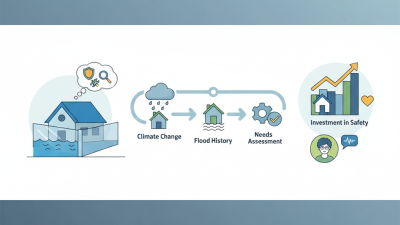
Choosing the right water pump can significantly impact your efficiency and success. The water pump market is expected to grow by 5.4% annually, reaching $60 billion by 2026. This data highlights the increasing importance of selecting the right pump for various applications.

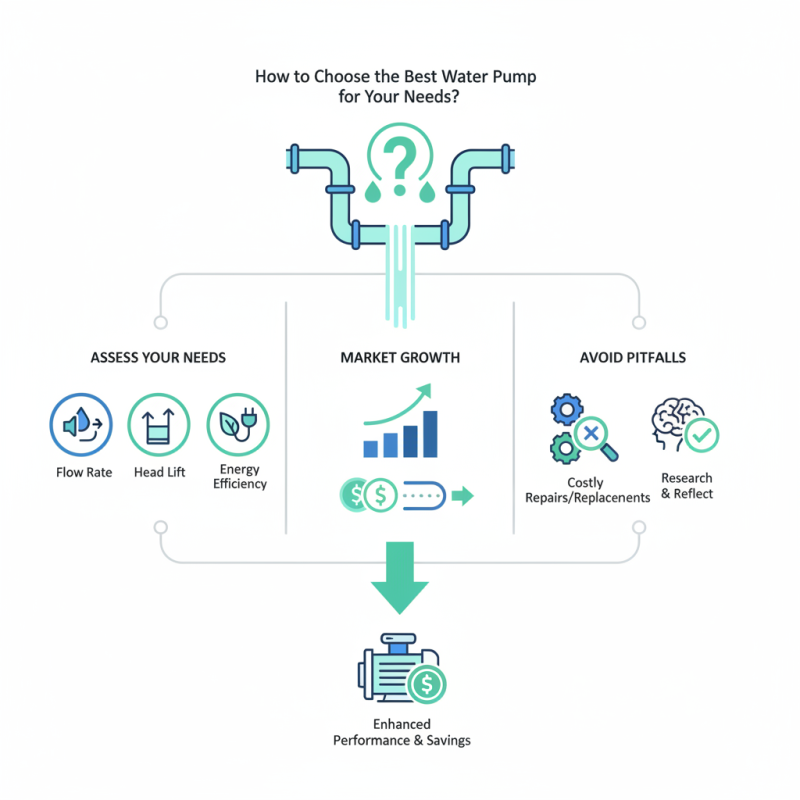
When evaluating water pumps, consider factors such as flow rate, head lift, and energy efficiency. Many users overlook these details, leading to suboptimal choices. A pump that doesn’t fit your needs may waste energy or fail to deliver adequate pressure. It's essential to assess your specific requirements carefully.

Mistakes in choosing a water pump can lead to costly repairs or replacements. Reports indicate that improper pump selection is a common industry challenge. Take your time to research and reflect on your needs to avoid common pitfalls. A thoughtful choice can enhance performance and save money in the long run.
How to Choose the Best Water Pump for Your Needs?

Understanding Different Types of Water Pumps Available in the Market

When choosing a water pump, it’s crucial to understand the different types available. Centrifugal pumps are popular for their efficiency. They are ideal for moving water quickly over short distances. This type works best in residential settings. They rely on rotating impellers to create flow. However, they may struggle with thicker liquids or high-viscosity fluids.

Submersible pumps are another option. Designed to be submerged in water, they excel at pumping out flooded basements or draining ponds. Their compact size makes them versatile. Yet, they can be tricky to maintain. Overheating is a common issue if not properly installed.

Diaphragm pumps offer another approach. They use a diaphragm to move water. This allows for precise control over flow rates. They are well-suited for applications requiring specific pressures. However, their complexity can lead to installation challenges. Evaluating your needs is essential. Each type has unique advantages and drawbacks. Knowing what you need will lead to a better choice.
Identifying Your Specific Water Pump Needs and Requirements

When selecting a water pump, understanding your specific needs is crucial. Think about the purpose of the pump. Are you using it for irrigation, draining excess water, or moving water for a home project? Each task has distinct requirements. Evaluate the volume of water you need to move and the distance. This helps in determining the right capacity and power of the pump.

Consider the types of water you’ll be handling. Will it be clean water, or will you deal with muddy or contaminated water? Different pumps are designed for specific types of water. It's important to choose a pump that can handle the conditions you expect. Also, think about portability if you need to move it around often. A lightweight model might be beneficial for smaller tasks, whereas a robust option may serve larger projects effectively.

Don’t forget to assess the available power source. Will you rely on electricity or opt for a gasoline-powered model? Each option has its pros and cons. Lastly, reflect on your budget. Higher quality pumps might cost more initially but save money in the long run. Balancing cost and quality can be challenging and requires careful thought.

How to Choose the Best Water Pump for Your Needs?

Dimension Description Examples
Flow Rate The volume of water a pump can move in a given time, typically measured in gallons per minute (GPM) or liters per minute (LPM). 5 GPM, 10 GPM
Head (Lift) The height a pump can lift water, usually measured in feet or meters. 20 ft, 30 ft
Power Source The energy source that powers the pump, which can be electric, gas, or solar. Electric, Gasoline
Usage Type Indicates whether the pump is designed for residential, agricultural, or industrial use. Residential, Agricultural
Material The material construction of the pump, impacting its durability and suitability for different liquids. Cast Iron, Stainless Steel
Portability The ease of transporting the pump from one location to another, important for mobile applications. Portable, Stationary

Evaluating Important Features and Specifications of Water Pumps

How to Choose the Best Water Pump for Your Needs?

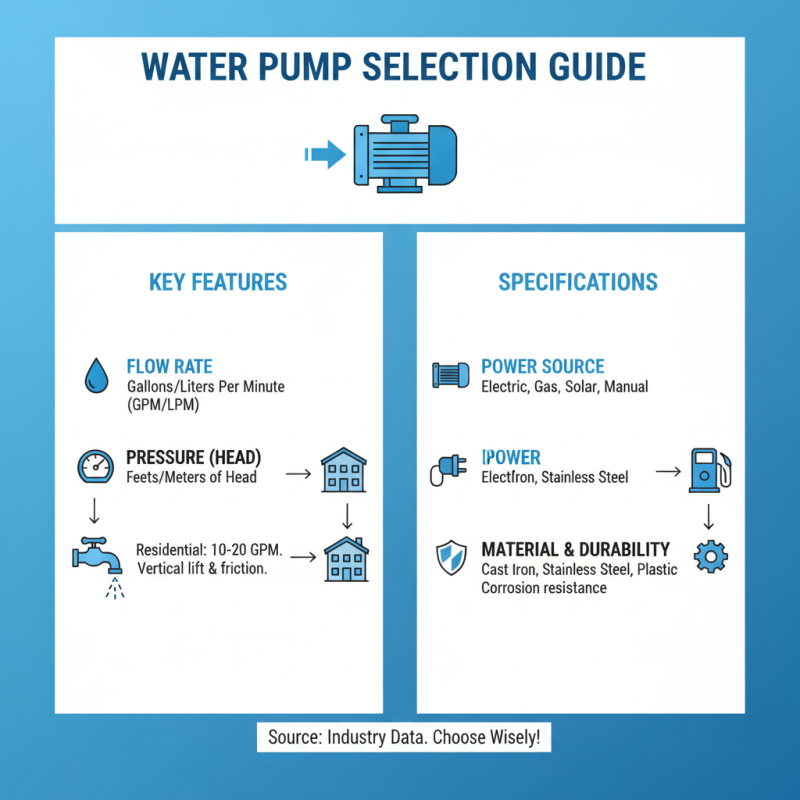
When choosing a water pump, evaluating its features and specifications is crucial. Start by considering the flow rate, which is typically measured in gallons per minute (GPM) or liters per minute (LPM). According to industry data, a standard residential water pump may have a flow rate of around 10-20 GPM. Higher flow rates are suitable for larger applications, like commercial use.

Another important aspect is the pump's horsepower. Pumps are available in various horsepower ranges, from 0.5 HP to over 10 HP. Selecting a pump with adequate horsepower ensures efficient operation and longevity. Experts suggest matching the pump’s capabilities with the needs of your specific use case. Overestimating your requirements can lead to wasted energy and higher costs.

Tip: Always check the pump's efficiency rating. An efficient pump can save you money on operational costs. Additionally, pay attention to the construction materials. Pumps made from durable materials resist corrosion and last longer.

Consider the power source as well. Electric pumps are common, but gas-powered options are available for remote areas. Make sure to assess where the pump will be installed. Not all pumps handle debris or solids well, so choose accordingly. Balancing your needs with the right specifications can seem challenging but is necessary for optimal performance.

Considering Budget and Maintenance Costs for Water Pumps

When choosing a water pump, budget plays a crucial role. It’s essential to assess how much you can realistically spend. Water pumps vary widely in price. You can find affordable options or high-end models. Researching prices helps you avoid overspending. Think about your long-term needs. Sometimes, cheaper pumps can lead to more expenses down the road.

Maintenance costs are often overlooked. Regular upkeep is necessary for optimal performance. Neglecting maintenance can result in costly repairs. Some pumps require more servicing than others. Read the user manual to understand maintenance needs. Consider the availability of replacement parts. If parts are hard to find, it may increase future costs.

Think about the pump's lifespan as well. Some models last longer than others, impacting total expense over time. A cheaper pump might seem appealing but could fail sooner. The balance of upfront costs versus long-term value is vital. Reflect on your choices carefully. What seems like a bargain today may not be tomorrow.

Researching Brands and Reviews for Quality and Reliability

Choosing the best water pump requires thorough research. Focus on brands that have a good reputation for quality and reliability. Look for metrics like customer satisfaction ratings and durability scores. Studies show that around 70% of users prioritize reliability over price when selecting a water pump. This highlights the importance of quality in the buying decision.

Online reviews can be quite insightful. Most consumers share their experiences, detailing both positive and negative aspects of their pumps. Pay attention to common complaints. For instance, if multiple users mention the same issues, it might indicate a recurring design flaw. Reviews often reveal unexpected weaknesses, like noise levels or maintenance difficulties.

Another vital aspect is the brand's support and warranty. Reports indicate that nearly 60% of buyers consider the warranty length when making their decision. A longer warranty can signal confidence in product quality. However, not all brands back up their promises. It's crucial to read the fine print before purchasing. Some warranties may have limitations that can catch buyers off guard. Always do your homework before making that investment.

Water Pump Performance Comparison