
A weak battery can turn a routine morning into a long wait beside a silent car. The right Automotive Battery Tester helps you check battery condition before replacing parts or calling for assistance. Yet choosing one is not as simple as comparing screen size or price. Different testers use different methods, and not every model suits every vehicle.
A useful tester should match your battery’s chemistry and rated cold-cranking amps (CCA). It should also explain results clearly, rather than displaying numbers without context. Some models measure voltage; others use conductance or apply a controlled load. Each method has limits. That matters. A low reading may reflect a discharged battery, cold weather, or poor terminal contact—not necessarily a failed battery. Not always.
This guide looks at practical features: supported battery types, CCA range, test functions, display readability, and ease of use. It also considers whether the instructions make sense when you are working in a dim garage with gloves on. Accuracy claims deserve careful attention, too; compare them with the manufacturer’s specifications and testing guidance. A tester cannot repair a battery or replace a professional diagnosis when symptoms persist. Still, a well-matched tool can provide useful evidence and help you make a more informed decision. Even experienced owners can misread a result, so the best choice is one that makes its limits clear.
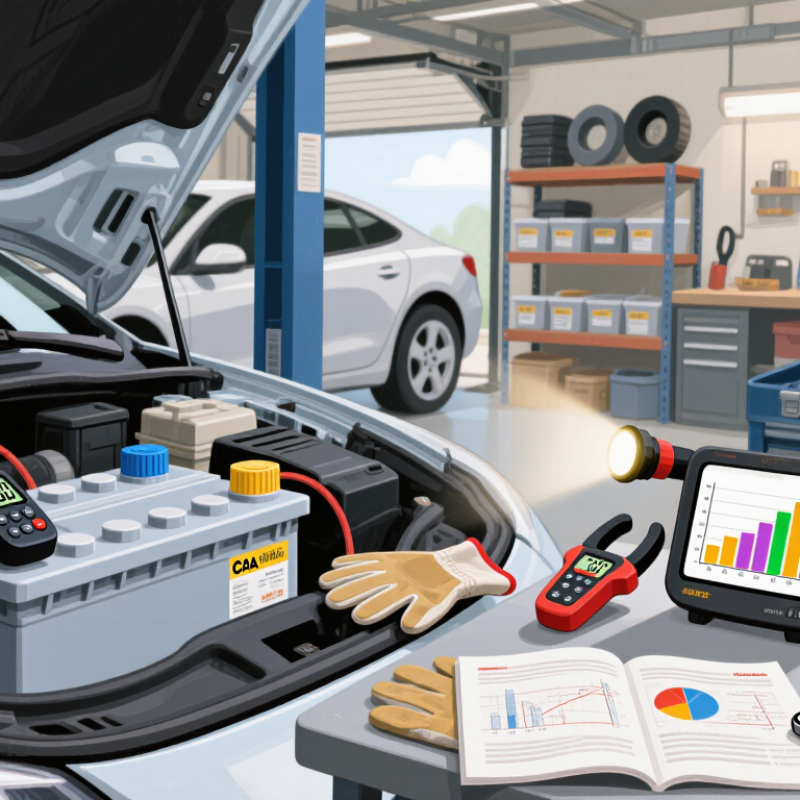
An automotive battery tester does more than display a green light. It estimates whether the battery can deliver starting power and how much charge remains. Most modern testers assess voltage and use conductance to estimate internal resistance and cold-cranking amps (CCA). Conductance is an estimate, not a direct test of the battery’s full capacity.
SAE J537 defines a standardized cold-cranking test at −18°C: a 12-volt battery must sustain its specified current for 30 seconds while staying above 7.2 volts. A handheld tester does not recreate that laboratory test; it estimates performance from measured electrical behavior. That distinction matters. Compare the displayed CCA with the rating printed on the battery, and enter the correct battery type when prompted.
Voltage gives a different clue. Battery Council International technical guidance places a fully charged, rested lead-acid battery near 12.6–12.8 volts; around 12.2 volts suggests a substantially discharged battery. Readings can shift after driving, charging, or temperature changes. A tester may also report state of health, but that figure is an algorithmic estimate, not a direct measurement. Numbers need context. If results look borderline, charge the battery, let it rest, and test again; a weak connection can distort the reading too.
Before choosing an automotive battery tester, identify the battery chemistry and voltage. Most passenger vehicles use 12-volt lead-acid batteries, but some have AGM or EFB batteries, especially vehicles with stop-start systems. A tester must support the battery type; the wrong setting can produce misleading results. Check the battery label and vehicle manual for its rated cold-cranking amps (CCA) and rating standard. A faded label is easy to misread, so verify the numbers before testing.
Tips: Match the tester’s CCA range to your battery. Check whether it can test the charging system, too. Keep the battery terminals clean.
Consider how and where you will use the tester. A compact conductance tester is convenient for quick checks, while a load tester applies a heavier electrical demand and may need more careful handling. Confirm that the tester supports your vehicle’s voltage and battery location, particularly if access is awkward. Some vehicles have batteries in the trunk or under a seat. If your car uses a less common battery chemistry, confirm compatibility in the tester’s instructions rather than guessing. A result is only useful when the settings and battery details are correct.
How to Choose the Best Automotive Battery Tester
Compare Tester Types, Functions, and Specifications
A digital voltmeter checks resting voltage, but it cannot reliably show how a battery performs under load. Conductance testers estimate cranking ability quickly, making them useful in a busy workshop or driveway. Carbon-pile load testers apply a real electrical load and reveal voltage drop, though they require more care and time. SAE J537 specifies a cold-cranking test at -18°C for 30 seconds; its 7.2-volt endpoint offers a useful reference for a 12-volt battery. That is a controlled test, not a promise that every handheld tester reproduces laboratory conditions.
Check that the tester supports your battery’s chemistry, such as flooded, AGM, or EFB, and accepts the battery’s stated CCA rating. The rating standard matters: SAE, EN, and DIN values are not interchangeable. Look for clear charging-state and health results, temperature compensation, reverse-polarity protection, and a usable clamp design. A printer or saved test record can help track a weak battery over time. Still, one reading can mislead. A discharged battery may test poorly, while a loose terminal can mimic battery trouble. Charge and retest when needed. A tester is a guide, not a complete diagnosis.
A good automotive battery tester should protect both the user and the vehicle. Look for insulated clamps, clear polarity markings, and protection against reversed connections. Work with the ignition off, keep metal tools away from battery terminals, and use eye protection. If the battery is damaged, leaking, or swollen, do not test it yourself; seek qualified help. Safety comes first.
Ease of use matters on a cold morning or in a dim garage. A readable screen, flexible leads, and simple prompts make it easier to connect the clamps correctly. The tester should let you select the battery type and rated capacity, such as AGM or standard lead-acid. Check that its instructions explain the steps plainly. Small details matter. A short cable can make a cramped engine bay frustrating, even when the device itself seems simple.
For useful results, match the tester settings to the battery label and follow its guidance on charge level and temperature. A weakly charged battery may show a poor result even if it is not permanently failing. Some testers estimate condition through conductance; others apply a load. Neither number should be treated as the whole story. Still, a neat digital reading can be misleading. If readings seem inconsistent, clean the terminals, secure the clamps, and test again. Compare the result with symptoms such as slow cranking, and consult a technician when uncertainty remains.
How to Choose the Best Automotive Battery Tester
Select a Tester That Fits Your Budget and Testing Needs
For occasional checks at home, a simple digital meter can show battery voltage. It cannot confirm whether a battery will start an engine under load. That difference matters. If you diagnose vehicles regularly, consider a tester that checks starting performance and charging-system output. Look for support for your battery’s chemistry, voltage, and rated CCA. A low-cost tool may cover basic checks, but it can leave you guessing when a battery acts inconsistently.
Pay for features you will actually use. A clear screen, sturdy clamps, and readable results are useful in a dim garage. Some testers save results or provide printouts, but those extras may not justify the cost for occasional use. Check that the instructions explain test conditions and result limits. Battery temperature and recent charging can affect readings, so even a capable tester needs careful use. It is easy to overvalue a precise-looking number.
Tips: Match the tester to the battery label before buying. Keep the clamps clean, follow the stated connection order, and compare results with the vehicle’s manual. If readings seem uncertain, repeat the test after the battery rests.
| Tester Type | Typical Price (USD) | What It Measures | Battery Compatibility | Best For | Key Limitations | What to Check Before Buying |
|---|---|---|---|---|---|---|
| Digital voltmeter | $10–$40 | Battery voltage; some models also show charging-system voltage. | Suitable for checking voltage on common 12-volt vehicle batteries. | Budget-conscious owners who want a quick voltage check or basic charging-system check. | Voltage alone cannot reliably determine remaining capacity, cold-cranking ability, or overall battery health. | Look for clear voltage readings, protected probes, and a measurement range suitable for automotive use. |
| Conductance battery tester | $40–$150 | Estimates starting capability from the battery’s electrical response; many models also report voltage and a pass, recharge, or replace result. | Often supports common flooded lead-acid, AGM, and sometimes EFB batteries; exact support varies by model. | Home mechanics and small workshops that need quick, repeatable battery checks with little battery discharge. | Results depend on correct battery type and rating entry. It is not a substitute for every capacity or reserve-capacity test. | Confirm supported battery chemistries, rating standards (such as CCA or EN), rating range, and whether the tester checks the vehicle’s charging system. |
| Carbon-pile load tester | $50–$180 | Applies a controlled electrical load and observes battery voltage under load. | Commonly used with 12-volt lead-acid starting batteries; follow the tester’s voltage and capacity limits. | Experienced users who want a direct load test and are comfortable following a timed test procedure. | Draws substantial current and can generate heat. Incorrect test duration, load, or connections can cause unsafe results or damage. | Check the maximum test current, duty cycle, cable and clamp quality, safety instructions, and supported battery range. |
| Professional battery and system analyzer | $150–$600+ | Typically combines battery assessment with starter and alternator checks; some models store or print test reports. | May support multiple 12-volt lead-acid types, including AGM and EFB. Verify compatibility for each battery type and vehicle system. | Repair shops, fleet operators, and users who test many vehicles or need documented results. | Costs more, and advanced features may be unnecessary for occasional personal use. Features differ substantially between models. | Compare supported chemistries and rating standards, test functions, result storage, update requirements, and warranty terms. |
Buying tip: Choose a tester that supports your battery’s chemistry and rating standard. Price ranges are approximate USD estimates and vary by features and region. A fully charged battery and clean, secure connections help produce more meaningful test results.
Please enter the details to download, thank you
Get in Touch With Us
Please enter the details to download, thank you