7 Tips for Choosing the Right Anti Flood Barrier?

Choosing the right anti flood barrier is not a simple matter of height, price, or appearance. It is a risk decision made before water reaches the doorstep. The World Bank estimates that floods affect about 1.8 billion people worldwide, while the UNDRR Global Assessment Report warns that disaster losses are increasing as exposure grows. These figures make flood protection a practical investment, not merely a construction upgrade.

Professor Hannah Cloke, a hydrologist and flood-risk specialist, has said, “Floods are a natural process, but flood disasters are not.” Her observation matters when comparing the seven key selection factors in this guide. A barrier must match the likely water depth, flow speed, installation time, ground conditions, and maintenance capacity. A product that performs well beside a calm river may fail against fast-moving street water. Small details matter.

So does evidence.

Look for independently tested performance, clear installation instructions, and documented service life. Check whether staff can deploy the system during darkness, cold weather, or panic. The European Commission’s Joint Research Centre has repeatedly highlighted the value of risk-based flood planning, rather than relying on one protective measure. Yet specifications can still mislead. Laboratory results do not always reflect blocked drains, uneven paving, or poor storage.

This guide offers seven practical tips for choosing an anti flood barrier with greater confidence. It also leaves room for doubt. No barrier removes every risk. Good decisions combine tested products, local flood data, professional advice, and honest preparation. Sources include the World Bank’s “Fiscal Disaster Risk Assessment and Risk Financing,” UNDRR’s “Global Assessment Report 2022,” and the European Commission Joint Research Centre’s flood-risk research.

7 Tips for Choosing the Right Anti Flood Barrier?

Assess Your Flood Risk and Protection Requirements

Choosing the right anti-flood barrier starts with measuring risk, not browsing product photos. The IPCC reports that heavy precipitation will intensify in many regions as temperatures rise. Your past experience may no longer predict tomorrow’s flood.

Check local flood maps, drainage plans, tide records, and nearby elevation. The World Bank estimates that 1.8 billion people face significant flood exposure worldwide. Measure doorways, garage openings, basement ramps, and low garden walls. Record water depth, flow direction, warning time, and flood duration. Small details matter.

Do not choose protection by height alone. A barrier must match expected water pressure, debris impact, installation time, storage space, and ground conditions. FEMA guidance stresses that flood protection should consider both flood depth and flow velocity. Ask whether one person can install it safely at night. Test that assumption. It may fail.

Select systems with documented laboratory testing, clear maintenance instructions, and replacement procedures. Independent certification is more useful than dramatic marketing claims. Check seals after dry storage, inspect joints, and rehearse deployment before storm season. The WMO State of the Global Climate reports that extreme weather continues to create severe social and economic losses. Risk is not only water entering a building; it includes blocked access, contaminated surfaces, and delayed evacuation. Leave a safe route open. A barrier should reduce danger, not create a trap. Review your plan annually, because the original assessment may be incomplete.
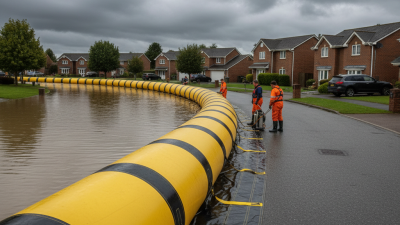
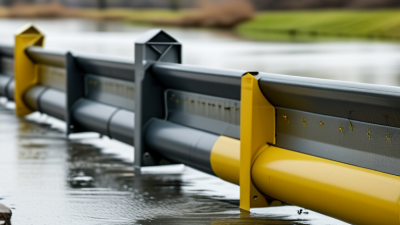
Compare Anti-Flood Barrier Types and Structural Designs

7 Tips for Choosing the Right Anti-Flood Barrier

Compare Anti-Flood Barrier Types and Structural Designs

Flood protection is not a one-size-fits-all purchase. The IPCC reports that extreme sea-level events once expected every century may occur annually at 20–30% of tide gauges by 2050. That changes the design conversation.

Tip 1: define the flood source, depth, flow speed, and warning time. Demountable panel barriers suit buildings with storage space and trained installers. Automatic barriers respond faster, but require reliable sensors, power, and maintenance. Permanent walls offer strong, continuous protection, though they may block views and alter drainage.

Tip 2: compare structural load paths, not only barrier height. A cantilever wall transfers water pressure into its foundation. A gravity barrier depends on mass and ground stability. Modular systems spread loads through posts, panels, and anchors.

Tip 3: inspect the foundation first. Cracked concrete, weak masonry, or shallow anchors can defeat an impressive barrier. FEMA’s flood guidance emphasizes site-specific flood loads, including hydrostatic pressure, moving water, debris, and buoyancy. Small details matter.

Tip 4: check seals at doors, joints, and corners.

Tip 5: calculate overtopping risk, because water can enter behind the barrier.

Tip 6: test drainage and backflow protection during installation.

Tip 7: demand documented testing, inspection intervals, and replacement procedures. The U.S. Army Corps of Engineers notes that flood structures need operation and maintenance planning throughout their service life.

I have seen projects focus heavily on panels while neglecting pumps and access points. That is an expensive blind spot. No barrier is perfect. A sound design accepts that weakness and plans for it.

Check Installation Methods, Storage Needs, and Reusability

7 Tips for Choosing the Right Anti Flood Barrier?

During site assessments, measure the doorway, driveway, and lowest drainage point before comparing barriers. A barrier that fits on paper may leave gaps around uneven paving. Check the expected water depth, flow speed, and warning time. These details determine whether a freestanding, anchored, or panel-based system is suitable.

Installation should be clear enough for a tired person to follow. Test the assembly with two people, then record the time required. Good instructions matter. Check whether tools, drilling, or permanent fixings are needed. Inspect seals, joints, and anchor points after every test. Do not assume a tight fit remains secure when surfaces shift or debris collects.

Storage is often overlooked. Choose a dry, accessible location, not a distant shed under heavy boxes. Keep components labeled and protected from sunlight, chemicals, and sharp edges. Reusability depends on careful cleaning, complete drying, and regular inspection. Replace cracked seals or distorted panels before the next warning. A barrier may survive many uses, but its real lifespan depends on maintenance and exposure. One practical mistake is storing it perfectly, then discovering missing connectors during an emergency. A short annual drill can reveal that problem early.

Evaluate Material Quality, Durability, and Maintenance Demands

Tip 1: Inspect material quality before comparing prices. A reliable anti-flood barrier should use dense, weather-resistant materials with consistent seams and reinforced connection points. Check the surface for thin patches, exposed fibers, or uneven welding. These small defects may become serious under pressure. Ask for test records, material specifications, and clear load information. Vague claims deserve caution.

Tip 2: Judge durability through real conditions, not appearance alone. Consider repeated exposure to rain, sunlight, mud, stored water, and temperature changes. A barrier may look strong in a showroom but weaken after poor storage or careless handling. Examine hinges, seals, anchors, and locking parts separately. They often fail before the main panel. If possible, observe a demonstration with flowing water and uneven ground. A perfect test surface can hide practical weaknesses.

Tip 3: Calculate maintenance demands before installation. Choose a design that can be cleaned with ordinary water and inspected without specialist tools. After each use, remove grit from seals and allow fabric or panels to dry completely. Store components away from sharp objects and direct sunlight. Keep a simple inspection log. It helps identify cracking, rust, or stretched joints early. However, maintenance plans are often too optimistic. Staff changes, rushed cleanup, and missing parts can reduce protection. Select a system that remains manageable during a stressful, wet morning.

Review Safety Features, Costs, and Long-Term Value

7 Tips for Choosing the Right Anti Flood Barrier

Review Safety Features, Costs, and Long-Term Value

Flood protection should begin with measured risk, not advertising claims. The World Meteorological Organization reported 11,778 weather-related disasters between 1970 and 2021, causing over $4.3 trillion in economic losses. Choose barriers tested for hydrostatic pressure, debris impact, leakage, and repeated installation. Look for secure anchors, sealed joints, anti-slip surfaces, clear height markers, and safe handling points. A barrier that protects one doorway may still fail beside an unsealed garage wall.

Cost needs a wider lens. Include purchase price, delivery, installation, storage, inspections, replacement parts, and labor after a warning. FEMA’s flood guidance notes that even shallow water can produce serious building damage, so a cheaper barrier may become expensive after one failure. Ask for independent test records and written limits. Do not trust vague phrases like “maximum protection.”

Long-term value depends on realistic use. Review the expected service life, ultraviolet resistance, corrosion protection, cleaning needs, and warranty conditions. The National Flood Insurance Program’s claims history shows that flood losses repeatedly affect residential properties, not only coastal buildings. Keep a simple maintenance log. Test the system before storm season. I would also check whether two people can deploy it safely in rain and darkness. That practical detail is easy to miss. And sometimes, the best barrier is useless if nobody knows where it is stored.

7 Tips for Choosing the Right Anti-Flood Barrier

Compare safety, setup effort, upfront cost, storage, reusability, maintenance, and long-term value before selecting a flood protection system.

The chart shows indicative planning estimates for protecting 10 metres of frontage. Values are representative midpoints from commonly published specifications and market ranges; actual costs and deployment times vary with barrier height, site access, labor, ground conditions, and required flood depth.

  1. Confirm the required protection height: Include freeboard above the expected flood level.
  2. Check water resistance and stability: Review leakage control, anchoring, ballast, and resistance to flowing water.
  3. Measure deployment time: A barrier is only useful if it can be installed before water reaches the site.
  4. Compare total cost: Include transport, labor, storage, accessories, inspection, and replacement parts.
  5. Assess reusability: Durable systems can provide better value when seasonal or repeated flooding is expected.
  6. Plan storage and maintenance: Check weight, drying requirements, inspection intervals, and available storage space.
  7. Verify site compatibility: Confirm suitability for slopes, uneven surfaces, doorways, drains, and emergency access routes.