
Choosing a Household Elevator in 2026 starts with the home, not a glossy product brochure. The right model should suit the building’s layout, the people using it, and the way they move through each day. A compact shaft beside a staircase may work in one house, while another may need a different layout or a machine-room-less design. There is no universal answer.
Begin with practical questions. How many floors will the lift serve? Who needs to use it, and will a wheelchair or walking aid need to fit inside? Measure available floor space, doorway widths, and the route for bringing equipment into the home. Also consider noise near bedrooms, power requirements, backup lowering, and how easily technicians can reach key components. Small details matter. A door that opens onto a narrow hallway can change the whole experience.
Ask qualified elevator professionals to assess the site before comparing prices. Request written specifications covering capacity, travel height, safety features, installation work, warranty terms, and ongoing maintenance. Requirements vary by location and building, so confirm applicable standards with local authorities and the installer. Check who will service the equipment, and how quickly help is available if it stops. A low purchase price can feel less attractive when repairs are difficult to arrange. Even careful planning has limits: existing structures may reveal surprises once work begins. That is worth discussing early. In this guide, we’ll examine the main elevator types, essential selection criteria, and questions to ask before making a long-term investment.
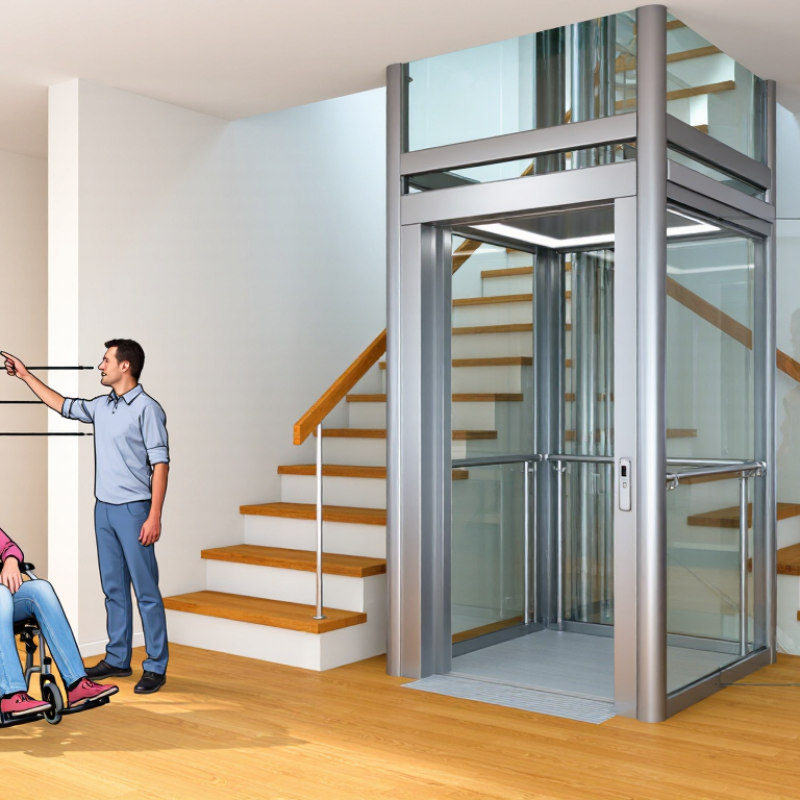
How to Choose a Household Elevator in 2026?
Define Your Household’s Mobility and Usage Needs
Start with the people who will use it, not the floor plan. For one week, note where mobility becomes difficult: carrying laundry upstairs, reaching a bedroom, or managing a walker on narrow landings. Record who rides, how often, and whether someone needs to travel beside the user. AARP’s 2024 Home and Community Preferences Survey found that 75% of adults aged 50 and older want to remain in their homes as they age. That preference makes everyday access worth planning for early. Small details matter.
Check the actual equipment, too. Measure the widest wheelchair or walker, including hand rims, then allow room for turning and a companion if needed. WHO’s 2022 Global Report on Assistive Technology estimates that more than 2.5 billion people need one or more assistive products worldwide. That figure is not an elevator forecast, but it highlights how varied mobility needs can be. Ask a qualified installer to assess entry routes, landings, power needs, and likely daily use. Plans change. A child’s injury, a visiting grandparent, or increasing care needs may alter the picture. I might over-plan for rare visits; still, ignoring them can make a good fit feel cramped.
| Household Mobility Need | Typical Use | What to Assess | Planning Priorities | Questions to Ask Before Choosing |
|---|---|---|---|---|
| Older adults with occasional difficulty using stairs | Daily trips between bedrooms, living areas, and entrances | Current stair use, balance, stamina, and whether mobility may change over time | Simple controls, easy-to-reach buttons, steady travel, clear lighting, and convenient access at each floor | Can the user enter and exit without stepping over a raised threshold? Are the controls easy to see and operate? |
| Wheelchair user who travels independently | Frequent trips with a wheelchair, possibly without an attendant | Wheelchair width and length, turning space, door clear opening, and the user’s ability to maneuver | Measure the actual mobility device and plan the car and doorway around it; consider accessible controls and an appropriate door arrangement | Does the proposed clear car space accommodate the wheelchair and allow the user to position safely? Is the doorway wide enough for the device? |
| Wheelchair user accompanied by a caregiver | Regular trips with a second person, including help with transfers or daily care | Space for both people, wheelchair maneuvering, caregiver position, and assistance needs | Allow for the actual wheelchair and attendant together; assess entry, turning, and exit rather than relying on rated capacity alone | Can the caregiver stand beside or behind the wheelchair as needed? Has the layout been checked with the household’s actual equipment? |
| Household using a walker, cane, or crutches | Short, repeated trips, often while carrying small items | Walking-aid dimensions, balance when entering, hand support, and the user’s ability to reach controls | Prioritize a level, unobstructed entrance, clear floor area, suitable handholds where available, and controls within comfortable reach | Can the user enter and leave without assistance? Is there enough room to position the walking aid safely? |
| Family with young children or multiple regular passengers | Several trips each day; occasional use by two or more passengers | Expected passenger count, supervision needs, stroller or luggage use, and household routines | Choose capacity and car space based on real passenger loads; check door safety features and controls that adults can supervise | How many people are likely to ride together? Will a stroller or everyday items need to fit at the same time? |
| Household transporting groceries, laundry, or bulky items | Frequent carrying between floors, sometimes with a passenger | Load weight, item dimensions, frequency, and whether goods need to travel with a person | Check rated load and car dimensions separately; consider a practical loading route and avoid blocking the doorway or controls | What are the heaviest and largest items normally carried? Can they fit without exceeding the lift’s rated load? |
| Short-term recovery or changing mobility needs | More frequent use during recovery, with needs that may change over time | Expected duration, temporary mobility equipment, caregiver support, and possible future use | Consider adaptable access and controls, and confirm that the installation can serve the household’s likely longer-term needs | Will the lift remain useful if a temporary limitation becomes long-term? Can the user operate it safely during recovery? |
| Occasional use by a visitor with limited mobility | Infrequent trips for guests or relatives | Visitor mobility aids, assistance required, and the route from the entrance to the lift | Make sure access is straightforward at every served floor and that visitors can enter, ride, and exit with the available assistance | Can a visitor using a cane, walker, or wheelchair reach and use the lift without an avoidable barrier? |
| Planning note: Passenger capacity and car dimensions vary by lift design and local requirements. Treat household needs as a starting point, measure actual mobility aids and items, and have a qualified professional verify clearances, accessibility, structural conditions, and applicable building and safety codes before selection. | ||||
How to Choose a Household Elevator in 2026?
Compare Household Elevator Types and Drive Systems
Start with the layout, not the brochure. A shaft-based elevator usually offers an enclosed ride and a familiar cabin, but it needs dedicated space across floors. A through-floor lift can suit a home with limited room, though its platform and opening may affect furniture placement. Platform lifts can work for short, straightforward routes. Check the number of stops, doorway positions, and available headroom before comparing finishes.
Drive systems change how an elevator feels and fits. Hydraulic models use fluid pressure to move the car and may require space for equipment. Traction systems use ropes and counterweights, often making efficient use of energy in suitable layouts. Screw-drive systems move along a threaded mechanism and can avoid a separate machine room, but operation may feel slower. There is no universal winner. Noise, travel distance, maintenance access, and backup lowering options deserve equal attention.
Tips: Measure the narrowest doorway and ceiling clearance, then ask a qualified installer to verify the route. Listen to a working unit if possible. Small details matter. I would not choose from rated capacity alone; real household needs can be easy to underestimate.
How to Choose a Household Elevator in 2026?
Assess Available Space, Layout, and Installation Requirements
Start with a measured plan of the home, not a product brochure. Note the floor-to-floor height, hallway widths, door swings, and any nearby windows or pipes. A landing that looks spacious can become awkward when the elevator door opens into a busy passage. Small details matter. Also identify a route for bringing equipment indoors; a tight stair turn may affect delivery and installation.
The elevator type and its required shaft, pit, and overhead clearance must fit the building—not just the available floor area. Check where structural supports, wiring, and plumbing run before settling on a location. In an existing home, a qualified installer or building professional can inspect the floors and explain what reinforcement or alterations may be needed. Ask for dimensions in writing, including clearances at every stop. Requirements vary by design and site, so avoid relying on a generic diagram. A first sketch is useful, but it is rarely complete; door placement, daily circulation, and access during maintenance deserve another look. Also confirm the power supply and any access needs for people using mobility aids.
Assess available space, layout, and installation requirements before comparing elevator options.
Example site-survey measurements only—not standard elevator requirements. Measure clear dimensions on site, including the proposed shaft area, doorway, overhead clearance, and pit. Required dimensions vary by elevator type, building conditions, and local codes; confirm them with a qualified installer.
How to Choose a Household Elevator in 2026?
Verify Safety Features, Accessibility, and Local Building Codes
Before comparing finishes, check the elevator’s safety systems and installation requirements. Look for door interlocks, obstruction sensors, an alarm, and a clear emergency-lowering procedure. Ask who responds if the elevator stops between floors. A feature list is useful, but it does not replace professional installation and inspection. Small details matter.
Tips: Measure the narrowest doorway and each landing. Test control height and door timing with the people who will use the elevator. Keep the measurements.
Accessibility depends on real movement, not just cabin size. A wheelchair user may need room to turn, approach controls, and pass the threshold without catching a wheel. Consider seated reach, handrails, readable indicators, and audible alerts. Needs can change, too; I would not assume today’s layout will suit every future user. Local building codes may set requirements for permits, clearances, electrical work, or inspections. These rules vary by location and project. Ask the local building department to confirm requirements before ordering, and have a qualified professional review the plans. Request written details on testing and maintenance. That extra check can feel slow, but guessing can be costly.
Compare 2026 Costs, Maintenance Plans, and Supplier Support
A household elevator’s quoted price is only part of its cost. Ask for separate figures for equipment, installation, electrical work, and any building changes. A narrow hallway or extra floor opening can shift the budget quickly. Get an itemized quote.
Compare estimates with the same travel height, capacity, finishes, and safety features. Then check what the price excludes, such as delivery or future repairs. Prices vary by home and region, so online averages are only a starting point. They can mislead.
Maintenance matters over the long term. Ask how often inspections are recommended, what routine visits include, and whether call-outs or replacement parts cost extra. Read the warranty carefully; coverage may differ for labor and components. Small details matter. A service plan should state response times and how urgent faults are handled. Ask who answers after installation, whether technicians cover your area, and how parts are sourced. Written answers are useful. Supplier support can feel hard to judge before a problem occurs, and no plan removes every delay. Compare the practical commitments, not just the headline price. A slightly cheaper quote may be reasonable, but only if its exclusions are clear.
Please enter the details to download, thank you
Get in Touch With Us
Please enter the details to download, thank you