What Is a Flaking Mill and How Does It Work?
A Flaking Mill is more than a machine that presses grain into thin pieces. It is a controlled system that changes kernel structure, moisture, and density. The mill usually receives cleaned and conditioned grain. Steam or water may soften the kernels before rolling. This preparation reduces cracking and improves flake quality.
Dr. R. Carl Hoseney, a respected cereal science authority, stated, “Processing quality begins with understanding the grain.” That principle explains why operators monitor moisture, temperature, roll pressure, and feed rate together. Inside the Flaking Mill, paired rolls apply strong compression. The rolls may be smooth or corrugated, depending on the raw material and final product. Their gap controls thickness. Their speed difference can create additional shear.
Small adjustments produce visible results. A narrow gap may create fragile flakes. A wider gap may leave kernels partly unflattened. Uneven feeding can cause inconsistent color, thickness, and bulk density. The process is not perfectly uniform. That limitation deserves attention.
This guide examines how a Flaking Mill works from intake to discharge. It considers conditioning, roll design, pressure control, cooling, and routine inspection. It also explains why operators study flakes rather than trusting machine settings alone. A bright, even flake usually indicates stable processing. A dusty or broken flake may signal excessive force, poor moisture control, or worn rolls. These clues are practical, but they are not absolute. Grain varies every season. Good milling requires measurement, experience, and a willingness to question familiar settings.
What Is a Flaking Mill?
What Is a Flaking Mill?
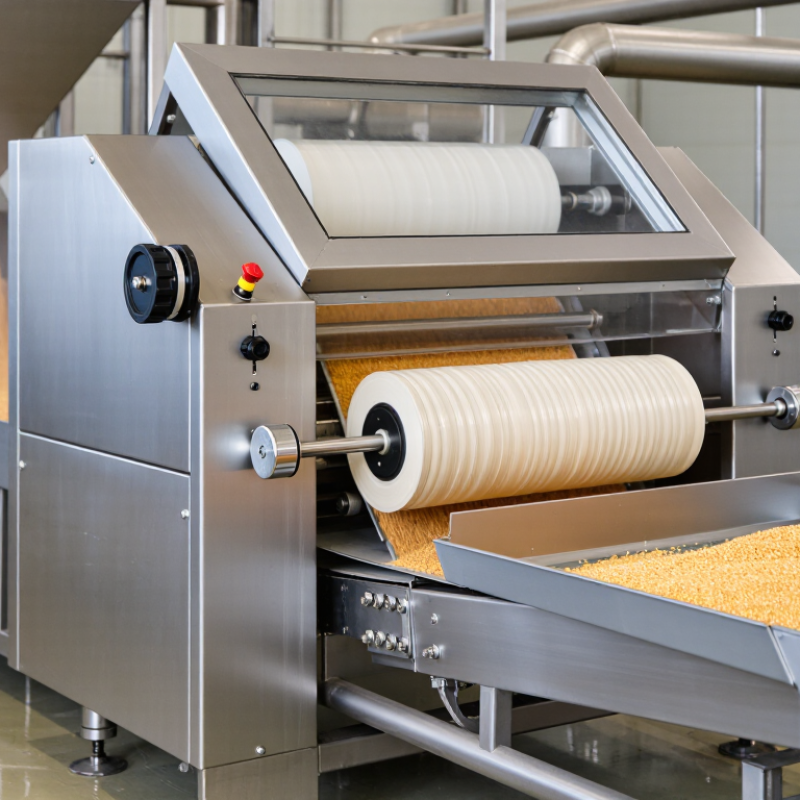
A flaking mill is an industrial machine that converts conditioned grain into thin, flattened flakes. It commonly processes corn, oats, barley, and wheat for animal feed or food production. The machine uses two heavy rolls rotating toward each other. A controlled gap applies compression and shear, breaking the grain structure without turning it into fine flour. This improves hydration, digestion, and heat transfer during later processing.
The process usually begins with cleaning and moisture adjustment. Steam conditioning softens the kernel and raises its temperature. The prepared grain then passes between smooth rolls, often with different rotational speeds. Operators adjust roll pressure, gap width, feed rate, and product moisture. Small changes can affect flake thickness, breakage, and energy use. Too much pressure may create powder. Too little pressure leaves whole kernels.
Scale matters. USDA’s 2024/25 Grain: World Markets and Trade report places global corn production above 1.2 billion metric tons. FAO statistical reports also show cereals exceeding three billion tonnes annually worldwide. These volumes explain why stable flaking performance matters in large feed and grain-processing facilities. In practice, however, no single setting works everywhere. Kernel variety, moisture, temperature, and roll wear can shift results. A flake that looks acceptable may still have uneven density. Regular sampling, moisture checks, and roll inspection remain necessary. Mistakes happen. The useful response is measured adjustment, not guesswork.
How a Flaking Mill Works Step by Step
A flaking mill reduces prepared grain or oilseed into thin flakes. It works between two counter-rotating rolls. The process begins before the machine starts. Operators inspect roll surfaces, check guards, and confirm that the feed is clean and evenly distributed. Foreign particles can damage rolls and create unsafe conditions. Moisture and temperature matter because material that is too dry may crack, while material that is too wet can smear. Small details matter.
The prepared material enters a controlled feeding device above the rolls. It spreads across the roll width, preventing heavy loading on one side. Gravity and the feed system guide each piece into the nip, the narrow gap where the rolls draw it inward. As the rolls rotate at different speeds, compression and shear open the structure and reduce thickness. The roll gap determines the flake size. A tighter gap usually creates thinner flakes, but excessive pressure increases heat, wear, and power demand. Operators monitor the product leaving the rolls, often checking thickness by hand and with a gauge. Not every first setting works.
After flaking, the material moves through a discharge system for cooling, conveying, or further processing. A practical inspection looks for even color, consistent thickness, and limited powder. Uneven flakes may indicate poor feeding, worn roll surfaces, or incorrect moisture. Skilled operators adjust one factor at a time, record the result, and avoid chasing changes too quickly. This is where experience helps. The machine is precise, but the raw material is never perfectly uniform. Regular cleaning, lubrication, and scheduled inspection help maintain stable operation and protect product quality.
Materials Processed by Flaking Mills
What Is a Flaking Mill and How Does It Work?
Materials Processed by Flaking Mills
Flaking mills process oilseeds and selected grains by compressing them between rotating rolls. Soybeans, canola, sunflower seeds, and cottonseed are common feed materials. The rolls flatten cleaned kernels into thin, flexible flakes. This increases surface area and helps solvent or heat reach the seed more efficiently during oil extraction.
Soybeans often receive cracking, dehulling, and controlled heating before flaking. The U.S. Department of Agriculture’s Oilseeds: World Markets and Trade report estimated global soybean production at about 421 million metric tons in 2024/25. That scale explains the demand for stable, high-throughput preparation equipment. Canola and sunflower seeds require different moisture levels and roll settings. A single recipe rarely works well.
Grains can also be flaked for livestock feed, including corn, barley, oats, and wheat. The FAO’s 2024 Food Outlook reported global cereal production near 2.85 billion tonnes in 2024. Steam-flaked grains need careful temperature control, while dry-rolled grains require less conditioning. Operators should monitor flake thickness, roll pressure, moisture, and temperature at the outlet. Too-thin flakes may create fines. Too-thick flakes can reduce extraction or digestibility. This is where practice matters. Laboratory targets are useful, but real kernels often behave differently. A small adjustment can change power use, throughput, and final product quality.
What Is a Flaking Mill and How Does It Work?
Materials processed by flaking mills and their representative flake-thickness settings
Flaking mills condition kernels with heat and moisture, then pass them through counter-rotating rolls to produce thin flakes. The values shown are representative commercial target settings; actual thickness varies with kernel variety, moisture, temperature, roll pressure, and the intended application such as livestock feed or breakfast cereals.
