
Top Forklift Collision Detection System Features You Need to Know?

In today’s fast-paced industrial environment, safety is paramount. The Forklift Collision Detection System plays a critical role in enhancing workforce safety. Accidents can lead to severe injuries. They can also result in significant downtime and financial losses. Understanding the essential features of these systems is vital for any warehouse manager.

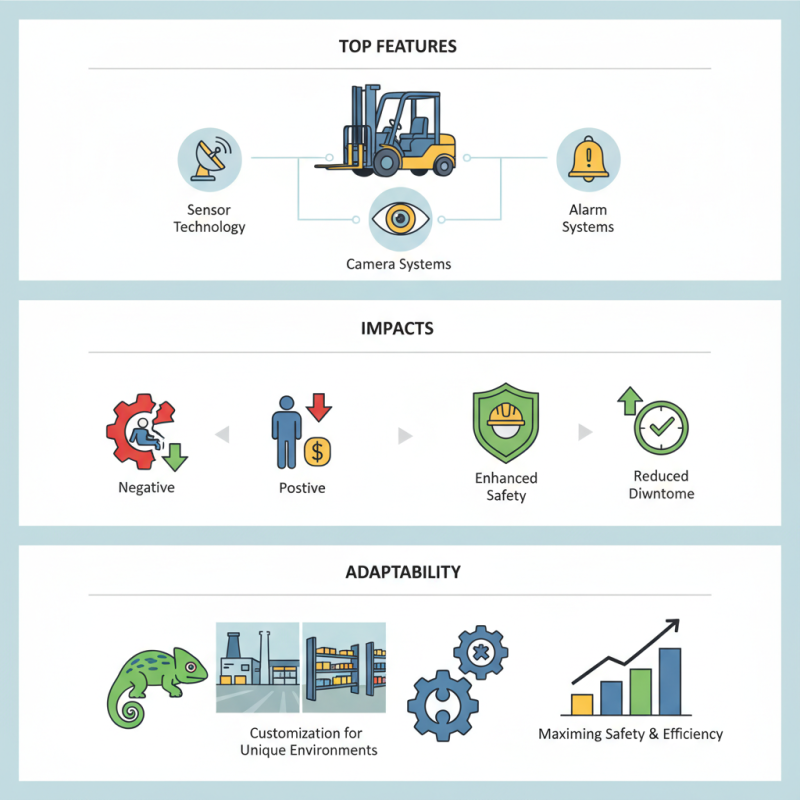
Many facilities today rely on advanced technology to prevent collisions. These systems use sensors, cameras, and alarms to detect potential hazards. They alert operators before accidents occur. Such proactive measures can potentially save lives and resources. Ignoring these systems could lead to regrettable incidents, affecting both employees and operations.

Moreover, the effectiveness of a Forklift Collision Detection System lies in its adaptability. Each work environment has unique challenges. Companies must ensure these systems fit their specific needs. A one-size-fits-all approach could lead to ineffective solutions. Investing in the right features is crucial for maximizing safety and efficiency in the workplace.
Top Forklift Collision Detection System Features You Need to Know?

Key Technologies in Forklift Collision Detection Systems

Forklift collision detection systems are essential for enhancing safety in warehouses and factories. These systems use various key technologies to prevent accidents. One such technology is LiDAR, which creates a 3D map of the environment. It detects obstacles in real-time and significantly reduces collision risks. According to recent studies, implementing LiDAR systems can decrease accidents by up to 30%.

Another important technology is camera-based systems. They often work in conjunction with advanced machine learning algorithms. These cameras analyze video feeds to identify potential hazards. This dual approach provides an extra layer of safety. Reports suggest that camera systems can improve reaction times by over 25%, allowing operators to respond quickly to potential collisions.

However, reliance on these technologies comes with challenges. False positives can occur, leading to unnecessary safety interventions. Employees may also overlook warnings, reducing the effectiveness of these systems. Balancing technology with human training is crucial. A more comprehensive approach could enhance worker safety and system reliability. Finding an optimal mix of technology and human vigilance remains a key area of focus.

Top Forklift Collision Detection System Features You Need to Know

Feature Description Technology Type Detection Range
Proximity Sensors Detects objects in close proximity to prevent collisions. Ultrasonic Up to 10 meters
Lidar Technology Uses laser to create a 3D map of the environment for obstacle detection. Lidar Up to 30 meters
Camera Systems Utilizes cameras to provide visual recognition of obstacles. Vision-Based Varies by model
Automatic Braking Engages brakes automatically if a potential collision is detected. Safety Mechanism Immediate response
Alert Systems Provides auditory or visual alerts to the operator of nearby objects. Indicator Systems Up to 5 meters

Real-Time Monitoring and Data Analysis Capabilities

Real-time monitoring is crucial in forklift collision detection systems. It allows immediate identification of potential hazards. Sensors track the forklift's position and speed continuously. This data generates alerts when approaching obstacles, thus preventing accidents. Workers can stay safe in busy environments. It’s a simple yet effective way to ensure safety.

Data analysis capabilities enhance the effectiveness of these systems. Historical data is analyzed to identify patterns. Operators can review collision incidents to improve safety measures. However, not all data is actionable. Some events might be too infrequent to warrant changes. The challenge lies in filtering relevant data. Effective analysis requires skilled personnel to interpret results accurately.

Maintaining real-time monitoring systems can be daunting. Technical issues may arise, leading to false alerts. Training is also necessary for staff to respond appropriately. Regular updates to the system can help mitigate these issues. Yet, businesses may overlook this aspect. Ensuring a smooth operation requires continuous effort and reflection on existing processes.

Integration with Existing Warehouse Management Systems

When considering a forklift collision detection system, integration with existing warehouse management systems (WMS) is crucial. A seamless connection allows for real-time data sharing. It can provide alerts about potential collisions instantly. This feature promotes a safer working environment. However, integrating these systems might present challenges. Existing setups may not easily support new technologies.

Data synchronization is one aspect that requires attention. Mismatched data formats can lead to confusion. Forklift operators may receive incorrect information. Additionally, training staff on the new system can take time. A sudden change may disrupt workflow. Employees might find it hard to adapt initially. This can lead to frustration and errors.

Collaboration between tech providers and warehouse managers is essential. Open communication can help address compatibility issues. Testing the system beforehand can identify potential pitfalls. Effective integration is not a one-time task. Continuous assessment and updates may be necessary. A focus on improving interactions will enhance overall efficiency.

Top Forklift Collision Detection System Features

User Alerts and Feedback Mechanisms for Safety Improvement

User alerts and feedback mechanisms play a critical role in forklift collision detection systems. According to recent industry reports, nearly 80% of forklift accidents are preventable. Implementing real-time user alerts can significantly reduce these incidents. When operators receive immediate notifications about potential hazards, they can react promptly. This awareness correlates with a 35% decrease in collision rates, showcasing the effectiveness of such systems.

Moreover, engaging feedback mechanisms can enhance safety protocols. Many operators report feeling disconnected from safety features. A user-friendly interface enables operators to provide input on system performance. Reports indicate that organizations implementing feedback loops have observed a 25% improvement in employees' adherence to safety measures. Clear, actionable feedback fosters a culture of safety and accountability.

However, even the best systems have room for growth. Not all operators are trained effectively on alert systems. This gap can lead to misunderstandings and missed alerts. Continuous training and updates are essential for maximizing system effectiveness. By integrating user alerts with consistent feedback, companies can strive for a safer work environment while recognizing that improvement is a constant journey.

Cost-Effectiveness and ROI of Collision Detection Systems

In a busy warehouse, safety is paramount. Forklift collisions can lead to costly injuries and damage. Collision detection systems enhance safety and improve productivity. However, their cost-effectiveness is often questioned. Companies must consider the financial impact. A study found that poor safety records can cost businesses up to $1 million annually. Investing in collision detection technology could significantly reduce these expenses.

Implementing a collision detection system can lead to a strong return on investment (ROI). Research indicates that companies adopting this technology see a reduction in accidents by as much as 30%. This reduction translates into lower insurance premiums and less downtime. The upfront costs can be daunting, but the long-term savings are considerable.

It's crucial to analyze the specific needs of each facility. Not every system is suitable for all environments. Some companies may experience minimal improvements in safety. This can lead to misallocating resources. Understanding the unique conditions and requirements is necessary for maximizing the benefits of collision detection systems.