China Top Flood Barrier for Home How to Choose?
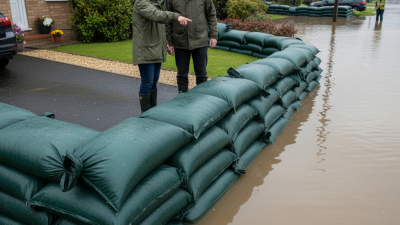
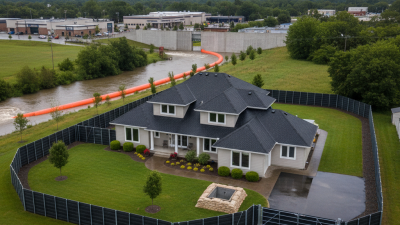
Choosing the right flood barrier for home begins with evidence, not marketing claims. The World Meteorological Organization’s State of the Climate in Asia 2023 reports that floods remain among the region’s leading weather-related hazards. China’s dense cities, coastal districts, and rapidly developing communities face different flood pressures. A basement entrance may need a removable panel, while a ground-floor doorway may need a sealed, self-supporting system. One product cannot solve every situation.
Technical guidance matters. FEMA’s Homeowner’s Guide to Retrofitting recommends evaluating flood depth, water flow, structural loads, and utility locations before installing protection. ASCE 24 also highlights flood-resistant design, including openings, anchoring, and hydrostatic pressure. These references make one point clear: a flood barrier for home must match the building, not merely its advertised height. Check the barrier’s tested water depth, leakage rate, loading method, seal material, and installation surface. Measure the doorway at several points. A three-millimeter gap can become a serious weakness when water pushes against a rubber seal.
Look closely.
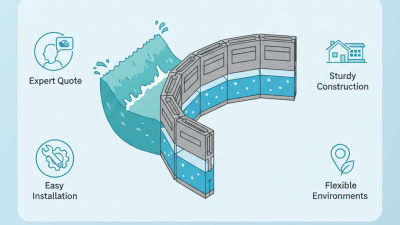
For buyers comparing Chinese manufacturers, request independent test reports, material specifications, installation instructions, and replacement-part availability. Aluminum panels may offer strength and repeated use, while modular water-filled barriers can be easier to store. However, convenience may reduce stability on uneven paving. The choice also depends on warning time, household mobility, drainage capacity, and local emergency procedures. Industry reports provide useful benchmarks, but they cannot replace a site inspection. This is where many buying guides become too confident. A barrier may slow water, not stop every flood. The safest decision combines verified performance, realistic maintenance, and professional assessment.
What Makes a Home Flood Barrier Effective in China?
What makes a home flood barrier effective in China? The answer begins with local flood conditions, not appearance. The World Meteorological Organization’s State of the Climate in Asia 2023 reported that floods represented about 80% of recorded disasters in the region. They caused more than 2,000 deaths and over US$36 billion in economic losses. China’s varied rainfall, from coastal typhoons to inland cloudbursts, demands different protection levels.
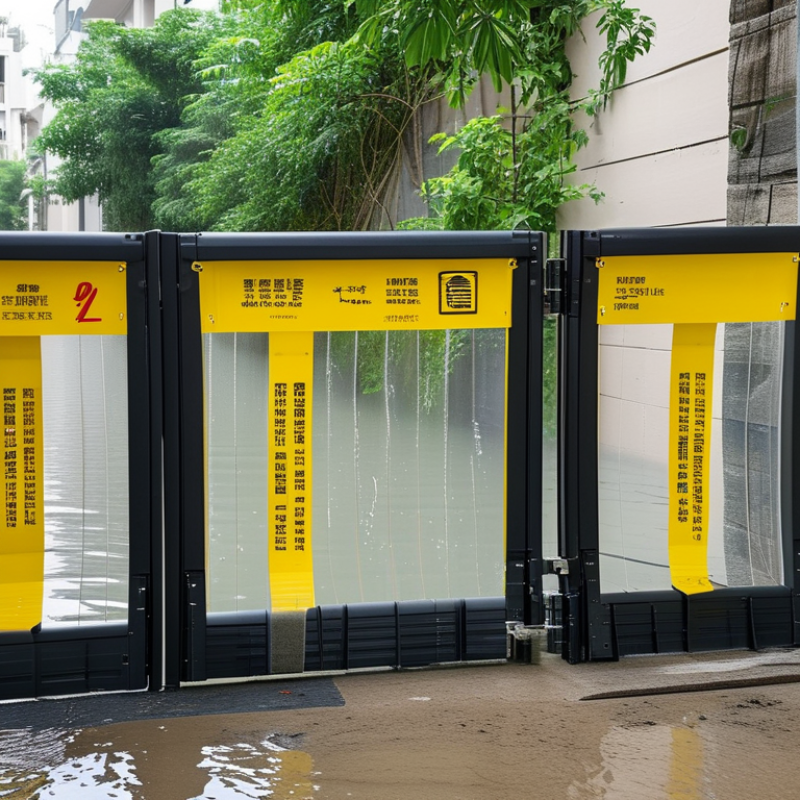
A reliable barrier should resist hydrostatic pressure, floating debris, seepage, and repeated installation. Its height must exceed the expected water level, while its base needs a continuous seal against uneven floors. Door thresholds, garage ramps, drains, and side gaps are common weak points. The China Meteorological Administration’s China Climate Change Blue Book 2024 reports a rising frequency of extreme precipitation events. Therefore, choosing only by height seems too simple.
Look for tested materials, clear load ratings, and documented installation procedures. Aluminum panels, reinforced composites, and flexible seals can perform well when properly anchored. However, performance depends heavily on the building surface. I would not trust a catalogue photo alone. Ask for test conditions, water depth, leakage limits, and maintenance intervals. A barrier that takes two people fifteen minutes to install may fail during a sudden night flood. Users should practice deployment, inspect seals before the rainy season, and leave drainage routes unobstructed. Small omissions matter. There is no universal barrier for every Chinese home.
How to Compare Flood Barrier Materials, Sizes, and Sealing Systems?
Choosing a home flood barrier starts with the opening, not the advertisement.
UNDRR’s Global Assessment Report 2022 estimates that 1.81 billion people face potentially severe floods. That risk makes material selection important.
Aluminum panels are lightweight and resist corrosion, but they can dent under impact.
Steel offers greater stiffness, yet it needs protective coatings and careful maintenance.
Reinforced polymer systems are easier to carry, although long-term ultraviolet exposure may weaken some materials.
Size must match the doorway, garage, or window precisely. Measure the clear width, frame depth, floor slope, and threshold height. Measure the opening.
A barrier that is too short can leave gaps at both sides. FEMA Technical Bulletin 3-93 stresses that dry floodproofing depends on controlling water pressure and preventing seepage through weak points.
For deeper water, hydrostatic force rises quickly with depth, as described in the U.S. Army Corps of Engineers Coastal Engineering Manual.
In practical terms, a 900-millimeter barrier needs stronger anchoring than a 300-millimeter model.
Sealing systems deserve close inspection.
Compression gaskets usually perform well on smooth, level surfaces.
Brush seals may tolerate dust better, but they can leak against uneven thresholds.
Mechanical clamps create stronger pressure, though installation mistakes are common.
Test the installed barrier with a hose before storm season. Do not trust a dry demonstration alone.
I would also check replacement-gasket availability and storage conditions. Small defects matter. Real homes rarely have perfect floors, and published laboratory results may not reflect that reality.
What Installation and Maintenance Factors Should Homeowners Check?
Choosing a home flood barrier starts with the opening, not the product label. Measure doorways, garage entrances, low windows, and floor drains before comparing designs. Record width, height, threshold shape, wall material, and nearby obstacles. A barrier must transfer water pressure into strong surfaces. Loose brick, cracked concrete, or weak anchors can undermine an excellent system. Check whether the barrier blocks a required exit or interferes with daily access. Local building guidance may also affect placement and anchoring. Get technical advice when drawings or site conditions are unclear.
Installation quality often decides performance. The base must be clean, level, and free from grit. Follow the manufacturer’s instructions, but question any step that ignores your doorway’s condition. Use corrosion-resistant fixings suitable for the wall and expected exposure. Seal gaps carefully, without hiding damaged masonry or uneven thresholds. After fitting, spray or hose water against the protected side during a controlled test. Watch for seepage, movement, and pressure points. Keep an unblocked escape route. A rushed installation can look secure and still fail.
Maintenance should be scheduled before storm season, not during rising water. Remove dirt from seals, hinges, tracks, and drainage channels. Inspect rubber components for hardening, splits, or lost flexibility. Tighten fixings carefully and replace damaged parts with compatible materials. Store removable panels flat, dry, and supported to prevent warping. Retest the assembled barrier after repairs, building work, or ground movement. Keep dated inspection notes and photographs; they reveal gradual changes. No barrier stays perfect. One overlooked drain can defeat careful preparation. That uncomfortable detail deserves regular attention.