
10 Best Safety Harnesses for Working at Height

Working at height leaves little room for guesswork. A loose strap, worn stitching, or poorly fitted chest buckle can change a worker’s safety in seconds. The right Safety Harness should fit the task, the person, and the rest of the fall-protection system. It should also be inspected and used by someone who understands its limits.

Dr. David Michaels, former Assistant Secretary of Labor for Occupational Safety and Health, has emphasized that worker protection must be part of everyday operations, not an afterthought. That principle applies directly to harness selection. A harness alone cannot prevent every fall or make an unsafe work area safe. Training, compatible equipment, proper fit, and a workable rescue plan matter too. Small details count.

This guide to the 10 best safety harnesses for working at height compares practical features, including adjustment points, padding, attachment locations, and intended applications. Those details can be easier to judge when you picture a real shift: gloves on, tools nearby, and a worker reaching across a steel beam. No single model suits every body or job. Even a promising product deserves a careful fit check. The best choice is the one workers can wear correctly, inspect consistently, and use as part of a complete fall-protection plan.
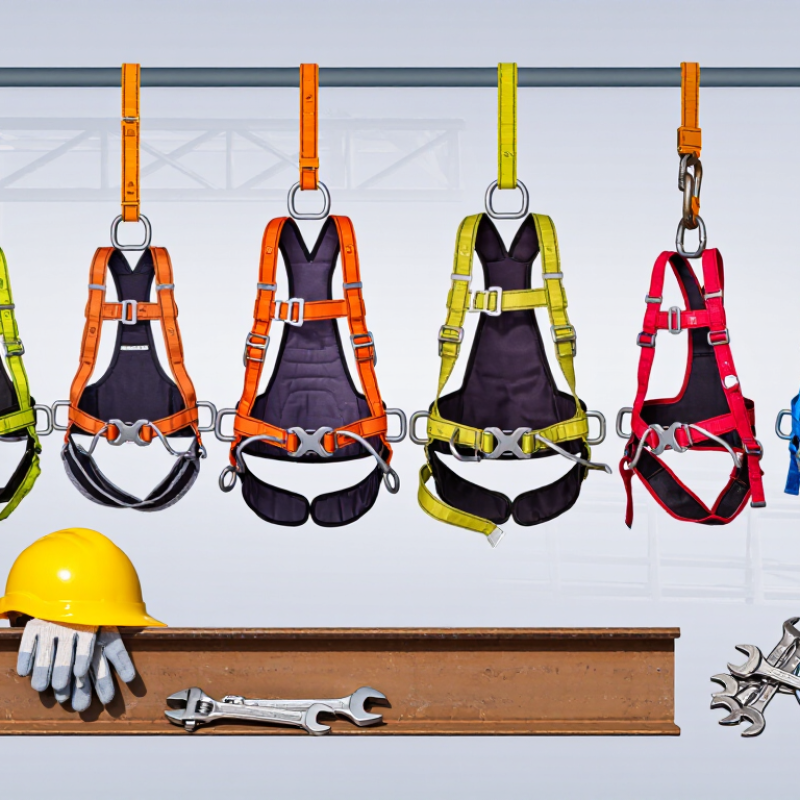
10 Best Safety Harnesses for Working at Height

How Fall-Protection Harnesses Work at Height

A fall-protection harness works as part of a complete personal fall-arrest system. It connects the worker to an anchorage through a connector, such as a lanyard or self-retracting lifeline. During a fall, a properly fitted full-body harness spreads arrest forces across the thighs, pelvis, chest, and shoulders. Its dorsal attachment point should sit between the shoulder blades, not near the neck. The harness does not prevent a fall by itself. The anchorage, connector, clearance, and fit matter just as much.

The U.S. Bureau of Labor Statistics recorded 395 construction-worker deaths from falls, slips, trips, and jumps in 2022. That figure shows why equipment setup and work planning deserve attention. Near a roof edge, for example, a short connection may still allow a worker to strike a lower level. Check the fall distance, possible swing path, and obstacles below before choosing a connection. Small details matter.

Fit is personal. Before each use, inspect webbing for cuts, burns, fraying, or chemical damage, and check stitching, buckles, and attachment points. Put the harness on over the clothing worn for the task; snug straps should not twist or slide. A coworker can often spot a loose chest strap that the wearer misses. That helps, but it is not a rescue plan. Workers should know how to summon help and how a suspended coworker will be retrieved. Harness use gets overlooked when crews rush. That deserves a second look.

Harness Types, Components, and Safety Standards

A safety harness is not just a set of straps. It is part of a complete fall-protection system, and its type must match the task. Full-body harnesses are commonly used for fall arrest. Work-positioning harnesses help workers stay supported while keeping their hands free. Suspension harnesses are designed for controlled hanging tasks, such as rope access. Some harnesses combine functions, but that does not make every attachment point suitable for every job.

Check the components closely. A dorsal D-ring often connects to a fall-arrest lanyard or lifeline; chest and side rings serve different purposes. Webbing should lie flat, buckles should fasten securely, and labels must remain readable. Small details matter. A twisted strap can affect comfort and fit. So can bulky clothing. Even experienced workers can rush an inspection, especially when the weather turns or a shift runs late. That deserves a second look.

Standards help identify intended uses. In Europe, EN 361 covers full-body harnesses, while EN 358 addresses work positioning and restraint belts. EN 813 applies to sit harnesses. In the United States, ANSI/ASSP Z359 standards cover several parts of personal fall-protection systems. Requirements vary by location and task, so confirm the applicable rules and equipment instructions. A compliant harness alone cannot prevent every hazard. Connect compatible equipment, inspect it before use, and plan how a suspended worker will be rescued. Safety plans can look complete on paper and still miss the difficult part: who reaches the worker, and how quickly?

10 Best Safety Harnesses for Working at Height — Harness Types, Components, and Safety Standards
# Harness Type Best Suited Tasks Typical Components and Features Relevant Standards Selection and Safety Notes
1 General-purpose full-body harness Construction, maintenance, and other tasks where a personal fall-arrest system is required. Shoulder and leg straps, a dorsal fall-arrest attachment point, adjustment buckles, and a compatible connecting subsystem. ANSI/ASSP Z359.11; OSHA 29 CFR 1910.140 or 1926.502, as applicable; EN 361 in relevant markets. Check fit, attachment-point labeling, system compatibility, and required clearance. The harness is only one part of a complete fall-arrest system.
2 Tower-climbing harness Climbing and working on communication towers, utility structures, and similar vertical structures. Full-body harness with designated fall-arrest attachment points; some configurations include positioning attachment points and equipment loops. ANSI/ASSP Z359.11; applicable OSHA fall-protection rules; EN 361 where applicable. Use only designated attachment points and compatible climbing or fall-arrest equipment. Equipment loops are not fall-arrest attachment points.
3 Confined-space entry and retrieval harness Entry into and retrieval from tanks, pits, shafts, and other spaces with restricted access. Full-body harness with a dorsal attachment point and, where designed for it, shoulder retrieval attachments; may be used with a compatible retrieval system. ANSI/ASSP Z359.11; OSHA confined-space and fall-protection requirements, as applicable; EN 361 where applicable. Confirm that the harness and retrieval equipment are designed to work together. Retrieval arrangements do not replace confined-space planning and rescue procedures.
4 Work-positioning harness Tasks where a worker needs hands-free support while positioned on a structure, such as pole or façade work. Full-body harness with designated side positioning attachment points; used with a compatible positioning lanyard or system. ANSI/ASSP Z359.11 and applicable OSHA rules; EN 358 for positioning equipment, with EN 361 where a fall-arrest harness is required. Work positioning is not automatically fall arrest. Use a separate, suitable fall-arrest system when required by the work plan or regulations.
5 Rope-access or suspension harness Controlled suspension and movement on ropes for inspection, façade work, and access tasks. Harness configuration may include a ventral attachment point and sit-harness features; a full-body design may also provide fall-arrest capability if specifically certified for it. EN 813 for sit harnesses; EN 361 for full-body fall-arrest harnesses; applicable national requirements. A sit harness certified to EN 813 alone is not a full-body fall-arrest harness. Verify the certification and use the required rope system and backup protection.
6 Heat- or welding-duty harness Hot work and tasks where exposure to sparks or elevated temperatures is identified in the risk assessment. Full-body fall-arrest design with materials and construction specified by the manufacturer for the stated exposure conditions. ANSI/ASSP Z359.11 or EN 361, as applicable; check the manufacturer’s stated limitations for heat and chemical exposure. Do not assume a standard harness is suitable for sparks or heat. Inspect for burns, cuts, melted fibers, or other damage before use.
7 Electrical-work harness Work near electrical hazards where the task assessment calls for fall protection and suitable equipment materials. Full-body harness with components selected for the specified work environment; any nonconductive properties must be explicitly stated by the manufacturer. ANSI/ASSP Z359.11 or EN 361, as applicable; electrical-work rules and equipment specifications also apply. A harness is not electrical insulation or protection from electric shock unless specifically tested and rated for that purpose.
8 Rescue-compatible full-body harness Work where a planned rescue may require controlled connection to suitable rescue equipment. Full-body harness with attachment points specifically identified for fall arrest and, where provided, rescue or retrieval use. ANSI/ASSP Z359.11; applicable OSHA requirements; EN 361 where applicable. Use only attachment points approved for the intended rescue function. Establish and practice a rescue plan before work begins.
9 Lightweight maintenance harness Routine inspection and maintenance at height where a simpler harness configuration meets the job requirements. Full-body harness with adjustable straps, a designated fall-arrest attachment point, and clearly readable identification labels. ANSI/ASSP Z359.11 or EN 361, depending on the jurisdiction and intended use. Choose based on fit and compatibility, not weight alone. Confirm that the configuration suits the connecting device and the job’s clearance limits.
10 Multi-attachment full-body harness Tasks requiring more than one approved connection function, such as fall arrest plus work positioning. Full-body harness with designated attachment points for specific functions; may include dorsal, front, or side points depending on its design and certification. ANSI/ASSP Z359.11; EN 361 for fall arrest and EN 358 for positioning equipment, where applicable. Attachment points are not interchangeable. Follow the harness label and instructions for each point’s intended purpose.

Safety note: This product-neutral comparison is for general information. Select equipment based on a task-specific risk assessment, applicable regulations, the manufacturer’s instructions, compatibility with the complete fall-protection system, and a documented inspection and rescue plan.

How to Choose a Harness for the Job

Choosing a harness starts with the task, not the price tag. A worker climbing a ladder may need a different setup from someone suspended beneath a platform. Match the harness to the fall-protection system, attachment point, work position, and rescue plan. Check the manufacturer’s label for approved use and weight limits, including tools and clothing. Fit matters. Straps should lie flat, and the chest strap should sit correctly without restricting movement. A harness that feels secure while standing may shift when the wearer reaches overhead.

The U.S. Bureau of Labor Statistics reported 885 fatal workplace injuries from falls, slips, and trips in 2023. That figure makes clearance and rescue planning hard to treat as minor details. Measure the distance below the work area, accounting for lanyard stretch, connector length, and the worker’s height. Then confirm the system can arrest a fall before the person strikes a lower surface. Measure twice. Inspect webbing, stitching, buckles, and labels before each use, following the maker’s instructions. A sizing chart helps, but it cannot show how a harness moves when someone twists or crouches. That gap deserves attention during a supervised fit check.

10 Best Safety Harnesses for Working at Height

Choosing among the 10 best safety harnesses for working at height means matching the equipment to the task, not picking the most feature-heavy model. Check that the harness meets applicable safety standards and fits the wearer snugly over the clothing used on site. Leg straps should stay secure without pinching; a loose chest strap can shift during a fall. The U.S. Bureau of Labor Statistics recorded 395 fatal falls to lower levels among construction workers in 2022, within 1,069 total construction fatalities. Those figures make fit and fall protection more than checklist details. Small errors matter.

Compare harnesses by attachment-point layout, adjustability, comfort during movement, and compatibility with the full fall-arrest system. OSHA’s construction standard limits the maximum arresting force on a worker to 1,800 pounds when a personal fall-arrest system is used. A harness alone cannot guarantee protection: assess fall clearance, anchorage, and a workable rescue plan too. Inspect webbing, stitching, buckles, and labels before each use, and remove damaged equipment from service. No model suits every body or job. Even a well-chosen harness may feel awkward at first; practice fitting and connecting it at ground level before relying on it aloft.

Fall-Protection Trigger Heights by Work Setting

U.S. OSHA thresholds provide useful context when planning work at height; they are not harness ratings or product rankings.

Thresholds shown: general industry, 4 ft; construction, 6 ft; longshoring, 8 ft. Applicable rules may include exceptions, and fall protection does not always require a harness. Sources: OSHA 29 CFR 1910.28(b)(1)(i), 1926.501(b)(1), and 1918.105(a)(1).

Fit, Inspect, and Maintain a Safety Harness

A safety harness must fit the worker who will wear it, not just look secure on a rack. Check the label and instructions before use, then loosen the straps and put it on without twisting them. The back D-ring should sit between the shoulder blades. Adjust the leg straps snugly, leaving room for a flat hand, and fasten the chest strap at the position specified by the manufacturer. Small details matter. A loose strap can shift during a fall; an overly tight one can restrict movement. Ask a trained supervisor to check the fit if anything feels wrong.

Inspect the harness before each use, in good light. Run your fingers along the webbing and look for cuts, fraying, burns, chemical damage, or faded areas. Check stitching, buckles, labels, and attachment points; tug each buckle after fastening it. Stop if unsure. Remove damaged or fall-loaded equipment from service, mark it clearly, and follow your workplace’s process for evaluation. Never patch or alter a harness yourself. Keep it clean and dry as directed, away from sharp tools, oils, and direct heat. Store it where straps cannot be crushed or tangled. It is easy to rush a check when a crew is waiting; that pressure is worth noticing, not obeying. Follow the equipment instructions and site fall-protection plan, and make sure the rest of the fall-arrest system is compatible.