Top 10 Three Phase Transformer Manufacturers Worldwide
Three-phase transformers sit behind the electricity we use every day. They step voltage up for long-distance transmission and down for factories, buildings, and local networks. Their reliability depends on more than nameplate capacity. Core design, insulation, cooling, efficiency, and service support all matter. So does the ability to deliver equipment on schedule.
The scale of grid investment makes these choices increasingly important. The International Energy Agency’s Electricity Grids and Secure Energy Transitions (2023) estimates that more than 80 million kilometres of grids must be added or replaced by 2040. It also says annual grid investment needs to exceed $600 billion by 2030. These figures describe grids overall, not transformer demand alone, but they show the infrastructure context. The U.S. Department of Energy’s 2022 review of large power transformer supply chains also discusses manufacturing and material constraints. Lead times and specifications can vary widely.
This guide profiles ten Three Phase Transformer manufacturers with a worldwide presence. It considers product range, technical capabilities, industry experience, and regional service networks. A large catalogue is not proof of the right fit. Buyers should check voltage class, capacity, efficiency data, testing practices, and available support against their actual project needs. Rankings can be imperfect; public information is uneven, and company scale does not guarantee suitability. That deserves a closer look.
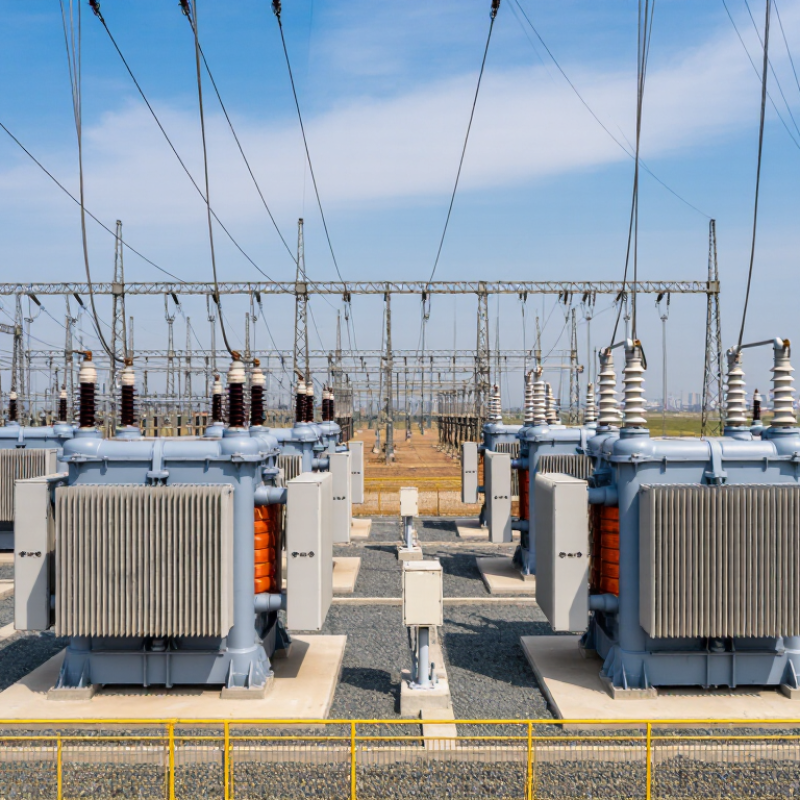
Three-Phase Transformers: Definition, Design, and Applications
Top 10 Three Phase Transformer Manufacturers Worldwide
Three-Phase Transformers: Definition, Design, and Applications
A three-phase transformer transfers electrical power between three alternating-current phases, raising or lowering voltage through electromagnetic induction. Inside the tank, copper or aluminum windings surround a laminated steel core. The arrangement may use three limbs or separate core sections. Delta and star connections affect phase relationships, neutral availability, and fault behavior. Small details matter.
Engineers select ratings, insulation, cooling, and impedance for the expected load and installation conditions. A unit serving a factory may face motor-starting surges, while a substation transformer must handle changing demand and grid disturbances. Outdoor units need suitable bushings, weather protection, and space for heat dissipation. A tidy calculation can still miss real operating conditions; load measurements and maintenance history help refine the design.
These transformers are widely used in transmission and distribution networks, industrial plants, commercial buildings, and renewable-energy connections. Their importance is growing alongside grid investment. The International Energy Agency’s Electricity Grids and Secure Energy Transitions report (2023) estimates that 80 million kilometres of grids must be added or refurbished by 2040, with annual grid investment rising above US$600 billion by 2030. This is grid-wide context, not a transformer-market forecast. Even so, it highlights why reliable voltage conversion, losses, and service access deserve close attention.
Criteria for Comparing Transformer Manufacturers Worldwide
Comparing three-phase transformer manufacturers requires more than checking rated capacity or quoted price. Start with the duty: voltage ratio, frequency, cooling method, insulation class, and expected loading. Then request documented routine and type-test results against the applicable IEC 60076 requirements. Loss figures matter. Compare guaranteed no-load and load losses at the same rating and test conditions, not headline efficiency claims. Ask how temperature rise, short-circuit withstand, sound level, and partial-discharge performance were verified.
Supply capability also deserves evidence. The International Energy Agency’s 2023 report, Electricity Grids and Secure Energy Transitions, says annual grid investment must rise from about $300 billion to more than $600 billion by 2030. That wider pressure makes delivery schedules and component sourcing relevant comparison points. Check factory capacity, stated lead time, quality-control records, and access to replacement parts. Request references for installations with similar ratings and operating environments; a factory tour can reveal practical testing and assembly procedures.
A useful scorecard weighs lifecycle cost, test quality, delivery risk, and service support—not price alone. Ask for assumptions behind loss-cost calculations, since electricity tariffs and loading profiles change the result. No scorecard is perfect. A polished specification may still leave gaps in maintenance planning or spare-part availability. Compare written evidence, and record what remains unverified before making a decision.
Profiles of Ten Leading Three-Phase Transformer Manufacturers
The ten manufacturer profiles reveal how three-phase transformer suppliers differ in engineering focus, production scale, and service support. One profile centers on utility projects, where high-voltage insulation and dependable testing matter. Another reflects industrial expertise, with units designed for motor loads and demanding duty cycles. A third emphasizes compact distribution transformers for crowded urban sites. Fit matters.
A fourth profile highlights renewable-energy connections, where variable output can challenge equipment selection. A fifth focuses on custom designs for mines, mills, and other heavy industries. A sixth represents manufacturers with broad regional service networks and accessible spare parts. The seventh profile values digital monitoring, including temperature sensors and fault alerts. The eighth stresses efficient core design, which can reduce operating losses over time. Details matter.
A ninth profile points to makers experienced with harsh conditions, such as dust, humidity, or coastal air. The tenth reflects suppliers offering flexible ratings and project-specific testing. These are useful comparison points, not proof that one supplier suits every installation. Buyers should check test reports, efficiency data, cooling methods, and warranty terms against actual site conditions. A brochure may look convincing; field performance deserves closer scrutiny.
Product Ranges, Technologies, and Global Market Presence
Three-phase transformer manufacturers differ less by headline capacity than by the problems their product ranges solve. Portfolios commonly span distribution units for neighborhoods, large power transformers for substations, and specialist designs for renewable-energy connections. Buyers also compare liquid-immersed and dry-type models, voltage ratings, cooling methods, and transport dimensions. A transformer that fits the electrical design may still be impractical if a heavy unit cannot reach a remote site.
Technology choices are becoming more specific. Amorphous-metal cores can reduce no-load losses, while ester-based insulating fluids offer an alternative to conventional mineral oil. Sensors can track temperature, moisture, and load, but digital monitoring is only useful when operators can act on the data. Demand is uneven. The International Energy Agency’s 2023 report, Electricity Grids and Secure Energy Transitions, says annual grid investment needs to rise above USD 600 billion by 2030. That outlook helps explain manufacturers’ focus on capacity, efficiency, and grid integration, though it does not measure transformer orders directly.
Global market presence is not simply a count of export destinations. Regional production, testing facilities, spare-parts access, and field-service teams can matter just as much as factory output. Suppliers must also adapt equipment to local grid conditions and technical standards. Comparisons remain imperfect: published capacity figures may describe different product categories, and delivery lead times can shift quickly. For project teams, checking test documentation and service coverage can reveal more than a polished catalogue.
Key Factors to Consider When Selecting a Manufacturer
When comparing three-phase transformer manufacturers, match their engineering capability to your actual load and site conditions. Share voltage, frequency, load profile, ambient temperature, and installation details before requesting a quotation. A unit sized only from peak demand may run inefficiently during ordinary operation. Ask how the manufacturer accounts for harmonics, enclosure ventilation, and future load growth. These details matter.
Review technical documents, not just catalog figures. Request routine test records covering winding resistance, voltage ratio, impedance, insulation, and losses. Confirm that test methods and stated tolerances align with the specifications for your project. Ask how materials and production batches are traced. If available, a factory visit can clarify workmanship, though a tidy production floor alone proves little. Check references for installations with similar duty cycles, and ask about response times for troubleshooting, spare parts, and commissioning support. Delivery promises should include realistic testing and transport schedules.
Tips: Put acceptance criteria in writing before ordering. Compare total ownership costs, including energy losses and maintenance, rather than purchase price alone. Ask who reviews drawings and answers technical questions after installation. A slow, precise answer may be more useful than an impressive brochure. Be cautious if details remain vague; I would want clarification before treating that as a minor issue.
Top 10 Three-Phase Transformer Manufacturers Worldwide: Key Selection Factors
A practical specification check: IEC normal service ambient-temperature limits
When comparing manufacturers, check that the proposed transformer suits your site's ambient conditions. IEC 60076-1 defines these normal service temperature limits; installations outside them may require a design review or rating adjustment. These values describe service conditions, not manufacturer performance.
