
China’s steel and metal-processing base creates a strong market for Belt Annealing Furnace systems. The World Steel Association reported approximately 1.019 billion tonnes of crude steel production in China during 2023. This represented more than half of global output. Such scale supports a wide supplier network, but it also makes supplier comparison difficult.
Energy performance deserves close attention. The International Energy Agency identifies iron and steel as a major industrial energy consumer, contributing roughly 8% of global final energy demand. A furnace’s heating efficiency, atmosphere control, cooling design, and heat recovery system can therefore influence operating costs. Practical buyers should request temperature-uniformity records, energy-consumption data, production references, and factory acceptance test results. A polished brochure is not enough.
This guide examines China’s best Belt Annealing Furnace manufacturers through engineering capability, product reliability, customization, certifications, and service response. Key details include strip width, line speed, furnace temperature range, protective gas control, conveyor materials, and tension stability. Manufacturers should also explain maintenance access and spare-parts availability. The shortlist is imperfect. Performance can change between projects, even within one company. Buyers should verify claims through plant audits, sample trials, and independent technical reviews. ISO 13579 guidance on industrial furnace energy efficiency offers a useful reference for comparing fuel and electricity performance. The strongest supplier is not always the largest. It is the one that delivers stable results under your actual material, speed, atmosphere, and production conditions.
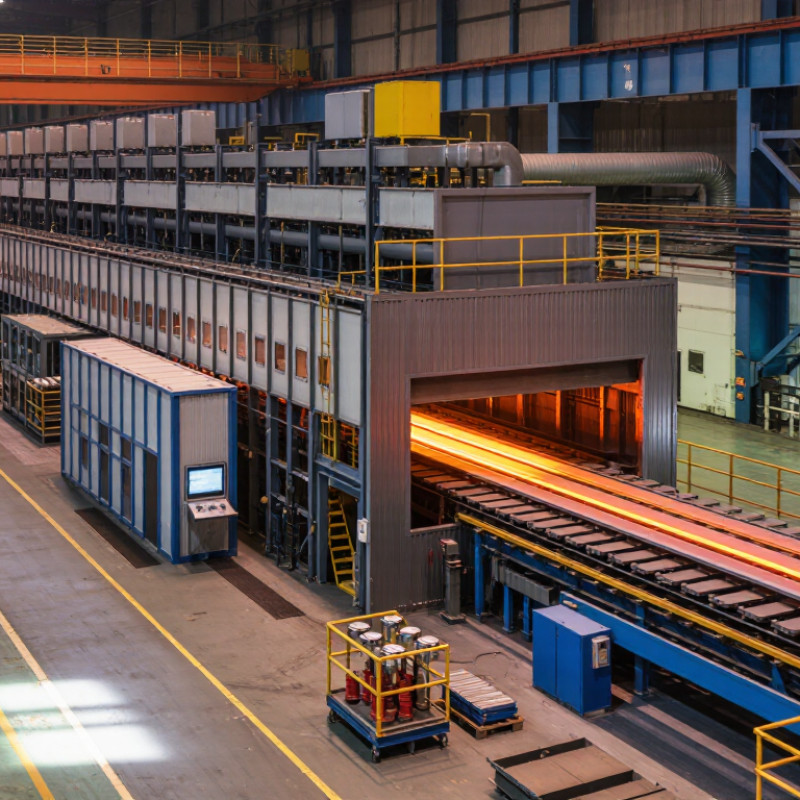
A belt annealing furnace is a continuous heat-treatment line for strip, wire, or small components. Metal travels on a heat-resistant mesh belt through controlled zones. Each zone adjusts temperature, atmosphere, and residence time. The purpose is not simply heating. It restores ductility, relieves stress, and stabilizes microstructure after forming or plating. The World Steel Association reported about 1.89 billion tonnes of global crude steel production in 2023. That scale supports demand for reliable, high-throughput annealing systems in China’s metal-processing clusters.
A typical cycle includes loading, preheating, soaking, controlled cooling, and discharge. Burners or electric elements supply heat. Fans circulate protective gas, while oxygen and dew-point sensors help limit oxidation. Belt speed determines residence time. Temperature uniformity decides whether edges and centers receive similar treatment.
Nitrogen-hydrogen mixtures may suit some alloys, but gas selection depends on surface requirements and safety design. The International Energy Agency’s Iron and Steel Technology Roadmap estimates that steelmaking produces roughly 7–9% of global energy-related carbon dioxide emissions. Small leaks matter.
When comparing Chinese manufacturers, request furnace-mapping records, atmosphere-control data, belt-life evidence, and measured energy consumption. Catalog temperature alone proves little. Test samples should match the intended belt loading and production speed. A technically attractive furnace can still underperform when the belt sags, loading changes, or cooling becomes uneven. I have seen precise specifications produce vague factory results. That gap deserves attention. Strong evaluation combines witnessed trials, calibration certificates, maintenance access, and clear acceptance criteria.
China’s belt annealing furnace manufacturers serve a large metal-processing market. The World Steel Association reported 1,019.1 million tonnes of Chinese crude steel production in 2023. This scale encourages continuous furnace development, especially for stainless steel, copper alloys, and precision strip.
Key features begin with temperature uniformity. Reliable systems typically use multi-zone heating, closed-loop thermocouples, and adjustable belt speed. Operators should inspect temperature records, not only brochure specifications. A small thermal deviation can change hardness, color, and surface quality.
Atmosphere control also matters. Nitrogen, hydrogen mixtures, or other protective gases require stable flow, sealing, and monitoring. Poor sealing wastes gas and may damage product consistency.
Energy performance is another practical measure. The U.S. Department of Energy’s Industrial Decarbonization Roadmap identifies process heating as roughly half of manufacturing energy use. Therefore, heat recovery, insulated chambers, and efficient cooling deserve close attention.
Belt tension control is often overlooked. It affects alignment and maintenance frequency. Digital controls can improve traceability, but software quality varies. Ask for alarm histories and sample production data.
Not every impressive interface proves dependable engineering. Some specifications remain optimistic, and buyers should verify them through factory acceptance testing, independent measurement, and long-duration trials.
When comparing Chinese belt annealing furnace manufacturers, examine process control before comparing prices. Ask for temperature uniformity records across the heating zone. A reliable supplier should explain how sensors are calibrated and replaced.
Inspect the furnace structure in person or through detailed factory videos. Check weld quality, insulation joints, belt tracking, and cooling-water connections. Request material certificates for critical parts, not only general brochures. The control system should record temperature, belt speed, atmosphere flow, and alarm history. Useful technology is measurable.
Review a sample production test using your strip grade and thickness. Confirm output stability during startup, continuous running, and emergency stopping. Ask whether the manufacturer performs factory acceptance testing with documented results. Service response also matters. Clarify spare-part availability, remote diagnosis, installation support, and operator training. Speak with recent customers, but remember that one reference cannot prove consistent quality. No factory gets everything right. A supplier that openly discusses past failures may be more dependable than one promising perfection. Compare energy consumption, maintenance access, and expected belt life under your actual working conditions. A polished quotation can hide weak engineering. Look deeper.
Major Industries Using Belt Annealing Furnace Systems
Belt annealing furnace systems support wire, tube, strip, and small metal component production. In wire manufacturing, controlled heat reduces hardness after drawing. This helps improve flexibility and electrical performance. Operators often inspect the belt surface for marks, residue, or uneven movement. Small changes matter.
Automotive suppliers use these furnaces for springs, clips, fasteners, and precision steel parts. A stable heating zone can reduce internal stress before forming or coating. Electronics manufacturers also process copper alloys and thin metal strips. These materials need careful temperature control because oxidation can affect conductivity and surface quality. Clean loading is essential. Overloading remains a common mistake.
The aerospace and medical equipment sectors may use belt furnaces for repeatable treatment of small, high-value parts. Production teams usually record temperature profiles, belt speed, atmosphere conditions, and cooling results. These records support traceability and process adjustments. However, a perfect specification does not guarantee perfect output. Material thickness, furnace loading, and maintenance habits still change results. Experienced engineers test representative samples before full production. They also question readings that appear unusually stable. Sensors can drift, and belts can wear gradually. In practical operations, reliable performance comes from documented procedures, trained staff, and regular verification rather than equipment selection alone.
| Major Industry | Typical Workpieces | Common Furnace Atmosphere | Representative Annealing Range | Primary Metallurgical Objective | Important System Features |
|---|---|---|---|---|---|
| Automotive Components | Cold-formed fasteners, brackets, clips, springs, and stamped steel parts | Endothermic gas, nitrogen-based gas, or nitrogen–hydrogen mixtures | Approximately 650–850 °C, depending on steel grade and process route | Reduce hardness, relieve forming stresses, and improve ductility before additional forming or assembly | Continuous mesh belt, controlled cooling, uniform temperature distribution, and stable belt loading |
| Fastener Manufacturing | Bolts, nuts, screws, washers, rivets, and threaded parts | Protective nitrogen–hydrogen atmosphere or endothermic atmosphere | Approximately 650–900 °C for process annealing and spheroidizing applications | Improve machinability, soften wire or formed parts, and prepare carbon steel for cold heading | Accurate residence-time control, low-oxidation operation, automatic atmosphere monitoring, and continuous production |
| Wire and Cable Production | Carbon-steel wire, stainless-steel wire, copper wire, and alloy wire | Nitrogen, nitrogen–hydrogen, vacuum-compatible gas, or controlled inert gas | Approximately 400–1,050 °C, based on material and required softening cycle | Restore ductility after drawing, reduce residual stress, and achieve consistent electrical or mechanical properties | High-speed belt or conveyor handling, precise cooling, low-tension loading, and inline temperature control |
| Stainless-Steel Processing | Small stainless parts, strip sections, wire, tubes, and precision components | Hydrogen-rich protective atmosphere, nitrogen–hydrogen, or high-purity hydrogen | Approximately 950–1,150 °C for many solution-annealing processes | Restore corrosion resistance, dissolve unwanted precipitates, and obtain a soft, uniform structure | Rapid cooling capability, gas-tight furnace zones, low dew point, and corrosion-resistant furnace components |
| Copper and Copper-Alloy Products | Copper strip, terminals, connectors, wire, tubes, and brass components | Nitrogen, nitrogen–hydrogen, or other oxygen-controlled protective atmospheres | Approximately 450–750 °C, depending on alloy composition and product thickness | Increase ductility, reduce work hardening, and limit surface oxidation or discoloration | Clean belt transport, low-oxygen control, rapid heat transfer, and adjustable cooling sections |
| Powder Metallurgy | Sintered gears, bushings, structural parts, and compacted metal components | Endothermic gas, nitrogen–hydrogen, or other carbon-potential-controlled atmospheres | Approximately 1,000–1,150 °C for many ferrous sintering cycles | Sinter powder particles, control carbon content, and develop required density and strength | Ceramic or mesh belt, multiple heating zones, controlled dew point, and accurate gas-flow distribution |
| Electrical and Electronic Components | Lead frames, connector parts, contact components, shielding parts, and fine metal stampings | Nitrogen or low-oxygen nitrogen–hydrogen atmosphere | Approximately 300–850 °C, according to substrate, coating, and alloy requirements | Relieve stress, maintain dimensional stability, and protect conductive surfaces from oxidation | Clean processing, precise thermal uniformity, low particle generation, and programmable zone control |
| Metal Strip and Sheet Processing | Cold-rolled carbon-steel strip, stainless strip, nickel alloys, and precision metal strip | Hydrogen, nitrogen–hydrogen, or other inert/protective atmospheres | Approximately 600–1,100 °C, depending on alloy and strip thickness | Recrystallize the cold-worked structure, improve formability, and achieve consistent strip properties | Continuous strip support, controlled line speed, edge-to-edge temperature uniformity, and low-tension transport |
Note: Temperature ranges and atmospheres are representative industrial values. Actual settings depend on alloy chemistry, product dimensions, loading density, required mechanical properties, and applicable heat-treatment standards.
Choosing the best belt annealing furnace manufacturer in China requires more than comparing quotations. Process heating consumes about 51% of U.S. manufacturing energy, according to the U.S. Department of Energy’s Industrial Decarbonization Roadmap. Energy efficiency deserves serious attention. Ask for heating-zone uniformity records, power-consumption data, and temperature mapping at working speed. A supplier should explain how its furnace handles strip width, thickness, line speed, and protective atmosphere changes.
Inspect the factory, not only the showroom. Review weld quality, insulation density, burner or electric-element origins, spare-parts control, and software documentation. Request test reports linked to calibrated instruments. ISO 13577 provides safety guidance for industrial furnace systems, but certification alone does not prove reliable production. Ask for a witnessed factory acceptance test using material close to your own grade. Check cooling performance too. Small temperature variations can affect hardness, color, and surface quality.
After-sales support may decide the real cost. The IEA reports that industry used roughly 37% of global final energy in 2022, making avoidable furnace losses commercially important. Require clear response times, remote diagnostics, training, and a stocked critical-parts list. Speak with operating customers, when possible. A polished visit can mislead. I would also challenge unusually low prices, because cheaper insulation, sensors, or tension controls may appear only after installation. No checklist catches everything. Keep a written risk register, and update it after each technical review.
Please enter the details to download, thank you
Get in Touch With Us
Please enter the details to download, thank you