
Global buyers are entering 2026 with stricter energy, hygiene, and reliability expectations. An oil free compressor is no longer limited to pharmaceutical plants. It now supports food processing, electronics, medical air, textiles, and clean manufacturing. These sectors cannot tolerate lubricant carryover near products, sensors, or sterile equipment.
The International Energy Agency notes that compressed air can represent around 10% of industrial electricity use. The U.S. Department of Energy also warns that leakage, pressure losses, and poor controls can waste significant energy. Small faults become expensive.
This guide examines leading oil free compressor manufacturers serving international markets in 2026. It considers compressor technology, ISO 8573-1 air quality claims, efficiency data, service coverage, spare-parts access, and lifecycle costs. ISO 8573-1 provides the framework for classifying particles, water, and oil in compressed air. Buyers should still verify test conditions. Marketing language can sound cleaner than factory reality.
Industry forecasts from MarketsandMarkets and Grand View Research indicate continued growth in the global air compressor market. However, market-size estimates vary because researchers define “oil free” differently. That difference matters. A laboratory air system may require a different design from a dusty automotive workshop.
The strongest manufacturers usually provide audited performance data, installation guidance, remote monitoring, and regional technicians. Some suppliers look impressive on paper. Field performance may tell another story. Energy tariffs, ambient temperature, duty cycle, and maintenance quality can change the final ranking.
This 2026 overview is designed for practical comparison, not blind purchasing. It highlights established brands, emerging competitors, and the questions global buyers should ask before signing a specification. Reliable air is valuable. Predictable ownership costs matter more.
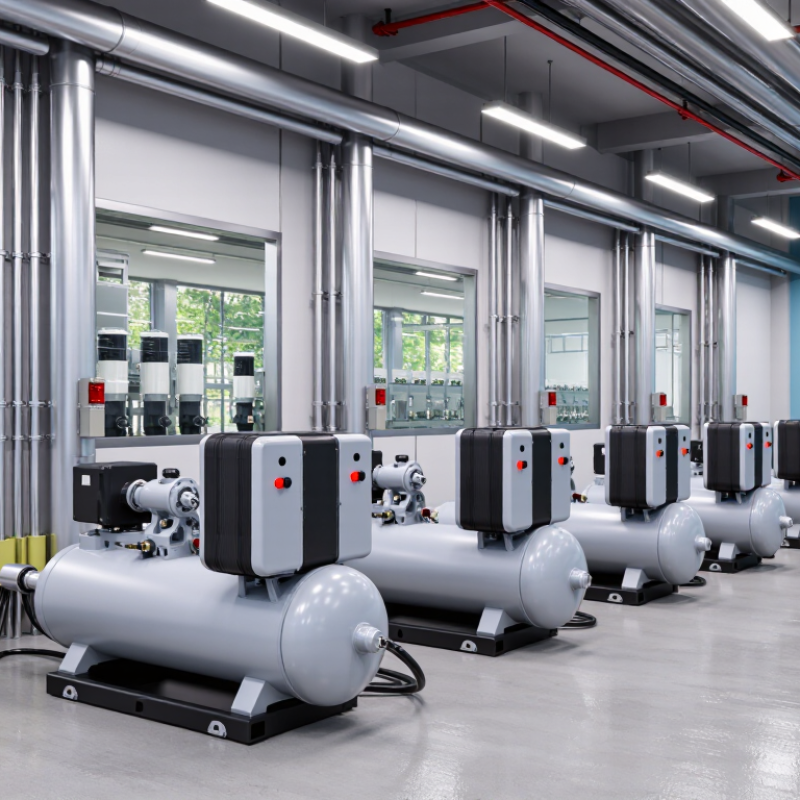
Oil-free compressors protect sensitive processes from lubricant carryover, but “oil-free” does not mean contamination-free. ISO 8573-1 Class 0 requires the supplier to specify the strictest oil concentration class, with testing under defined conditions. Buyers should also check intake air, piping, seals, and receiver hygiene. Contamination can enter after the compressor.
Selection should begin with measured demand, not the largest nameplate. Compare free air delivery, working pressure, duty cycle, and performance during partial load. The U.S. Department of Energy’s Compressed Air Sourcebook notes that compressed air can consume about 10% of industrial electricity. Therefore, control strategy matters. Variable-speed operation may help fluctuating demand, while poor sequencing can increase energy use. Small leaks still matter.
Air quality needs a practical specification. ISO 8573-1 defines particle, water, and oil classes, including pressure dew point requirements. Food, pharmaceutical, electronics, and laboratory users often need tighter control than general workshops. Check the compressor’s performance at the actual site temperature, altitude, and voltage. Ask for ISO 1217 test data, service intervals, noise levels, and lifecycle energy figures. A useful warning: advertised efficiency may reflect ideal conditions. I would request a logged demand profile before purchase, even if it delays the quotation. That extra step can expose oversized equipment, low-load losses, or unrealistic pressure assumptions.
Evaluating oil-free compressor manufacturers in 2026 requires more than checking catalogue pressure and flow. The U.S. Department of Energy reports that compressed-air systems can consume about 10% of industrial electricity. It also notes that leaks may waste 20–30% of compressor output. A supplier should therefore provide measured specific power, leak-control guidance, and performance data at your actual operating pressure.
Ask for independent testing against ISO 1217, not only factory brochures. Confirm whether “oil-free” applies to the compression chamber, cooling circuit, and delivered air. ISO 8573-1 defines air-quality classes, so request laboratory results for oil aerosol, particles, and humidity. A credible manufacturer will explain test conditions clearly. Vague numbers deserve caution.
Site experience matters. Reviewers should compare performance at 25%, 50%, and full load, especially where demand changes hourly. Check service intervals, replacement-part availability, noise levels, heat recovery, and controls compatibility. The International Energy Agency’s energy-efficiency research repeatedly identifies system design and operational control as major saving opportunities, not compressor efficiency alone.
I would also request three years of operating data from similar plants. Yet references can be selective. Visit one site if possible, and inspect drain lines, filters, and maintenance records. A lower purchase price may hide higher electricity use. The uncomfortable question is simple: can the supplier prove lifetime performance under your conditions, or only promise it?
A manufacturer-neutral evaluation framework based on performance, compliance, lifecycle cost, service capability, and application fit.
| Evaluation Dimension | What Global Buyers Should Compare | Relevant Technical Data or Standard | Evidence to Request from the Manufacturer | Why It Matters in 2026 | Suggested Weight |
|---|---|---|---|---|---|
| Oil-Free Air Quality | Whether the compressor produces air without intentional oil added to the compression chamber and whether the complete system maintains the required air purity. | ISO 8573-1 Oil concentration should be verified against the required purity class, especially for Class 0 applications. | Independent test report, certification scope, sampling method, operating conditions, and a clearly stated oil-concentration limit. | Food, pharmaceutical, electronics, medical, and textile processes can be damaged or contaminated by oil aerosols or vapors. | 20% |
| Rated Flow and Pressure | Actual delivered air capacity at the buyer’s required discharge pressure, rather than nominal motor size or free-air displacement alone. | ISO 1217 Compare declared FAD, inlet conditions, discharge pressure, and tolerance using the same test basis. | Performance test curve, guaranteed FAD, pressure range, turndown data, and test conditions. | Incorrect comparison can cause undersizing, unstable plant pressure, or unnecessary energy consumption. | 15% |
| Energy Efficiency | Specific power across the expected load profile, including full-load, part-load, unloaded, standby, cooling, and auxiliary consumption. | Specific power is normally expressed as kW per m³/min or kW per 100 cfm. Evaluate against the complete operating profile rather than peak efficiency only. | Measured specific-power data, part-load curves, control logic, motor efficiency class, and annual energy model. | Electricity is commonly the largest operating cost over the compressor’s service life. | 20% |
| Compressor Technology Fit | Suitability of oil-free scroll, oil-free screw, centrifugal, or reciprocating technology for the required flow, pressure, duty cycle, and air-quality risk. | Scroll systems are commonly suited to smaller modular flows; screw systems to variable industrial demand; centrifugal systems to high, relatively stable flow; reciprocating systems to specialized pressure duties. | Technology selection rationale, operating envelope, minimum stable flow, maximum starts per hour, and application references without relying only on marketing claims. | Technology mismatch can reduce efficiency, increase maintenance, or create unstable operation. | 10% |
| Reliability and Duty Cycle | Continuous-duty suitability, operating hours, redundancy options, allowable ambient temperature, altitude, and cooling requirements. | Review design duty, rated service conditions, restart limitations, vibration limits, and expected availability. Do not treat a warranty period as a reliability rating. | Reliability data, failure-rate information where available, maintenance history, operating envelope, and reference installations with comparable duty. | Production interruptions can cost considerably more than the initial equipment price. | 10% |
| Lifecycle Cost | Purchase price plus installation, electricity, consumables, planned maintenance, unplanned repairs, replacement parts, and end-of-life costs. | Use a multi-year total-cost-of-ownership model. Include dryers, filters, drains, cooling systems, controls, and air leaks where applicable. | Itemized quotation, five- to ten-year operating-cost estimate, recommended spare-parts schedule, and clearly identified exclusions. | A lower purchase price may result in a higher total cost if energy use or service costs are not controlled. | 15% |
| Maintenance Requirements | Service intervals, replacement components, access to wear parts, cleaning requirements, lubrication of auxiliary components, and technician skill requirements. | Compare planned maintenance by operating hours and calendar time. Identify whether specialist tools or factory-trained technicians are required. | Maintenance schedule, service manuals, parts list, consumables list, labor-hour estimate, and preventive-maintenance checklist. | Predictable maintenance supports uptime and makes budgets easier to control. | 8% |
| Controls and Connectivity | Pressure control, sequencing of multiple compressors, remote monitoring, alarms, data logging, and compatibility with plant-management systems. | Check available communication protocols, cybersecurity controls, sensor accuracy, alarm history, and compatibility with the buyer’s control architecture. | Control-system specification, communication protocol list, sample dashboards, data-retention policy, and integration requirements. | Better visibility helps reduce leaks, detect performance degradation, and coordinate variable demand. | 5% |
| Noise and Installation Footprint | Sound-pressure level, heat rejection, ventilation needs, dimensions, service clearances, foundation requirements, and indoor or outdoor suitability. | Sound data should state the measurement method, distance, environment, and operating condition. Verify dimensions with all service access panels considered. | Acoustic data sheet, layout drawing, ventilation calculation, lifting points, connection sizes, and installation requirements. | Noise, heat, and limited space can affect worker comfort, compliance, and installation cost. | 4% |
| Global Service Coverage | Local technical support, spare-parts availability, response time, commissioning resources, training, and warranty administration in the target market. | Evaluate service coverage by country or region, not merely the existence of an international sales office. | Local service contacts, response-time commitment, parts lead times, technician qualifications, warranty terms, and escalation process. | Regional support reduces downtime and import-related delays for international buyers. | 8% |
| Regulatory and Documentation Compliance | Conformity with applicable electrical, pressure-equipment, safety, environmental, and import requirements in the destination country. | Typical documentation may include declarations of conformity, pressure-vessel records, electrical test reports, material certificates, manuals, and risk assessments. | Complete technical file, certificates applicable to the destination market, multilingual manuals, and documented change-control process. | Missing documentation can delay customs clearance, installation approval, or customer qualification. | 5% |
The 2026 oil-free compressor market is becoming more technology-specific. MarketsandMarkets estimates the segment could grow from about USD 16 billion in 2023 to over USD 23 billion by 2028. Demand is strongest in pharmaceuticals, food processing, electronics, healthcare, and precision manufacturing. These sectors cannot tolerate oil carryover near products, instruments, or sterile air lines.
Technology choice affects operating risk. Dry screw compressors suit continuous industrial loads, while oil-free scroll units fit laboratories and small medical facilities. Water-injected screw designs can reduce discharge temperatures, but water quality and corrosion control require daily attention. Oil-free centrifugal systems support large, stable airflow, yet they perform poorly under frequent load changes. According to ISO 8573-1, buyers should specify air purity by class, not simply accept an “oil-free” label.
Energy performance deserves equal attention. The U.S. Department of Energy reports that compressed air may consume 10% to 20% of industrial electricity, while leaks can waste 20% to 30% of compressor output. A capable manufacturer should provide verified flow data, part-load efficiency, noise figures, service intervals, and lifecycle cost estimates. A clean datasheet is not enough.
In practical audits, installation quality often decides the result. Poor piping, undersized dryers, and wet intake air can undermine advanced equipment. Buyers should compare factory testing, regional service coverage, spare-part availability, and ISO 8573 test documentation. I still see projects choosing low purchase prices first. That decision can become expensive within one production cycle.
Technology comparison for oil-free compressor sourcing. The chart shows typical discharge-pressure ranges used in commercial and industrial configurations; actual limits vary by model, cooling method, and operating conditions.
Buyer guide: Scroll compressors are commonly selected for compact, low-flow applications. Oil-free screw compressors serve general industrial plants and medium-flow systems. Centrifugal compressors are suited to high-flow continuous operation, while reciprocating compressors are used where higher pressure is required.
For 2026 sourcing, buyers should verify compliance before comparing compressor prices. Oil-free air must meet the required ISO 8573-1 purity class. Class 0 certification is especially important for pharmaceutical, food, electronics, and medical applications. However, the certificate must cover the exact compressor model and operating conditions. A generic laboratory report is not enough.
Check electrical safety, electromagnetic compatibility, pressure equipment, and local import requirements. CE may support European sales, while other markets may require different approvals. Ask for test reports, declaration documents, serial-number traceability, and factory quality records. Experienced suppliers can explain certification limits clearly. Vague answers deserve attention.
After-sales support should be measurable. Request installation guidance, commissioning procedures, maintenance schedules, and recommended spare-parts lists. Response times should be written into the service agreement. Remote diagnostics can reduce downtime, but only when technicians receive accurate operating data. Local service coverage is valuable for urgent repairs. It is not always available, even when brochures suggest otherwise.
Buyers should also inspect training quality. A clear manual should show oil-free air checks, filter replacement, alarm codes, and safe shutdown steps. Spare parts should include lead times and storage requirements. Some suppliers promise global support but depend on untrained local contractors. That gap can become expensive. A factory audit, technical interview, and reference-site review may reveal more than polished certification files.
Cost depends on more than the purchase price. The U.S. Department of Energy reports that compressed air can consume 10% to 30% of industrial electricity. Therefore, efficiency, maintenance, and operating hours deserve equal attention. A low-cost unit may become expensive after several years.
Oil-free compressors suit food processing, pharmaceuticals, electronics, medical facilities, and paint production. These applications require clean air and controlled contamination risks. Buyers should check ISO 8573-1 performance data, not rely only on “oil-free” wording. Class 0 certification can be important for sensitive production lines. It is not automatically necessary for every workshop.
Market reports show steady demand. Grand View Research estimates the global air compressor market will continue growing through 2030, supported by manufacturing and healthcare investment. Fortune Business Insights also identifies energy efficiency and contamination control as major oil-free compressor drivers. Exact forecasts differ. That difference deserves caution.
International buyers should compare total cost of ownership, including shipping, customs, installation, filters, dryers, spare parts, and technician access. Voltage and frequency compatibility can prevent costly delays. Ask for factory test records, noise data, warranty terms, and local service coverage. A supplier offering only a low quotation may be hiding lifecycle costs. I would also question oversized capacity, because unused airflow still consumes energy. Procurement decisions should match pressure, flow, duty cycle, ambient temperature, and future expansion plans.
Please enter the details to download, thank you
Get in Touch With Us
Please enter the details to download, thank you