What Are Water Barriers for Flooding and How Do They Work?
In recent years, the increasing frequency of severe weather events has drawn attention to the importance of effective flood management strategies. Among these, "water barriers for flooding" have emerged as a critical tool for protecting communities and infrastructure from the devastating impacts of rising waters. According to Dr. Emily Sanders, a leading expert in flood mitigation technology, "water barriers for flooding offer a flexible and efficient solution to tackle water intrusion, enabling communities to adapt quickly in the face of natural disasters."
As urban areas continue to evolve and climate variability becomes more pronounced, the demand for innovative solutions to combat flooding is on the rise. Water barriers, which can be rapidly deployed and adjusted to accommodate varying levels of risk, play a significant role in safeguarding properties and enhancing overall community resilience. Their versatile design allows them to be implemented in diverse settings, from residential neighborhoods to commercial districts, making them an essential component of modern flood management strategies.
Understanding how water barriers for flooding function and their broader applications can empower municipalities and organizations to make informed decisions regarding flood preparedness. As we delve deeper into this topic, we will explore the various types of water barriers, their installation methods, and their effectiveness in mitigating flood damage, ultimately highlighting their significance in our evolving climate landscape.
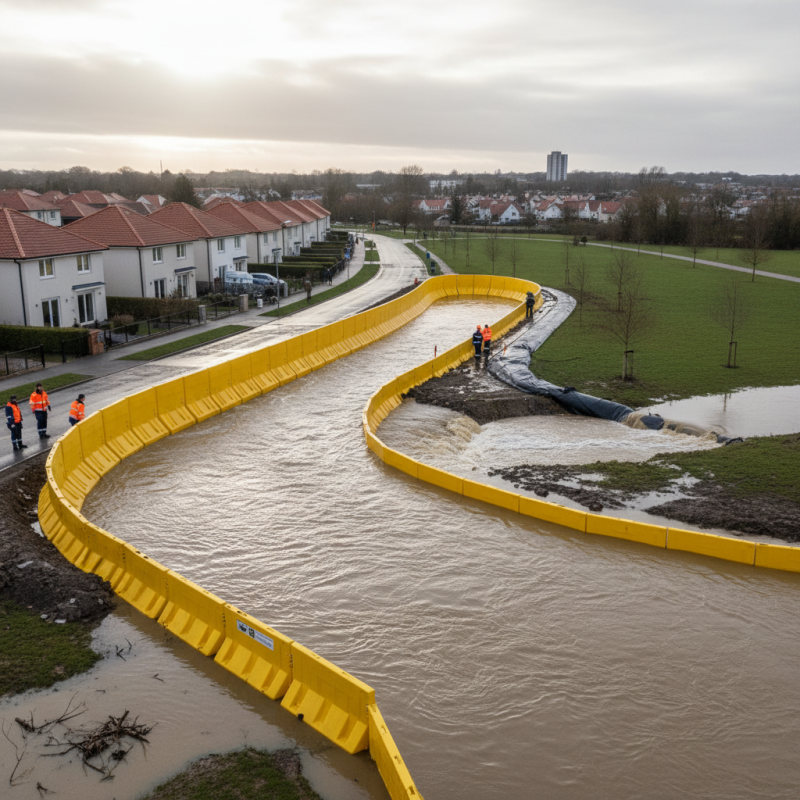
Types of Water Barriers Used in Flood Prevention
Water barriers are essential tools in flood prevention, designed to manage and redirect excess water during extreme weather events. These barriers come in various types, each engineered to address specific flooding scenarios and environmental conditions. Understanding these different barriers can inform effective flood management strategies.
One common type of water barrier is the earthen berm, which is an earth-filled embankment that can be constructed quickly in response to rising water levels. According to the American Society of Civil Engineers, properly designed earthen berms can handle large volumes of water and can be particularly effective in areas with soft soil, preventing inundation of nearby properties. Another effective approach is the use of inflatable barriers, which are lightweight and can be deployed rapidly in emergency situations. These barriers can expand to create a temporary dam, holding back water with impressive capacity—some models can withstand pressures exceeding 50 pounds per square foot.
Additionally, modular barrier systems are gaining traction in flood prevention techniques. These systems utilize interlocking panels that can be assembled to create a robust barrier tailored to specific flood risks. A study from the National Flood Insurance Program indicated that such modular systems could reduce flood damage expenses by up to 75% when compared to non-barrier areas. The choice of water barrier largely depends on the location, the potential flood levels, and the urgency of deployment, with each system offering unique benefits to safeguard communities against the threat of flooding.
Types of Water Barriers Used in Flood Prevention
How Water Barriers Function During Flood Events
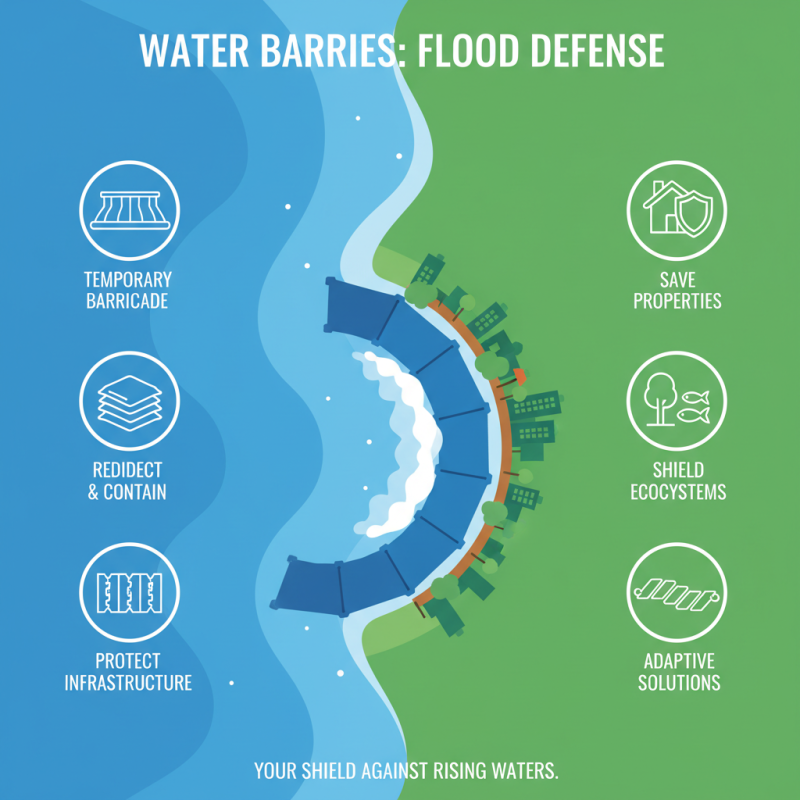
Water barriers are essential tools designed to mitigate the impact of flooding in vulnerable areas. Their primary function is to create a temporary, robust barricade against rising water levels. During flood events, these barriers are deployed to redirect, contain, or prevent water from inundating critical infrastructure, properties, and ecosystems. Typically made from materials such as inflatable structures, sandbags, or modular panels, they serve as a flexible and adaptive solution to combat varying flood scenarios.
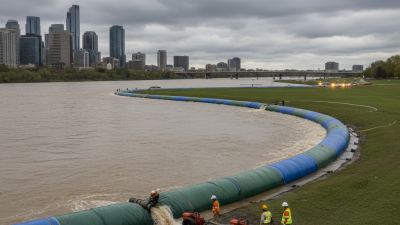
When flooding occurs, water barriers function by sealing off entry points and establishing a controlled zone. For instance, inflatable water barriers are rapidly deployed, filled with air and water, allowing them to expand and form a solid wall against incoming water. On the other hand, sandbag barriers are constructed manually, stacking bags to create a dam-like effect that can withstand substantial water pressure. Both types of barriers operate on the principle of redirecting water flow and providing a line of defense that gives communities critical time to execute evacuation plans, safeguard essential resources, and minimize damage to property and infrastructure.
Materials Commonly Used in Construction of Water Barriers
Water barriers for flooding play a crucial role in protecting communities from inundation by redirecting or blocking the flow of water. The construction of these barriers relies heavily on various materials, each with distinct properties and applications that enhance their effectiveness.
One of the most commonly used materials in the construction of water barriers is sandbags, which have been a traditional choice for temporary flood protection. According to the U.S. Army Corps of Engineers, a typical sandbag can effectively hold back water pressures of around 3 to 5 feet in height, making them suitable for emergency flood responses. Additionally, geotextiles, which are permeable fabrics, are increasingly used due to their durability and strength. These materials allow for sediment filtration while allowing water to flow through, thus preventing erosion and maintaining structural integrity.
In recent years, more advanced materials like inflatable barriers have gained popularity. These barriers, often made from high-strength synthetic fabrics, can be quickly deployed and inflated to form a barrier against rising water levels. Studies indicate that inflatable barriers can sustain water pressures exceeding 5 feet, providing a reliable option for both urban and rural settings. The ability to quickly set up and dismantle these barriers has proven invaluable in emergency management scenarios, highlighting the importance of innovation in flood control strategies.
Installation and Maintenance of Water Barriers
The installation of water barriers is crucial for effective flood prevention. Typically made from materials such as sandbags, inflatable dams, or modular panels, these barriers can be deployed in various environments. Before installation, it is important to assess the site, ensuring that the ground is stable and that any potential access points for water are identified. The location should be cleared of debris to allow for a proper seal, which enhances the barrier's effectiveness. Proper training of personnel involved in the installation process ensures that barriers are set up quickly and efficiently, particularly in emergency situations.
Maintenance of water barriers is equally essential for their long-term effectiveness. Regular inspections should be conducted to check for wear and damage, particularly after severe weather events. Barriers made of synthetic materials may require cleaning and occasional repairs to maintain their integrity. Additionally, personnel should be trained to recognize signs of deterioration, such as leaks or structural weakness, which can compromise the barrier’s performance. It is also advisable to have a maintenance schedule to ensure that all equipment is operational and that personnel are familiar with the installation and disassembly processes. Keeping barriers in optimal condition will play a significant role in mitigating flood risks and enhancing community resilience.
What Are Water Barriers for Flooding and How Do They Work?
| Type of Water Barrier |
Material |
Height (Feet) |
Installation Time (Hours) |
Maintenance Frequency (Years) |
| Inflatable Barriers |
PVC |
2 - 5 |
1 - 2 |
3 |
| Modular Barriers |
Aluminum |
3 - 6 |
3 - 5 |
5 |
| Sandbags |
Natural Fiber |
1 - 4 |
2 - 4 |
1 |
| Water-Gate Systems |
Steel |
5 - 10 |
4 - 6 |
10 |
| Permanent Earth Levees |
Soil |
3 - 12 |
5 - 10 |
15 |
Limitations and Challenges of Using Water Barriers for Flooding
While water barriers can be effective tools for flood management, they also come with significant limitations and challenges that must be considered. One of the primary challenges is their dependence on site-specific conditions. According to the National Flood Insurance Program, more than 90% of all natural disasters in the U.S. involve flooding, and the effectiveness of water barriers can vary based on geography, soil type, and existing flood history. In regions with particularly porous soil or uneven terrain, traditional water barriers may struggle to maintain their integrity, leading to potential breaches.
Additionally, while water barriers are designed for temporary use, their installation and removal can be resource-intensive. Reports from environmental agencies indicate that improperly installed barriers can exacerbate flooding in neighboring areas by redirecting water flow instead of containing it. The Army Corps of Engineers has documented instances where flooding has increased in adjacent regions due to misuse of barriers, highlighting the critical need for proper training and community planning when implementing these solutions. Moreover, maintenance of these barriers during extreme weather events can be challenging, as the rapid onset of floods can overwhelm even the best-prepared defenses.