
In chemistry, a base is a substance that can accept a proton, donate an electron pair, or produce hydroxide ions in water, depending on the definition used. These descriptions come from different scientific models, so the word does not have just one meaning. The Brønsted–Lowry model describes ammonia accepting a proton from water. The resulting mixture contains ammonium and hydroxide ions. Under the Arrhenius model, sodium hydroxide is a base because it increases hydroxide ions in aqueous solution. The Lewis model is broader still. That distinction matters.
Bases can be grouped in several useful ways. Strong and weak describe how extensively a base reacts or ionizes in water; they do not simply mean concentrated and dilute. Sodium hydroxide is a strong base, while ammonia is a weak one. Bases may also be classified by composition, such as inorganic metal hydroxides or organic compounds that accept protons. Another grouping counts how many protons a base can accept per formula unit. These categories help explain reactions, compare substances, and interpret laboratory results. Yet real examples do not always fit a tidy chart. Context matters: water, concentration, and the reacting partner can affect observed behavior. This guide introduces the main definitions and types of bases, with practical examples and careful distinctions. Even familiar labels deserve a second look. A clear understanding begins by asking which definition is being used.
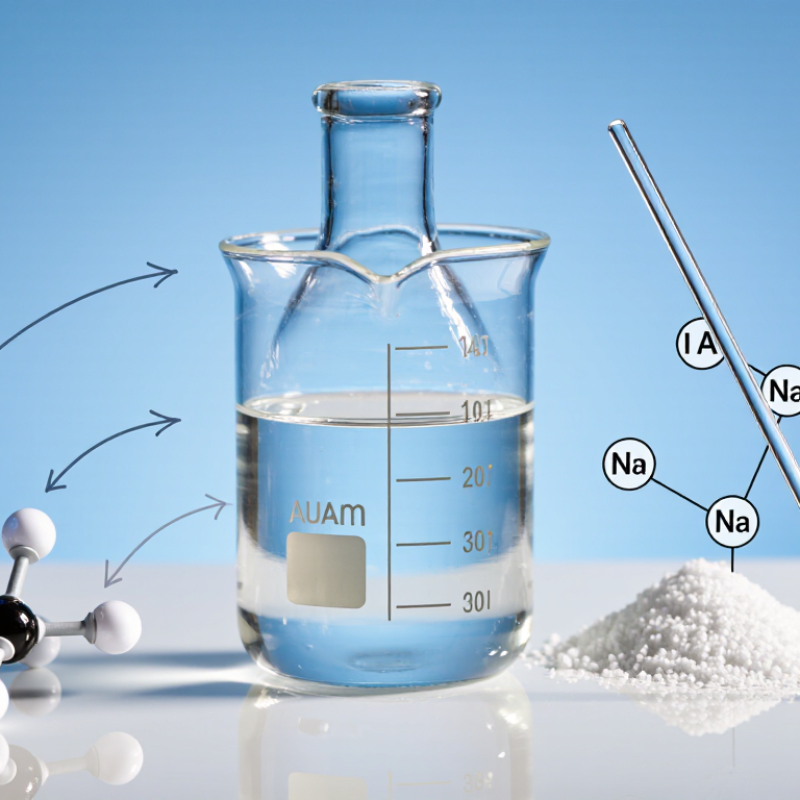
A base can be defined by how it behaves, not just by what it contains. In the Brønsted–Lowry model, a base accepts a proton, written as H⁺, from another substance. Ammonia, for example, accepts a proton from water and forms ammonium ions. Not every base contains hydroxide. In the Arrhenius model, however, a base increases the concentration of hydroxide ions, OH⁻, in water. Sodium hydroxide does this directly, while ammonia produces hydroxide through its reaction with water. These definitions describe related but different chemical behaviors. That distinction matters.
The pH scale helps show how acidic or basic an aqueous solution is. At about 25°C, a pH above 7 is generally basic, while a value below 7 is acidic. A neutral solution is near 7. Each whole-number step represents a tenfold change in hydrogen-ion activity, so pH 10 is not merely “a little” higher than pH 9. A damp test strip changing color can offer a quick estimate, but it cannot identify every substance in a sample. The classroom rule that bases feel slippery is also a poor test; touch is neither precise nor safe. pH can shift with temperature and concentration, so a number needs context. A base’s proton-accepting ability, hydroxide ions, and measured pH are connected, but they are not interchangeable descriptions.
What Is a Base and What Are Its Types?
How Arrhenius, Brønsted–Lowry, and Lewis Models Define Bases
A base has different meanings depending on the chemical model being used. Under Arrhenius theory, a base increases hydroxide ions in water; sodium hydroxide is a familiar example. The Brønsted–Lowry model is broader: a base accepts a proton. Ammonia does this when it takes a proton from water, forming ammonium ions. The Lewis model focuses on electrons instead. A Lewis base donates an electron pair to form a bond, as ammonia does when it binds to boron trifluoride. One molecule, three useful lenses.
These models are not competing labels so much as tools for different settings. Arrhenius is practical for aqueous solutions, while Brønsted–Lowry describes proton transfers beyond water. Lewis theory also covers reactions without proton transfer. IUPAC’s Gold Book uses proton acceptance and electron-pair donation to define the latter models. A physical reference point helps: the IAPWS formulation for water gives a pKw near 14.00 at 25 °C, corresponding to roughly 1.0 × 10⁻⁷ mol/L each of hydronium and hydroxide in pure water. That equilibrium is easy to overlook. In real solutions, concentration, temperature, and solvent can shift measured behavior, so calling a substance “strong” without context can mislead.
Approximate pH of 0.1 M base solutions at 25°C
How the models define bases: Arrhenius bases increase hydroxide-ion concentration in water; Brønsted–Lowry bases accept protons; Lewis bases donate an electron pair. Sodium hydroxide is a typical Arrhenius base, while ammonia acts as a Brønsted–Lowry and Lewis base. Acetate ions in sodium acetate accept protons from water. pH values are approximate.
Bases can be grouped by strength, solubility, and chemical composition. These categories describe different properties, so a strong base is not automatically a highly soluble one. Strength refers to how fully a base reacts with water or accepts protons. Sodium hydroxide is a strong base that separates almost completely into ions in water. Ammonia is weak; only some molecules react with water to form ammonium and hydroxide ions. The difference shows up in a pH test, though concentration also affects the reading.
Solubility describes how much base dissolves in water. Sodium hydroxide dissolves readily, while magnesium hydroxide dissolves only slightly. A cloudy suspension can still be basic. Don’t confuse low solubility with weak behavior: the small amount of dissolved magnesium hydroxide separates into ions extensively. That distinction matters.
Composition offers another useful classification. Metal hydroxides, such as sodium hydroxide, contain a metal joined to hydroxide ions. Metal oxides, such as calcium oxide, can form basic hydroxides when they react with water. Ammonia and many amines contain nitrogen and act as proton acceptors. Their behavior depends on structure and conditions, so a neat category can sometimes feel incomplete. A damp test strip helps reveal what a dry formula alone cannot.
| Base or Example | Formula | Strength in Water | Water Solubility | Chemical Composition / Type | Key Behavior |
|---|---|---|---|---|---|
| Sodium hydroxide | NaOH | Strong | Highly soluble | Metal hydroxide; alkali-metal base | Dissociates almost completely in water, producing sodium and hydroxide ions. |
| Potassium hydroxide | KOH | Strong | Highly soluble | Metal hydroxide; alkali-metal base | Dissociates almost completely in water to produce hydroxide ions. |
| Barium hydroxide | Ba(OH)2 | Strong | Soluble | Metal hydroxide; alkaline-earth base | The dissolved compound dissociates extensively and releases hydroxide ions. |
| Calcium hydroxide | Ca(OH)2 | Strong in the dissolved portion | Slightly soluble | Metal hydroxide; alkaline-earth base | Its limited solubility restricts how much dissolves; the portion that dissolves dissociates extensively. |
| Ammonia | NH3 | Weak | Highly soluble | Molecular base; nitrogen-containing base | Reacts reversibly with water to form ammonium and hydroxide ions; only a fraction reacts. |
| Methylamine | CH3NH2 | Weak | Highly soluble | Amine; molecular base | Accepts a proton from water in a reversible reaction, forming methylammonium and hydroxide ions. |
| Pyridine | C5H5N | Weak | Miscible with water | Nitrogen-containing heterocyclic base | The nitrogen atom can accept a proton; its reaction with water is incomplete. |
| Magnesium hydroxide | Mg(OH)2 | Strong in the dissolved portion | Sparingly soluble | Metal hydroxide; alkaline-earth base | Its low solubility limits the hydroxide-ion concentration in water; low solubility does not by itself mean weak base strength. |
| Copper(II) hydroxide | Cu(OH)2 | Not usefully classified by aqueous strength alone | Practically insoluble | Transition-metal hydroxide | Can react with acids, but its very low solubility limits its basic effect in water. |
| Zinc oxide | ZnO | Not classified as a strong or weak aqueous base by simple ionization | Insoluble in water | Metal oxide; amphoteric oxide | Reacts with acids and also with strong bases, so it is amphoteric rather than solely basic. |
| Calcium oxide | CaO | Forms a strong base when it reacts with water | Reacts with water rather than simply dissolving | Basic metal oxide | Reacts with water to form calcium hydroxide; the resulting hydroxide is only slightly soluble. |
Notes: A Brønsted–Lowry base accepts a proton. In water, strength describes how extensively a base reacts or ionizes, while solubility describes how much dissolves; these are different properties. Solubility can vary with temperature.
A base can be described as a substance that accepts protons or produces hydroxide ions in water. Common examples include dissolved ammonia and sodium hydroxide. The pH scale helps describe how acidic or basic an aqueous solution is. At 25°C, pH 7 is neutral; values above 7 are basic. Values below 7 are acidic. Small changes can matter: pH 10 is not simply “twice as basic” as pH 5.
That scale has practical limits. It works best for dilute water-based solutions, and pH depends on hydrogen-ion activity, not just concentration. Temperature also matters: the neutral point shifts as water warms or cools. In concentrated solutions, unusual mixtures, or poorly calibrated measurements, a displayed number may suggest more certainty than the sample deserves. A decimal place can look reassuring. It may not be.
Tips: Calibrate a pH meter with fresh buffer solutions, rinse its probe between samples, and record the temperature. For a quick check, strips can help, but their color readings are less precise. Note the sample and method, too; I might overlook that detail on a rushed day.
A base accepts protons or produces hydroxide ions in water, depending on the definition used. Industrial alkalis include sodium hydroxide, a strong base supplied in several concentrations.
At 50% by weight, every 100 kilograms of solution contains 50 kilograms of sodium hydroxide and 50 kilograms of water. This is a mass ratio, not a volume measurement. That distinction matters when operators calculate feed rates or compare deliveries. Small details matter.
A 50% solution is used in industrial processes such as soap production, pulp and paper processing, and chemical manufacturing. Its high concentration can reduce the volume needed for dosing, but it also demands careful storage and transfer.
Sodium hydroxide is corrosive, and dilution releases heat. Trained staff use suitable protective equipment and follow the current safety data sheet. Storage vessels, pumps, and lines must be compatible with the solution and the operating temperature.
Cold conditions can also affect handling, so temperature guidance should be confirmed for the specific product. A concentration label can look simple; it does not answer every question about purity or process needs. That deserves a second look.
Please enter the details to download, thank you
Get in Touch With Us
Please enter the details to download, thank you