Why Are Threaded Inserts Used in Manufacturing?
Threaded joints are common in manufacturing, but threads cut directly into soft or thin materials can wear, strip, or fail after repeated assembly. Inserts Threaded products address this weakness by adding durable internal threads to plastics, wood, aluminum, and other materials. A small metal coil or bushing can make a noticeable difference. The screw engages a stronger, more reliable thread.
The choice depends on the application. Engineers consider the base material, load, temperature, vibration, installation method, and expected service life. A press-in insert may suit a molded plastic housing. A wire-thread insert can repair or reinforce a tapped metal hole. The wrong type, size, or installation depth can still cause trouble. It happens.
Fastening specialist John H. Bickford is widely known for his work on bolted joints, but I cannot verify a verbatim statement from him specifically about threaded inserts. Rather than invent a quotation, this introduction reflects a practical engineering principle: thread strength depends on both the fastener and the material holding it. That distinction matters on the factory floor, where a loose screw can halt an assembly line, damage a part, or complicate maintenance. Understanding why inserts are used—and where their limits lie—helps manufacturers choose connections that remain serviceable, repeatable, and suited to real operating conditions.
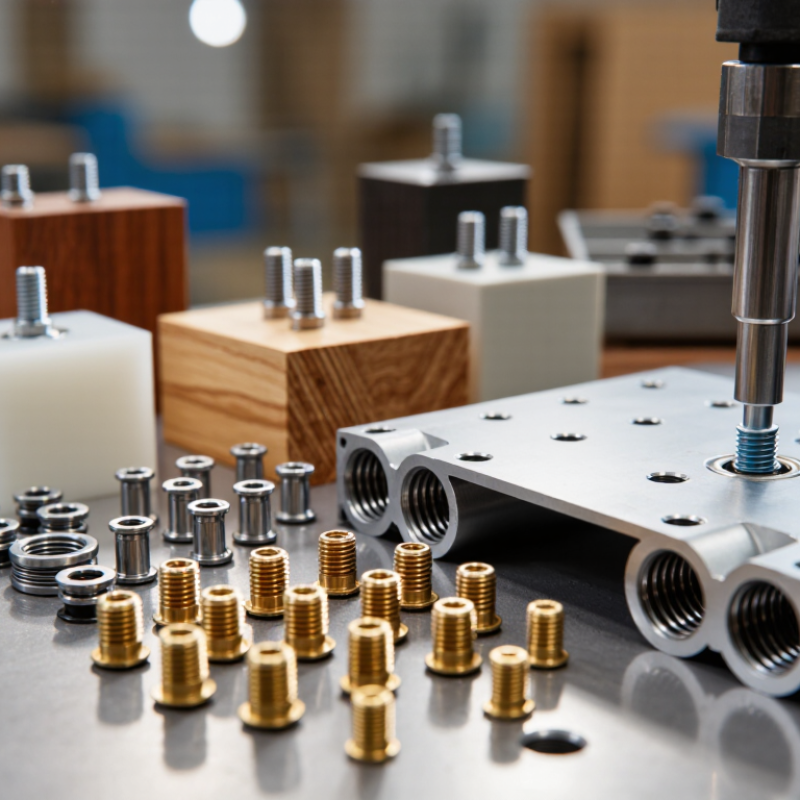
What Threaded Inserts Are and How They Work
A threaded insert is a separate, internally threaded component installed in a prepared hole. It gives a screw or bolt a durable thread where the surrounding material may be too soft, thin, or easily damaged. Common designs include wire coils and solid sleeves. Depending on the design, the insert is retained by friction, formed features, or an external thread engaging the base material.
Installation is precise work. A technician drills or forms the specified hole, taps it when required, then seats the insert at the correct depth. The fastener engages the insert’s internal threads, while the insert transfers load into the surrounding part. NASA’s Fastener Design Manual, NASA RP-1228, reports that torque-based tightening can produce preload uncertainty of about ±25%. That variation makes correct insert sizing and installation important; an insert cannot compensate for a poorly controlled joint. Small details matter.
For example, an insert set too high may interfere with a mating surface, while one installed too deep can limit screw engagement. Material, wall thickness, hole condition, and expected removal cycles all affect selection. I would not assume one insert type suits every assembly. Check the manufacturer-neutral engineering specification for installation dimensions and load limits, then validate it in the actual material. Real parts can behave less neatly than drawings.
Common Types and Materials of Threaded Inserts
Threaded inserts restore strong, reusable threads in plastic, wood, and soft metals. Their design depends on the host material and expected load. Helical wire inserts suit stripped or newly tapped metal holes, while solid press-fit inserts add durable threads to softer parts. For plastics, molded-in inserts sit in the part during molding; heat-set versions are installed afterward, leaving knurled sides embedded in the material. Self-tapping styles cut or form their own path in prepared holes. Not interchangeable.
Material choice matters. Brass inserts resist corrosion and machine easily, making them common in wood and plastic assemblies. Stainless steel is useful in damp or corrosive settings, while carbon steel often suits high-load applications where corrosion protection is manageable. Aluminum inserts can reduce weight, but the softer material needs careful load assessment. A small insert can still fail if the surrounding plastic creeps under heat.
ASTM A240/A240M specifies a 515 MPa minimum tensile strength for Type 304 stainless sheet and strip. That figure describes stock, not a finished insert. Finished strength also depends on geometry, installation, and the receiving material. A practical selection starts with hole dimensions, installation access, service temperature, and repeated assembly needs. One detail is easy to miss: a stronger insert does not automatically make a weak plastic boss stronger. The surrounding wall may split first.
How Inserts Strengthen and Protect Threaded Connections
Threaded inserts create a durable metal thread inside softer or repeatedly serviced materials. In aluminum housings, plastic panels, and thin sheet, they spread loads across a larger area than a directly tapped thread. A wire insert’s spring-like coils grip the screw along the thread flanks. A solid insert provides a tougher sleeve where repeated assembly could wear the parent material. The fit must be right. Incorrect hole size or installation depth can weaken the connection rather than improve it.
Insert choice also affects joint reliability. NASA’s Fastener Design Manual, RP-1228, reports that torque-based tightening can produce preload variation of roughly ±25%, largely because friction changes. An insert cannot remove that uncertainty, but a stable thread helps keep the mating surfaces engaged without stripping the base material. For critical assemblies, engineers should check pull-out strength, installation torque, material temperature limits, and service cycles. Test the actual material stack, too. A neat-looking insert is not proof of a strong joint. One practical detail is often missed: repeated servicing may damage the surrounding material before the insert itself fails.
Key Factors for Selecting Inserts in Manufacturing
Why Are Threaded Inserts Used in Manufacturing?
Key Factors for Selecting Inserts in Manufacturing
Choosing a threaded insert starts with the materials being joined. A soft aluminum housing may need a different insert than a steel plate or molded plastic panel. Check the parent material’s thickness, strength, and resistance to cracking. Fit matters. An insert that is too long can interfere with nearby parts, while one that is too short may provide inadequate thread engagement.
Consider the load and operating conditions. Repeated assembly, vibration, heat, moisture, and chemical exposure can all affect performance. For example, a service panel opened often may need stronger resistance to wear than a cover fitted once and left untouched. Review the expected pull-out and torque loads, but don’t rely on a catalog figure alone. The finished assembly can behave differently.
Installation method matters just as much as insert material. Press-fit, heat-set, and mechanically installed designs require different tools and preparation. Check whether workers can position each insert consistently, especially in a high-volume process. Test a sample. A small trial can reveal spinning, cracking, or poor alignment before production begins. It may feel slower to test, but replacing a failed insert later is usually more disruptive.
Why Use Threaded Inserts? Material Selection Matters
Threaded inserts provide durable, reusable metal threads in softer materials. Matching insert and workpiece materials can help manage dimensional changes as temperature varies.
Typical linear thermal expansion coefficients near room temperature. Values are approximate and vary by alloy and temperature. Consider thread size, base-material strength, service temperature, corrosion exposure, and installation method when selecting an insert.
Typical Installation Methods and Industrial Applications
Threaded inserts provide durable internal threads where direct tapping may fail, especially in aluminum castings, thin sheet, and molded plastics. Common methods include pressing knurled inserts into prepared holes, heat-staking inserts into thermoplastic parts, and installing helical wire inserts into tapped holes. Each method needs a different hole size and installation tool. A visible tilt or proud insert can prevent a fastener from seating flat.
NASA’s Fastener Design Manual, RP-1228, discusses engagement length, material strength, and preload as connected design factors. For aluminum, designers often begin by checking engagement near 1.5 times the screw diameter, then verify the joint for its actual load and material. This is a starting point, not a guarantee. Inserts are used in automotive housings, aircraft panels, electrical enclosures, and industrial equipment that may need repeated servicing. ISO 16047 provides a test method for measuring fastener torque and clamp force, useful when validating a joint rather than relying on feel alone.
Tips: Keep the hole clean, align the insert squarely, and follow the insert supplier’s specified installation depth. Check a sample joint with a torque tool. It may seem fussy, but small alignment errors can cause uneven seating and weakened threads.
