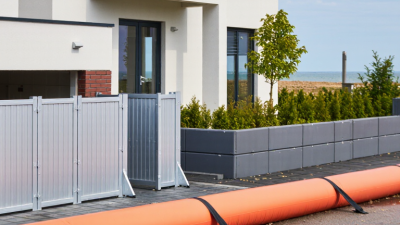
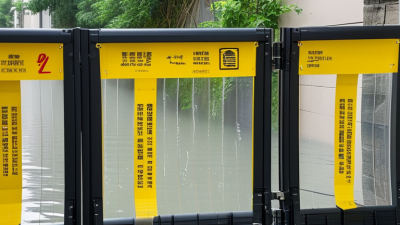
For global buyers, choosing the best domestic flood barriers in 2026 requires more than comparing prices and photographs. A barrier must match the property, flood depth, installation surface, and expected warning time. A garage entrance needs a different solution from a basement door or patio opening. Water pressure can expose weak seals within minutes.
Dr. Robert Muir-Wood, a leading catastrophe-risk specialist, offers a useful reminder: “Flood risk is not the same as flood hazard.” That distinction matters. A severe flood may be unlikely, yet one unprotected doorway can still produce expensive damage. Buyers should examine barrier height, tested resistance, anchoring methods, storage needs, and replacement parts. Independent test reports are more valuable than impressive marketing language.
This guide compares domestic flood barriers for homes, rental properties, and small commercial buildings. It considers reusable panels, automatic systems, temporary water-filled designs, and doorway shields. It also looks at shipping practicality, installation training, warranty support, and regional compliance expectations. Products should never be judged by height alone.
No barrier is perfect.
A system can fail through poor fitting, neglected seals, or late deployment. That is an uncomfortable point, but it deserves attention. Some manufacturers provide excellent laboratory results while showing little evidence from real homes. Global buyers should ask for clear test conditions, maintenance instructions, and documented performance limits. The strongest choice is not always the most expensive one. It is the system that householders can install correctly, inspect regularly, and trust under pressure.
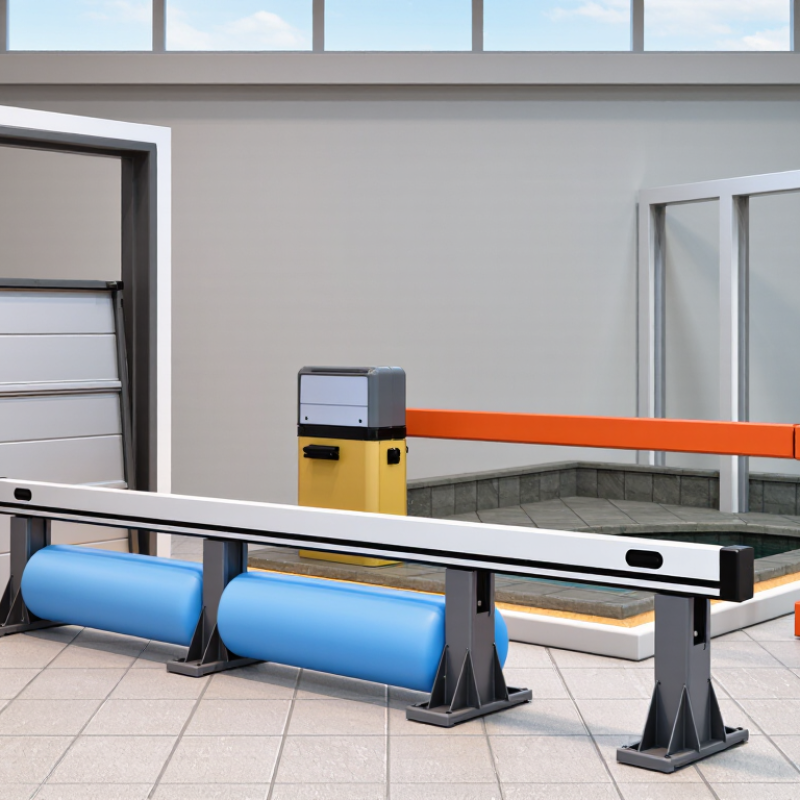
For global buyers, the “1-in-100-year flood” phrase needs careful handling. FEMA defines it as a 1% annual chance of flooding, not a flood occurring once every century. Two such floods can happen within a few years. FEMA flood maps, elevation certificates, and local flood studies should guide barrier height and placement.
Flood barriers usually fall into three groups. Dry-floodproofing systems block water at doors, garage openings, vents, and loading areas. Demountable panels offer flexibility, but they require trained installation and secure storage. Permanent walls and raised thresholds provide stronger protection, yet they may restrict access. Wet-floodproofing accepts controlled water entry and reduces structural pressure. It is unsuitable for every building. NOAA’s 2022 Sea Level Rise Technical Report projects about 10–12 inches of additional U.S. coastal rise by 2050. That projection can make today’s barrier height inadequate later. A barrier is not magic. Poor drainage can still push water through joints.
Tips: Check the local design flood elevation, expected flow speed, warning time, and foundation condition. Ask for tested leakage rates, installation tolerances, maintenance records, and repair procedures. FEMA guidance emphasizes considering flood depth, hydrostatic pressure, and debris impact. One overlooked detail is the doorway seal. It often fails before the panel does. Buyers should also compare whole-life costs, not only purchase prices. Specifications can look impressive, but field performance may differ. That deserves honest review.
Comparative guide to commonly used flood-protection systems for homes, commercial properties, utilities, and temporary emergency response.
| System Type | Typical Application | Deployment / Installation | Typical Barrier Height or Protection Range | Main Advantages | Important Limitations | Global-Buyer Evaluation Criteria |
|---|---|---|---|---|---|---|
| Sandbag Barriers | Doorways, small openings, short emergency lines, and rapidly changing local flood conditions. | Manual and labor-intensive Requires filling, placement, and later disposal or storage. |
Usually built in low courses; practical height depends on bag arrangement, foundation, seepage control, and available labor. | Low initial cost; widely available; adaptable to irregular ground and small openings. | Heavy when wet; vulnerable to seepage, erosion, poor placement, and prolonged exposure; not a uniform engineered wall. | Bag material, filling method, local labor availability, disposal requirements, and storage conditions. |
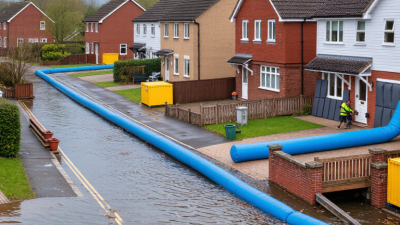
| Water-Filled Tube or Pillow Barriers | Temporary perimeter protection for yards, roads, warehouse approaches, and construction sites. | Rapid mechanical or hose filling Needs a reasonably continuous ground surface and access to water. |
Common commercial designs are generally low-profile systems; actual height and length depend on the model and manufacturer’s tested configuration. | Reusable; compact when empty; faster to deploy than manually filled sandbags in many situations. | Can be damaged by puncture, debris, sharp surfaces, or fast-moving water; stability decreases on steep or uneven terrain. | Material puncture resistance, anchoring, repairability, UV resistance, hose connections, empty storage volume, and tested hydraulic conditions. |
| Modular Flood Panels | Building entrances, loading bays, garage openings, pedestrian access points, and short flood lines. | Temporary or semi-permanent Panels are assembled between posts, frames, or side guides. |
Height is project-specific and controlled by panel design, post spacing, foundation, and hydrostatic loading calculations. | Reusable; relatively clean deployment; suitable for repeated protection of the same opening or site boundary. | Requires accurate dimensions and a suitable bearing surface; gaps, weak joints, or inadequate foundations can cause failure. | Water-tightness testing, structural calculations, post spacing, foundation anchorage, seals, corrosion protection, and replacement-part availability. |
| Demountable Flood Walls | Longer perimeter lines around buildings, transport facilities, critical infrastructure, and public spaces. | Pre-engineered installation Typically uses permanent ground sockets, posts, panels, or connection points. |
Designed to a project-specific flood level, including expected water depth, wave action, debris impact, and required freeboard. | Can protect large perimeters while keeping the site open during normal conditions; components may be stored between events. | Higher capital cost; requires engineering, trained crews, logistics, and a suitable foundation or anchorage system. | Design flood elevation, freeboard, hydrostatic and hydrodynamic loads, foundation capacity, installation time, storage, and inspection procedures. |
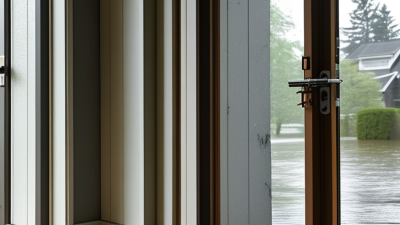
| Permanent Flood Doors and Gates | Doorways, vehicle entrances, basement access, service corridors, and other permanent openings. | Permanent installation Manual, semi-automatic, or automatic operation may be available depending on the design. |
Must be selected for the site’s design flood elevation and opening geometry; the frame, threshold, wall, and anchorage are part of the protection system. | Fast operation after installation; suitable for frequently used openings; can provide a durable long-term solution. | Higher installation cost; requires maintenance, correct closure, compatible surrounding construction, and protection of mechanical components. | Rated water depth, leakage criteria, cycle testing, emergency operation, power-failure provisions, corrosion resistance, seals, and maintenance access. |
| Dry Floodproofing Measures | Non-residential buildings where walls, openings, utilities, and structural components can resist flood loads and limit water entry. | Professional design required May include wall treatment, flood shields, backflow prevention, utility protection, and sealed openings. |
Protection level is governed by the approved design flood elevation and the capacity of the building envelope and structure. | Maintains building use and interior space when properly designed; can be integrated into a permanent building upgrade. | Not appropriate for every building; hydrostatic pressure, buoyancy, seepage, and structural damage can occur if the design is inadequate. | Structural assessment, local code compliance, floodproofing certification where required, utility protection, drainage, maintenance, and emergency procedures. |
| Wet Floodproofing Measures | Selected non-residential spaces, enclosures, parking areas, agricultural structures, and buildings where controlled water entry is acceptable. | Permanent adaptation Uses flood-resistant materials, openings, drainage paths, and protected utilities. |
Designed around the site’s expected flood elevation and flow conditions rather than relying solely on a water-tight enclosure. | Reduces differential pressure on walls; may be more practical than complete water exclusion in some flood-prone structures. | Does not keep the interior dry; contents and finishes may still be damaged; suitability depends on building use and local regulations. | Flood-resistant materials, automatic flood openings, utility elevation, clean-up requirements, contamination risk, and permitted occupancy. |