How to Choose the Best Flood Control Barrier?

Choosing the best flood control barrier starts with understanding the threat, not comparing product photos. Floodwater can enter through doorways, garage ramps, drains, and weak boundary walls. A barrier that works beside a river may fail against fast-moving coastal water. The right choice depends on flood depth, flow velocity, warning time, ground conditions, and the building’s access points.

Coastal geologist Dr. Robert S. Young has warned, “There is no such thing as a 100-year flood.” This reminder matters when buyers rely too heavily on historical averages. Climate patterns, drainage changes, and urban development can alter local risk. A dependable flood control barrier should have documented test results, clear installation limits, and materials suited to repeated exposure. Aluminum panels, reinforced seals, and anchored systems may perform differently on concrete, asphalt, or uneven ground.

Look closely at the details. Can one person deploy it during heavy rain? Does it need electricity? Will leaves block the drainage channel? What happens if the barrier remains installed for several days? These practical questions often matter more than a low purchase price. Maintenance records, staff training, inspection schedules, and professional site assessments also support safer decisions. No system is perfect. That is the uncomfortable truth. Even a well-designed barrier can be bypassed by water entering through an overlooked opening. This guide examines performance, usability, durability, certification, and total ownership cost, helping property owners choose protection based on evidence rather than confident marketing.
How to Choose the Best Flood Control Barrier?

Flood Control Barrier Types and Their Core Functions

How to Choose the Best Flood Control Barrier?

Flood Control Barrier Types and Their Core Functions

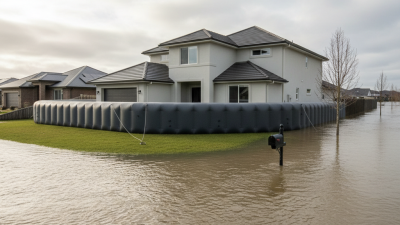
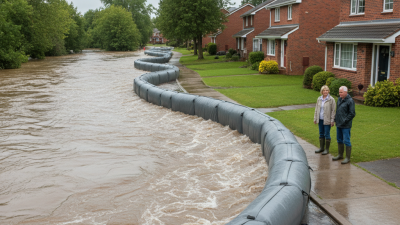
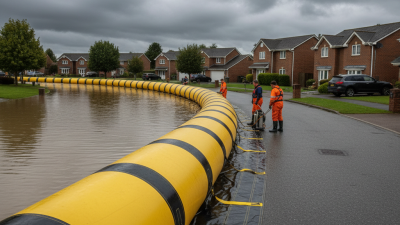
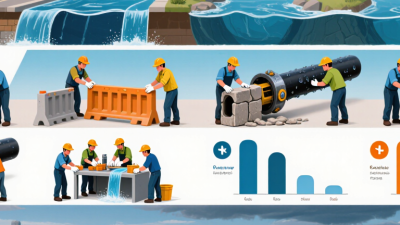
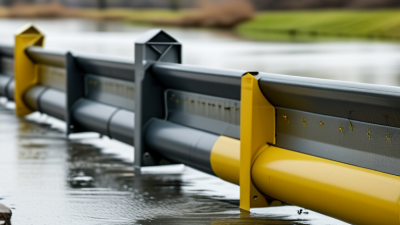
Flood barriers do not perform the same job. Sandbags provide low-cost diversion for shallow, slow-moving water, but they require many workers and careful placement. Water-filled tubes deploy faster on flat ground, yet punctures and uneven surfaces can reduce protection. Demountable panel systems suit doorways, roads, and commercial entrances. They depend on strong anchors and accurate installation. Permanent flood walls offer reliable separation, but they require higher construction costs and drainage planning.

The correct choice begins with flood behavior. Check expected water depth, flow velocity, debris, warning time, and flood duration. FEMA guidance emphasizes site-specific flood loads and secure connections. A barrier that works beside a warehouse may fail beside a fast-flowing channel. Field experience also shows a common weakness: teams often measure barrier height but ignore water pressure beneath doors and around foundations. That mistake is expensive.

The UNDRR Human Cost of Disasters report recorded 7,348 disaster events from 2000 to 2019, affecting 4.2 billion people. NOAA reported 27 weather and climate disasters costing at least one billion dollars in the United States during 2024. These figures support investment in layered protection. Combine barriers with backflow valves, pumps, drainage routes, alarms, and trained staff. Test deployment before flood season. Not every plan survives real water. Recheck it after every event.
How to Choose the Best Flood Control Barrier? - Flood Control Barrier Types and Their Core Functions
Flood Control Barrier Type Core Function Typical Deployment Speed Typical Protection Height Reusability Best Use Case Main Advantages Key Limitations Overall Suitability
Sandbags Create a flexible, manually built embankment that redirects or slows floodwater. Slow; requires filling, carrying, stacking, and sealing. Usually below 1 metre when used as a temporary wall; greater heights require careful engineering and a wider base. Low. Bags may be damaged or contaminated after use. Short-duration emergencies, doorways, drains, small gaps, and irregular ground. Low initial cost, widely available, adaptable to uneven surfaces, and easy to place around obstacles. Labour-intensive, heavy when wet, prone to leakage between bags, and difficult to remove after flooding. Good for localized emergency protection
Water-Filled Tubes Use the weight of available water to form a continuous temporary barrier against shallow to moderate flooding. Moderate; filling requires pumps, hoses, and a suitable water source. Common commercial systems are generally designed for low to moderate flood depths; the exact height depends on the system design. High when drained, cleaned, dried, and stored correctly. Long property edges, roads, entrances, and locations requiring a continuous barrier. Faster to install than sandbags, reusable, relatively compact in storage, and suitable for long runs. Requires a pump and water supply; punctures, sharp surfaces, poor anchoring, and fast-moving water can reduce performance. Good for planned temporary protection
Self-Inflating Flood Tubes Expand through contact with water and form a lightweight barrier intended to slow or divert shallow floodwater. Fast after activation, but the barrier may require time to fully expand. Generally suitable for shallow water and localized seepage control; height varies by product design. Limited to moderate, depending on material condition and drying procedures. Residential entrances, garages, small thresholds, and quick-response situations. Lightweight before use, easy to transport, and requires less manual filling than sandbags. Not normally intended for deep, high-velocity, wave-driven, or long-duration flooding; must be positioned correctly. Good for shallow, low-energy flooding
Modular Flood Panels Connect interlocking panels to create a removable wall across doorways, driveways, roads, or property boundaries. Fast to moderate; installation depends on panel length, connections, and anchoring requirements. Varies widely by engineered system; higher walls require stronger foundations and structural verification. High when inspected and stored properly. Commercial entrances, building perimeters, access roads, and repeat flood-risk locations. Reusable, clean-looking, scalable, and capable of forming relatively straight or configured barriers. Needs a stable base and reliable end seals; uneven ground, debris, and poor connections can cause leakage or instability. Very good for repeat deployments
Demountable Flood Defence System Uses permanent ground sockets, posts, beams, or rails with removable flood boards to provide engineered temporary protection. Moderate; faster after the permanent foundation and fittings are installed. Can be engineered for substantial depths, subject to site-specific structural design and certification. High for removable components; permanent fittings remain in place. Town centres, critical infrastructure, commercial sites, and areas with recurring flood exposure. High capacity, repeatable installation, limited visual impact when stored, and suitable for large openings. Higher capital cost, requires design and anchoring works, and needs trained personnel for deployment and inspection. Excellent for planned, recurring flood risk
Permanent Flood Wall or Levee Provide continuous, fixed protection by retaining or redirecting floodwater away from buildings and infrastructure. Always in place; construction is lengthy and requires planning. Project-specific and determined by flood modelling, freeboard, stability, seepage, and foundation conditions. Permanent, with scheduled inspection and maintenance. Settlements, infrastructure corridors, industrial sites, and areas with persistent flood exposure. High reliability when properly designed, no emergency assembly required, and suitable for long-term risk reduction. High construction cost, land requirements, drainage implications, environmental approvals, and limited flexibility after installation. Excellent for permanent protection
Flood Door or Doorway Barrier Seal building openings that would otherwise allow floodwater to enter through doors, thresholds, or access points. Fast after preparation; removable types can be installed when warnings are issued. Usually designed for the opening height and the rated flood depth of the specific system. High for removable and demountable designs when seals are maintained. Homes, shops, basements, garages, utility rooms, and other vulnerable openings. Targets the main entry point, requires limited storage space, and can be integrated with property-level flood protection. Protects only the opening; walls, drains, vents, and adjacent structures may still require separate measures. Excellent for property-level protection
Inflatable Flood Barrier Uses air-filled chambers or inflatable structures to form a lightweight temporary wall. Fast to moderate; depends on pumps, inflation time, and anchoring. Varies by design and pressure rating; generally selected for defined temporary protection levels. Moderate to high with careful inspection, drying, and puncture repair. Events, temporary worksites, entrances, and locations where low transport weight is important. Lightweight during transport, quick to deploy, and suitable for applications where water-filled systems are impractical. Vulnerable to punctures, wind, debris, and pressure loss; continuous monitoring may be necessary. Good for controlled temporary applications
Selection note: The most suitable barrier depends on predicted flood depth, flow velocity, warning time, ground conditions, barrier length, frequency of flooding, available labour, storage space, and the consequences of failure. Product-specific testing, installation instructions, anchoring requirements, and local flood-risk guidance should always be reviewed before deployment.

Assessing Flood Risks and Site-Specific Protection Needs

How to Choose the Best Flood Control Barrier?

Assessing Flood Risks and Site-Specific Protection Needs

Flood protection should begin with the site, not the barrier. Map nearby rivers, drainage channels, tidal zones, ground levels, and building entrances. The World Meteorological Organization reported that global sea-level rise reached a record high in 2023. Its 2014–2023 rate was more than twice the 1993–2002 rate. This makes historic flood marks useful, but incomplete.

Review flood depth, flow speed, warning time, and likely debris. Check whether water may enter through doors, vents, drains, or underground services. The IPCC states that extreme sea-level events are expected to become much more frequent this century. Local rainfall can also overwhelm drainage within minutes. A barrier that handles shallow standing water may fail against fast-moving flow. That distinction matters.

Tips: Ask for site-specific hydraulic calculations before choosing equipment. Measure every opening, including uneven thresholds and sloped driveways. Check storage space, installation time, maintenance duties, and emergency access. NOAA recorded 27 billion-dollar weather and climate disasters in the United States during 2024, showing how costly repeated events can become. Still, reports cannot predict every property’s exposure. A modest site survey may reveal overlooked risks, while an expensive system may protect the wrong boundary. Reassess after construction, drainage changes, or new climate data. Perfect certainty is unrealistic. Careful evidence is achievable.

How to Choose the Best Flood Control Barrier?

Assessing Flood Risks and Site-Specific Protection Needs

How to read the chart: The required barrier height increases with the design flood depth. The illustrated recommendation adds a 0.3 m freeboard allowance above the expected water level to help account for waves, surface variation and uncertainty.

Before selecting a barrier, confirm the site’s flood source, expected depth, flow velocity, warning time, ground conditions, access points and local design standards. A hydraulic assessment should be used for final sizing and installation decisions.

Comparing Barrier Materials, Designs, and Installation Methods

Choosing a flood barrier starts with the material, not the advertising claim.

Aluminum panels resist corrosion and remain light enough for two trained workers to carry. Steel offers greater impact strength, but it needs protective coatings and regular rust inspections. PVC and composite boards can suit temporary protection around doorways and garages. I have found that lighter systems install faster, yet they may need stronger anchoring during rapid water flow. That trade-off matters.

Design determines how water pressure travels through the barrier and into the building.

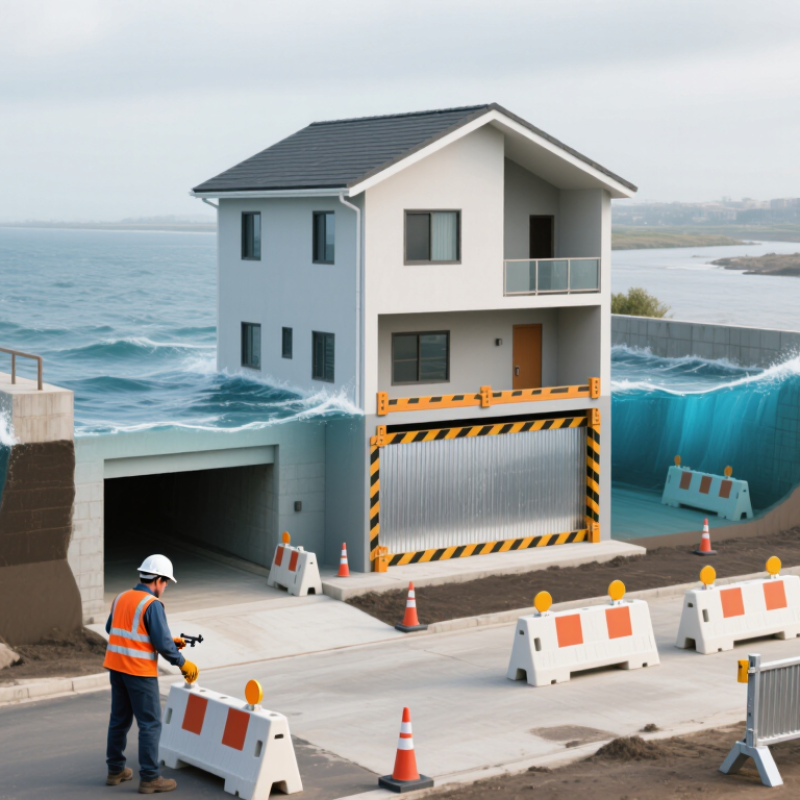
Freestanding barriers suit open driveways, while door-mounted systems need accurate measurements and sound thresholds. Modular designs allow damaged sections to be replaced without removing the entire line. Look for sealed joints, visible locking points, and a base that sits evenly on the ground. A barrier that looks secure can still leak through one small gap. Do not overlook drainage.

Installation quality often decides performance more than material selection.

Before fitting anything, measure width, slope, surface cracks, and nearby drains. Concrete and asphalt usually provide firmer support than loose paving or compacted soil. Follow the supplied instructions for torque, spacing, storage, and inspection intervals. A trial installation can reveal awkward lifting points or missing tools before storm conditions arrive. My own preference changed after seeing rushed setups fail at corner joints. The first setup may not be perfect.

Evaluating Performance, Maintenance, Cost, and Reusability

How to Choose the Best Flood Control Barrier?

Evaluating Performance, Maintenance, Cost, and Reusability

Choosing a flood control barrier starts with the water you expect, not the product photograph. During site assessments, measure doorway width, ground slope, drainage paths, and likely water depth. A barrier that performs well on level concrete may fail beside gravel or a sloping garage entrance.

Check independent test data for leakage, load resistance, setup time, and anchoring requirements. Ask whether results reflect flowing water, debris, and repeated installation. Real streets are messier than test bays.

Maintenance affects performance long after purchase. Inspect seals, connectors, hinges, and storage cases before every wet season. Look for brittle rubber, rust, warped panels, and missing fasteners.

Clean mud from contact surfaces after use, then dry every component fully. Keep a simple inspection log with dates and photographs. It takes minutes.

Training matters too; tired workers can leave gaps or install panels backwards. Instructions should be clear enough for one person to follow under pressure.

Cost should include labor, storage space, replacement parts, transport, and possible downtime. A cheaper barrier may demand more staff or frequent seal replacement. Reusability is valuable only when components survive handling and remain easy to inspect.

Ask how many cycles the system is designed for, and what maintenance voids that expectation. No barrier is perfect.

I have seen teams overestimate reuse because one successful deployment hid gradual damage. Choose based on documented evidence, local conditions, and a repair plan that someone will actually follow.

Selecting the Most Suitable Flood Control Barrier for Your Property

Selecting the most suitable flood control barrier begins with your property, not a product catalogue. Measure expected flood depth, water velocity, duration, and available warning time. FEMA reports that one inch of floodwater can cause more than $25,000 in building damage. That figure makes small gaps around doors, garages, and vents difficult to dismiss. Consider barriers that match your opening sizes and can transfer water pressure into sound walls or foundations. ASCE 24 also recommends flood-resistant design practices for structures in flood-prone areas.

NOAA recorded 27 separate billion-dollar weather and climate disasters in the United States during 2024. This does not predict flooding at your address, but it shows why historical records alone may be insufficient. Check local flood maps, drainage reports, and previous water marks. Ask whether the barrier remains stable during fast-moving water, debris impact, and repeated use. A taller system is not automatically safer. It may increase loading on older masonry. That detail is easy to miss.

Tips: Photograph every installation point before purchase. Confirm the barrier’s tested water depth and setup time. Store seals away from sunlight, then inspect them before storm season. A temporary barrier can still fail when the ground is uneven. I would also request an engineer’s review for basements, commercial entrances, or properties beside channels. No option is perfect. Careful maintenance matters almost as much as the barrier itself.