How to Choose the Best Door Water Barrier?
Choosing the best door water barrier is not a small maintenance decision. A few centimeters of water can enter beneath a door, spread across flooring, and damage insulation, furniture, and electrical components. FEMA estimates that one inch of floodwater can cause approximately $25,000 in property damage, according to its consumer flood-damage guidance. That figure explains why a modest protective threshold deserves careful evaluation.
Performance matters more than appearance. The right door water barrier should match the doorway’s width, threshold height, surface condition, and expected water pressure. FEMA’s Homeowner’s Guide to Retrofitting recommends combining flood-resistant materials with properly sealed openings, rather than relying on one product alone. The Insurance Institute for Business & Home Safety also emphasizes reducing water entry around vulnerable building openings. A barrier with a strong seal, stable anchoring, and removable access can help protect homes, shops, garages, and temporary entrances.
Details reveal quality. Check the seal’s compression, the frame’s rigidity, and the manufacturer’s tested water depth. Look for resistance to ultraviolet exposure, temperature changes, cleaning chemicals, and repeated installation. Some products appear sturdy but leave gaps beside uneven thresholds. That weakness is easy to miss.
No barrier is perfect. Installation still matters. A poor fit can defeat an expensive product within minutes. This guide compares practical designs, materials, installation methods, and maintenance needs, helping readers choose a door water barrier with evidence, not marketing claims. Local flood conditions and building requirements should also be reviewed before purchase. Perhaps the most overlooked factor is usability: a barrier that residents cannot install quickly may fail when rainfall becomes intense.
Understanding Door Water Barriers and Their Main Functions
Understanding Door Water Barriers and Their Main Functions
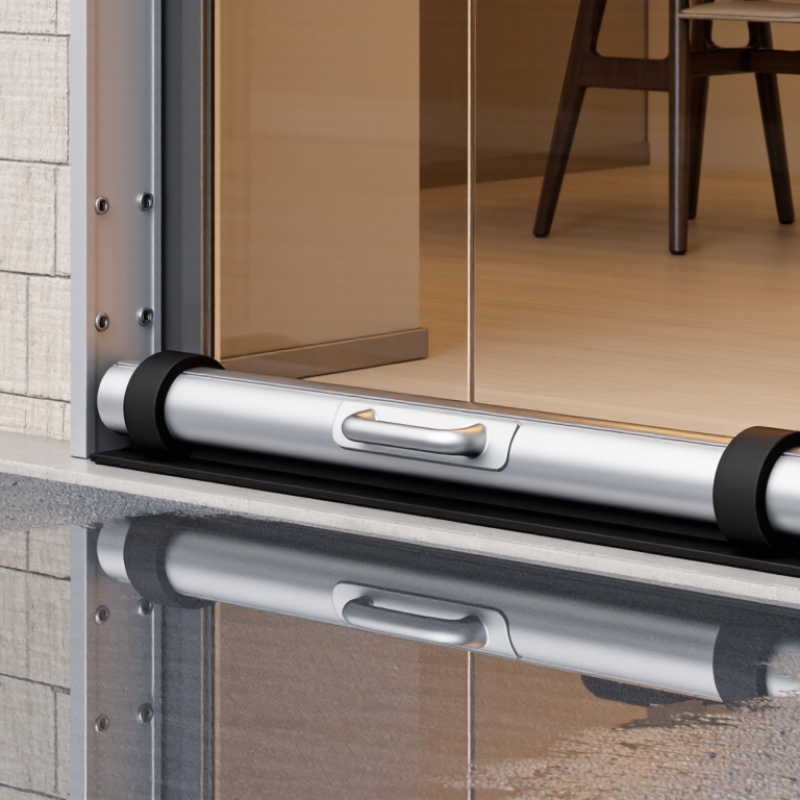
A door water barrier is a temporary defense against shallow, fast-moving water. It usually combines a raised threshold, side seals, and a pressure-resistant panel. The system aims to limit entry, not eliminate flood risk.
Not a cure.
FEMA’s National Risk Index separates riverine, coastal, and pluvial flooding. This matters because each type produces different water pressure and flow paths. A barrier for rainwater pooling may not withstand water moving across a driveway. NOAA’s 2024 Billion-Dollar Weather and Climate Disasters report recorded 27 U.S. weather and climate events exceeding one billion dollars in damage. That figure shows why small openings deserve serious attention. Door gaps often become the lowest entry point.
When choosing a barrier, check its tested water height, installation method, seal material, and surface compatibility. A system fixed to uneven concrete may perform poorly, even with strong panels.
FEMA flood-resistant design guidance also emphasizes durable materials and controlled water entry. Look for independent test documentation, not only product claims. ASTM or other recognized testing references can strengthen reliability, but testing conditions still matter.
In practical inspections, damaged seals are common. They crack, flatten, or collect grit. A barrier also needs safe storage and quick deployment. Measure the doorway after installation changes. Recheck it seasonally. The overlooked detail is usually the floor. A small slope can redirect water beneath the seal.
Assessing Your Doorway’s Water Protection Needs
Assessing your doorway’s water protection needs starts with the water itself. Measure likely flood depth, flow direction, exposure time, and recurrence. FEMA estimates that one inch of floodwater can cause about $25,000 in residential damage, according to its flood-cost analysis. That risk is not theoretical. NOAA’s National Centers for Environmental Information recorded 27 billion-dollar weather and climate disasters in the United States during 2024.
Start with the water source. Surface runoff usually needs a different defense than rising groundwater. Check nearby slopes, drains, downspouts, and paving joints. Measure the door opening, threshold height, and available wall space. Check carefully. Door swing matters, too. An outward-swinging door may press against a barrier, while an inward-swinging door can reduce usable clearance.
U.S. Army Corps of Engineers floodproofing guidance stresses depth, duration, velocity, and building conditions when evaluating protection methods.
Choose a barrier with a tested height, seal design, and installation method suited to those conditions. A low strip may stop splashes but fail against several inches of standing water. Field reality is less tidy. Uneven thresholds, damaged seals, and careless storage can defeat good equipment.
I would rather overestimate the expected water depth than trust a neat measurement taken during dry weather. Still, excessive height can obstruct access and create a trip hazard. Inspect the threshold, frame, nearby drainage, and barrier seals before every severe-weather season.
Comparing Barrier Materials, Designs, and Installation Methods
Choosing a door water barrier requires comparing materials, design, and installation conditions. Aluminum panels resist corrosion and repeated handling, while stainless steel offers greater strength but adds weight and cost. Flexible PVC or coated fabric systems are lighter and easier to store. However, sharp debris can puncture them. FEMA Technical Bulletin 2 states that flood-resistant materials should tolerate direct contact with floodwater for at least 72 hours without significant damage.
Design matters more than appearance. A barrier should match the doorway width, threshold height, and expected water pressure. Interlocking panels can provide strong modular protection. Hinged systems allow faster deployment during heavy rain. Inflatable barriers need careful inspection because small leaks may remain unnoticed. NOAA reported 27 U.S. billion-dollar weather and climate disasters in 2024, showing why temporary protection deserves serious planning.
Installation is where many systems underperform. The frame must transfer pressure into sound masonry or structural supports. The floor should be clean, level, and free from loose grit. Even a small gap beneath a seal can admit water. Not perfect. Drainage pumps and backflow protection may still be necessary. FEMA guidance recommends professional review for floodproofing decisions, especially where water depth, velocity, or structural loads are uncertain. A practical test with a hose can reveal poor compression, twisted seals, or awkward storage procedures before a real storm exposes them. Sentence length also matters; installation instructions should be short, visible, and understandable under pressure.
Checking Fit, Durability, Maintenance, and Accessibility
Choosing the best door water barrier starts with an accurate fit. Measure the doorway width, threshold height, frame depth, and floor slope. Check the measurement twice. A few millimeters can create a leak path. The barrier should seal against smooth, stable surfaces without blocking the door’s normal movement. I once saw a barrier fit the opening but fail near a slightly uneven corner. That small detail changed the result.
Durability depends on materials, connection points, and expected water pressure. Look for corrosion-resistant parts and seals that remain flexible after repeated use. A strong product can still weaken if it is dragged, stored wet, or exposed to grit. Test the barrier before the rainy season. Check for cracks, loose fasteners, hardened seals, and damaged contact surfaces. Replace worn components early. This is less dramatic than emergency repair, but more reliable. I would not trust appearance alone.
Maintenance should be simple enough for regular inspection. Clean dirt from the sealing edge, dry removable parts, and follow the manufacturer’s storage instructions. Accessibility also needs careful attention. A raised threshold may create a trip hazard for children, older adults, or wheelchair users. Choose a low-profile design when possible, and keep nearby pathways clear. Confirm that the barrier does not prevent safe door operation or emergency access. Local building requirements may also affect installation. A technically effective barrier is not truly suitable if people cannot use the doorway safely.
Selecting the Best Door Water Barrier for Your Situation
How to Choose the Best Door Water Barrier?
Selecting the Best Door Water Barrier for Your Situation
Choosing a door water barrier starts with the water risk, not the product appearance. Measure the doorway width, threshold height, and likely water depth. A barrier must match the opening closely. Small gaps can become serious leakage points.
For shallow surface water, a removable panel may offer practical protection. It should be light enough for one person to install quickly. For repeated flooding, a fixed or reinforced system may provide better reliability. Check whether the door swings inward or outward. This detail can affect installation and emergency access. Test the barrier before storm season. Do not wait for dark skies.
Material also matters. Aluminum or reinforced composite panels can resist pressure, while rubber seals help reduce seepage. Look for clear installation instructions, replaceable seals, and secure locking points. A barrier that needs unusual tools may fail during a stressful moment. In my experience, users often underestimate storage conditions. A bent panel or cracked seal can weaken protection.
Consider cleaning and inspection as part of ownership. Remove dirt from the threshold before fitting the barrier. After use, dry every component and inspect the seals for flattening. Performance claims should be supported by testing details, not vague promises. Still, no barrier is perfect. Extreme water pressure, debris, or poor fitting can overwhelm even a well-designed system. Choose protection that matches your building, skills, and realistic response time.
How to Choose the Best Door Water Barrier?
Compare common door water-barrier solutions by their typical nominal protection height. Choose a barrier rated above the expected water level, and consider installation speed, reusability, and the condition of the doorway.
The values shown are typical practical ranges for residential and light commercial use: threshold seals are suited to minor seepage, removable panels and inflatable barriers handle shallow flooding, and stacked sandbags can provide greater height but require more labor. Always verify the product rating and site conditions before installation.