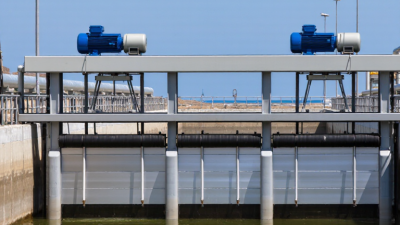
Choosing among China’s top flood gates for houses is not just a matter of price or appearance. The right flood gates for houses must fit the doorway, expected water depth, and available installation space. A removable panel may suit a home that needs occasional protection. A hinged gate can be quicker to deploy, while a permanently installed system may offer stronger readiness but require more planning. No single type is best for every property.
Professor Hannah Cloke, a hydrologist whose research focuses on flood risk, offers a useful principle, paraphrased here rather than quoted verbatim: “A barrier works best when it matches the local risk and is ready before water arrives.” That distinction matters. A gate stored in a garage cannot protect a doorway if nobody can lift or seal it in time. Check the frame, seals, locking points, and instructions. Look for clear performance information, including tested water depth and leakage limits. Ask how the gate performs on uneven thresholds, where small gaps can let water seep inside.
Real homes vary. A narrow apartment entrance, a wide shopfront, and a low garden doorway need different solutions. This guide compares common gate types, their installation demands, and practical trade-offs. It also highlights questions buyers should ask suppliers in China before choosing a model. Product claims deserve careful checking. Even a well-made gate needs correct fitting, maintenance, and a plan for deployment. The best option is the one your household can install correctly, in time, under realistic conditions.
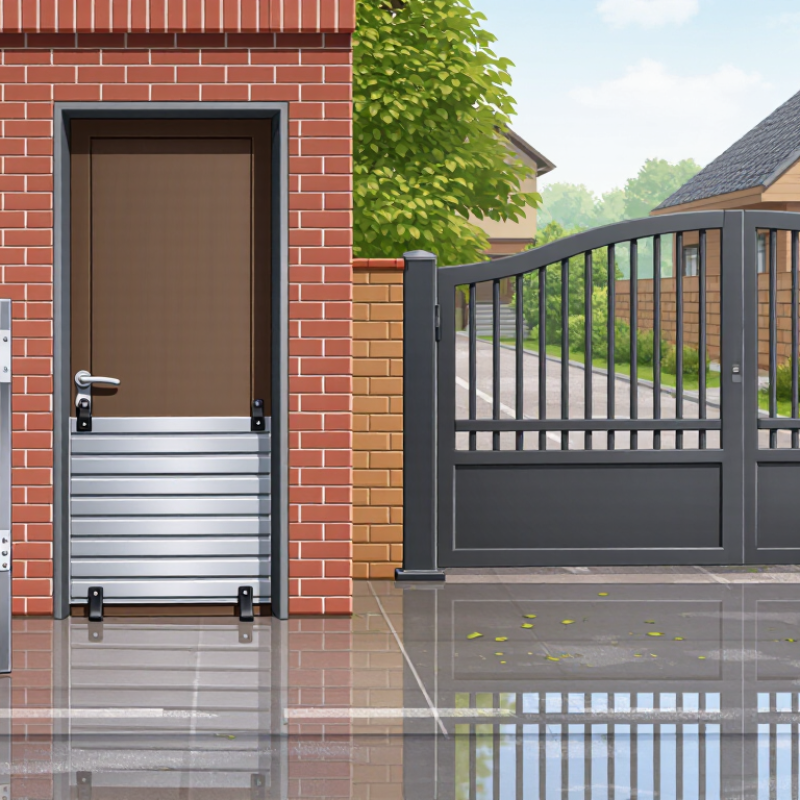
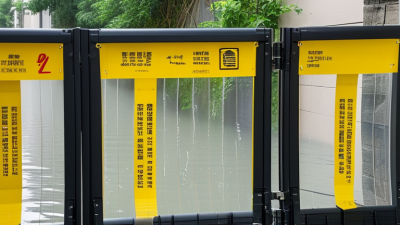
Chinese homes commonly use removable panel barriers, hinged flood doors, and temporary sandbag barriers. Removable aluminum panels slide into fixed side channels across a doorway or garage opening. They store compactly, but gaps at the floor and joints need careful sealing. A tight fit matters. Hinged flood doors are quicker to close and suit entrances used every day, though their frames must be firmly anchored. Sandbags are easy to source, but placement takes time and protection can vary with the water level.
The choice should match the opening, likely flood depth, and wall material. Measure the clear width and threshold height, then check whether the fixing points are sound concrete or weaker masonry. WMO’s State of the Climate in Asia 2023 recorded 79 disasters linked to hydrometeorological hazards across Asia, including floods and storms. That regional figure is not a household risk forecast, but it shows why temporary protection deserves planning. For a garage, removable panels may be practical; for a frequently used front door, a fitted flood door may be easier to deploy. Even a good barrier can leak at its edges. A common mistake is choosing by panel height alone and overlooking drainage, seepage, or pressure on the frame.
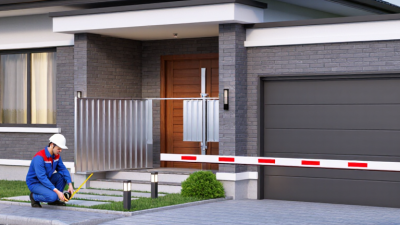
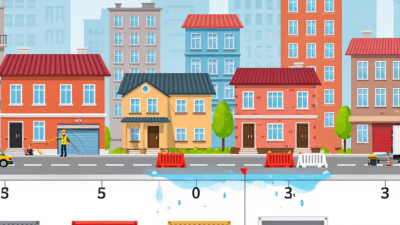
Flood gates prevent water entry by creating a barrier across a doorway, garage opening, or low threshold. Removable panel systems slide into fixed side channels and suit openings that need protection only during storms. Their seals press against the floor and frame, so uneven surfaces can leave small leak paths. Small gaps matter.
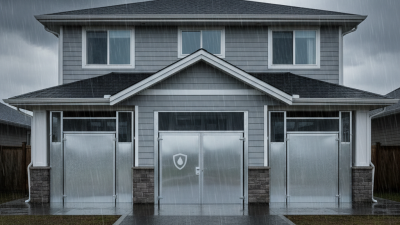
Hinged gates stay attached and swing into place, which can make deployment quicker when water rises suddenly. Roll-up barriers store compactly, but their guides and lower seals need careful inspection. Each design must resist water pressure at the expected depth; a taller barrier is not automatically safer if its anchors or surrounding wall are weak. The building matters too.
A useful choice starts with measuring the opening, checking floor level, and noting where runoff collects. For example, a garage with a sloped concrete lip may need a different seal detail from a level front entrance. Drainage inside the building also deserves attention, since a gate cannot stop water rising through floor drains. It depends. I would avoid treating any gate as fully watertight without site-specific assessment. Even a well-fitted system needs practice: test the closure, clear debris from channels, and replace worn seals before the rainy season.
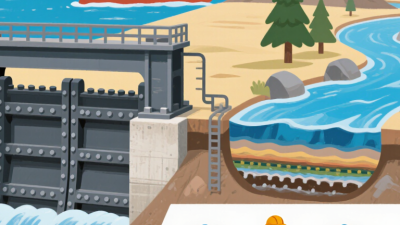
Flood gates must resist the water pressure created by the depth of water they are designed to hold back.
The chart shows hydrostatic gauge pressure in freshwater, calculated as pressure = water density × gravity × depth (using approximately 1,000 kg/m³ and 9.81 m/s²). At 1 metre of water depth, pressure at the bottom is about 9.81 kPa. Actual gate performance depends on its design, installation, condition, and rated capacity.
The best residential flood gate depends on the opening, expected water depth, and the wall or frame that carries its load. Measure the opening at several points; older doorways may not be square. Check how the gate anchors, how its seals meet the threshold, and whether the stated protection rating covers the expected flood conditions. A tall barrier can still leak if the sill is uneven or the fixings are weak. I would not judge by height alone. That is an easy mistake.
Consider how quickly one person can install and remove the barrier, where it will be stored, and whether it blocks a required exit. Ask for independent test details, including water depth, duration, and leakage limits, rather than relying on a general “flood-rated” claim. The National Institute of Building Sciences’ Natural Hazard Mitigation Saves: 2019 Report estimates that each dollar invested in federally funded mitigation grants yields about six dollars in avoided losses. That figure covers many mitigation measures, not flood gates alone, but it reinforces the value of sound planning. Site-specific advice matters. A gate’s performance depends on the building around it, and that detail is easy to overlook.
For most homes, removable aluminum flood panels offer a practical balance: moderate upfront cost, solid protection when correctly anchored, and manageable storage. They work best at doors and garage entrances with sound frames and level thresholds. Check the rated water depth and pressure, not just the panel height. A low-cost barrier can fail if water seeps beneath it. Small detail. Seal condition matters.
Automatic rising gates reduce last-minute handling, but their purchase and installation costs are usually higher. They also need maintenance and a reliable power supply. Sandbags are easy to find and cheap, yet take time to place and can be awkward to dispose of.
NOAA’s 2023 U.S. Billion-Dollar Weather and Climate Disasters report recorded 28 disasters costing at least $1 billion each, with combined losses of $92.9 billion. These figures cover multiple hazards, not floods alone, and are not China-specific. They show the scale of weather losses, but cannot predict a gate’s performance.
FEMA’s Homeowner’s Guide to Retrofitting, P-312, stresses matching protection measures to local flood conditions and building construction. Measure the opening, inspect the frame, and compare installation costs before choosing. I would not assume the most expensive option is automatically the safest.
A flood gate should match the opening, expected water depth, and how often flooding occurs. For a doorway exposed to occasional shallow street runoff, a removable panel may be practical, provided its side channels are firmly anchored. A hinged barrier is easier to deploy repeatedly, but needs clear space to swing and a sound threshold. Basement stairs and garage ramps may need taller, engineered barriers because water can collect there quickly. Automatic gates offer convenience, though sensors and moving parts can be affected by silt or power loss. Small details matter.
Flood risk is not just about depth. Flow speed, debris, and how long water presses against a barrier all affect performance. FloodSmart, FEMA’s flood-insurance resource, notes that just one inch of floodwater can cause up to $25,000 in home damage. That is a strong reason to protect low doorways, but a gate alone cannot protect a weak wall or prevent water entering through drains. I would check the whole opening and nearby drainage, not just compare gate heights. A reassuring-looking barrier can still have a weak point.
Tips: Measure the opening at several points, including the floor, and check the manufacturer’s tested water-pressure rating. Ask a qualified flood professional to assess anchoring and wall strength. Recheck seals after installation; even a small gap can let water seep through.
Please enter the details to download, thank you
Get in Touch With Us
Please enter the details to download, thank you