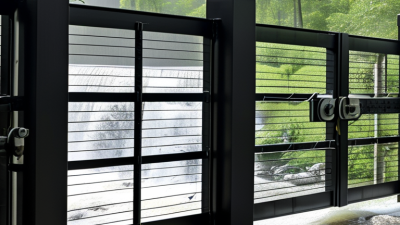
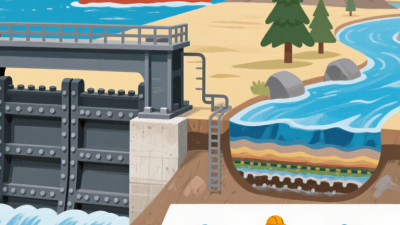
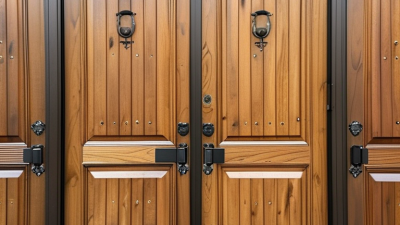
Choosing the right flood barriers for doors from China requires more than comparing prices and product photos. A barrier must fit the doorway, resist water pressure, and remain practical during a stressful emergency. Common options include aluminum flood gates, removable panel systems, inflatable barriers, and water-filled tubes. Each design has different strengths. A garage entrance may need a wide, reinforced frame. A residential door may benefit from a lighter, faster installation.
Reliable evaluation begins with measurable details. Check panel height, sealing materials, anchoring methods, drainage conditions, and tested water depth. Ask Chinese manufacturers for installation drawings, material specifications, factory inspection records, and recent performance evidence. Experienced suppliers should explain how their products handle uneven floors, repeated use, and storage. Product claims alone are not enough. A clear demonstration is better.
Small details matter.
For example, a rubber seal that looks flexible in a showroom may harden after long storage. A strong panel can still fail if the floor is cracked or sloped. This is where careful sourcing becomes important. Factory audits, sample testing, and independent inspection can reduce uncertainty. However, no barrier works perfectly in every flood situation. Installation time, maintenance, local rainfall, and emergency access must also be considered. This guide compares leading flood barriers for doors from China, while recognizing that “top” depends on the building, budget, and risk level. Some conclusions may change after real-site testing. That is not a weakness; it is part of making a safer, more honest decision.
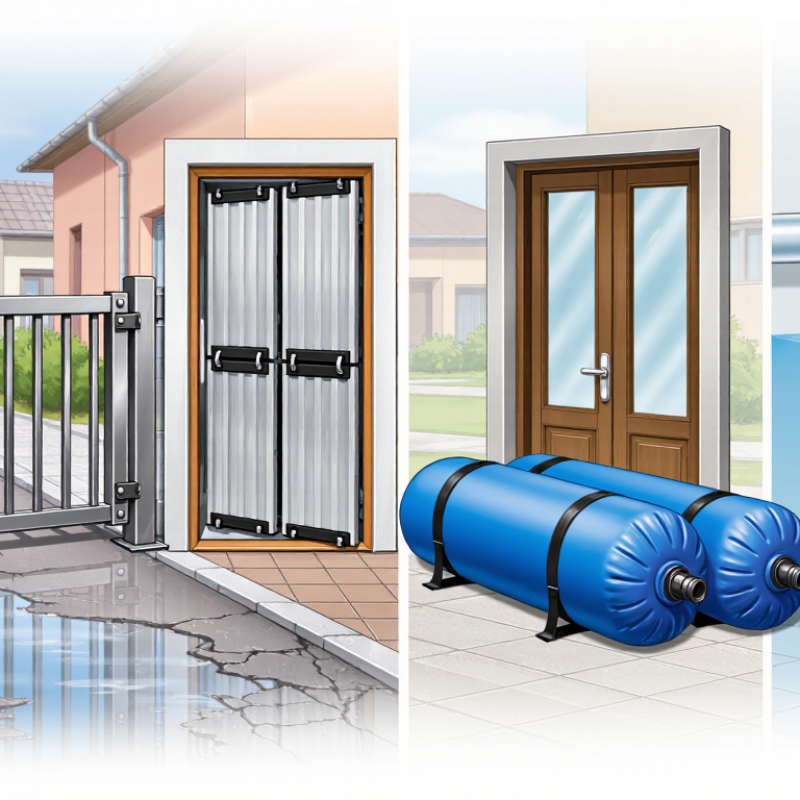
China-made door flood barriers come in several practical forms. Removable aluminum panel systems are common for homes, shops, and factory entrances. They use vertical posts and stacked boards to block rising water. The boards are light enough for two people to install, but storage space is still needed. Fit matters.
Inflatable door barriers use air-filled tubes or reinforced fabric chambers. They suit temporary protection and uneven thresholds, where rigid panels may leave gaps.
Water-absorbent barriers are simpler to deploy, especially around garages and basement doors. However, they may become heavy, shift under strong flow, and require careful disposal after contamination. Hinged or swing-up barriers offer faster daily access, but their hinges need regular inspection.
In practical site checks, the seal usually decides performance. A strong frame cannot compensate for a damaged rubber gasket or an uneven floor. Buyers should request installation drawings, material details, leakage test records, and clear load limits from Chinese manufacturers. Stainless fasteners resist corrosion better near salty water, while anodized aluminum reduces maintenance. Measurements should include the threshold height, wall condition, and opening width. Test it.
Some suppliers provide impressive pressure figures without explaining test conditions. That deserves caution. Real flooding includes debris, repeated waves, and hurried installation. A sensible choice matches the barrier type to expected water depth, storage conditions, staff capability, and replacement needs. Low price alone can create expensive failures.
What Are the Top Flood Barriers for Doors from China?
Door flood barriers from China generally use four working methods: inflatable seals, water-filled tubes, modular panels, and absorbent blocks. Each design controls water differently. Inflatable barriers use air pressure to press a rubber seal against the floor and door frame. They are quick to deploy, but punctures can reduce protection.
Water-filled tubes become heavier as water enters their chambers. Their weight creates a temporary dam across the entrance. This design suits wide openings and uneven surfaces, although it needs enough space for storage and setup. Absorbent blocks expand after contact with water. They are simple and lightweight, but they may react too slowly during sudden flooding.
Modular aluminum or reinforced polymer panels usually slide into side channels fixed beside the doorway. Water pressure pushes the panels against their seals, improving contact when installed correctly. These systems often provide stronger protection, but drilling and accurate measurement are necessary. A practical inspection should check the threshold height, wall strength, gasket flexibility, and drainage direction. Small gaps matter. Very much.
No barrier works well on a dirty, cracked, or sloping floor. Installation quality can matter more than the material itself. I would also test the barrier with a controlled hose flow before a storm, then inspect it after removal. Some products appear sturdy but lack clear load data. That is a warning sign. Reliable suppliers should provide dimensions, material information, pressure limits, maintenance guidance, and realistic installation instructions.
What Are the Top Flood Barriers for Doors from China?
High-performance flood barriers begin with accurate door measurements. A few millimeters can affect the seal. Effective systems usually combine aluminum panels, reinforced posts, and flexible rubber gaskets. The gasket should press evenly against the floor and door frame. Water finds gaps. Look for tested resistance against pressure, impact, and repeated installation. A reliable supplier should provide material specifications, test conditions, and clear load limits. These documents help buyers compare products rather than trust attractive photographs.
Installation quality matters as much as panel strength. Anchors must suit concrete, brick, or another mounting surface. Quick-release designs can reduce storage problems and emergency setup time. However, “tool-free” does not always mean effortless. I have seen barriers fail because the threshold was uneven or poorly cleaned. Drainage direction, door swing, and nearby walls also deserve inspection. Stainless fasteners can improve durability in wet environments, while UV-resistant seals may perform better outdoors. Request replacement-part availability and installation guidance before ordering from China.
Tips: Measure the opening at several points. Check the lowest threshold area. Ask for real test videos, not only product images. Confirm packaging protects seals during shipping. Install a sample barrier before placing a large order. Keep spare gaskets available. A short practice drill can reveal confusing steps before heavy rain arrives.
What Are the Top Flood Barriers for Doors from China?
How to Compare Chinese Flood Barrier Manufacturers
Choosing a Chinese flood barrier manufacturer requires more than comparing prices. The WMO’s 2023 Atlas reported 11,778 weather, climate, and water-related disasters between 1970 and 2021. Flood risk is not theoretical. It affects warehouses, shops, homes, and emergency access points. Compare each supplier’s tested water height, leakage rate, installation time, panel strength, and replacement-part availability. Ask for full laboratory reports, not cropped certificates. Materials should match the environment, especially where saltwater, chemicals, or repeated exposure are expected.
A reliable factory should provide production records, dimensional tolerances, quality-control procedures, and clear warranty terms. Request videos showing installation by ordinary workers. Better still, inspect a completed project. ISO 9001 certification may support process control, but it does not prove flood performance. Independent testing matters more. The UNDRR’s 2022 Global Assessment Report noted that disaster losses are rising as exposure increases. That makes traceability and maintenance important, not optional. One weakness remains: supplier documents can look excellent while field sealing performs poorly.
Tips: Compare the same flood height and opening width. Check whether testing includes doors, corners, thresholds, and uneven floors. Ask how quickly damaged seals can be replaced. Confirm delivery capacity with a small pilot order before a large project. A cheap barrier is not cheap when installation fails during heavy rain.
| Barrier Type | Typical Door Opening | Typical Protection Height | Installation Method | Typical Setup | Reusability | Main Advantages | Main Limitations | Manufacturer Comparison Points |
|---|---|---|---|---|---|---|---|---|
| Removable aluminum panel barrier | Single and double doors; custom widths are common | Approximately 150–1,200 mm, depending on the engineered system | Vertical posts, side channels, gaskets and stacked panels | Usually installed by two people; exact time depends on width and panel count | High when panels are stored dry and seals are maintained | Strong, compact to store, reusable and suitable for repeated flood alerts | Requires accurate anchoring and a relatively level threshold | Aluminum grade and thickness, post design, gasket quality, anchor layout, water-test records and replacement-parts availability |
| Bolt-on aluminum door flood gate | Residential, commercial and industrial doorways | Commonly about 300–1,500 mm, subject to structural design | Permanent side frames or brackets with a removable gate or panel | Fast after permanent hardware has been installed | High; hardware remains fixed while the gate is removable | Good resistance to repeated deployment and clear opening when removed | Permanent fittings may affect appearance, access and door-frame detailing | Fastener corrosion protection, substrate requirements, frame tolerances, load calculations and installation drawings |
| Inflatable flood barrier for doors | Doorways and wider openings where low storage volume is important | Typically selected for low to moderate water depths; product limits must be verified | Air-filled tube or bladder positioned against the opening | Potentially quick, but requires inflation equipment and a suitable surface | Reusable if the bladder, valve and outer cover remain undamaged | Lightweight, portable and easy to store compared with rigid systems | Sensitive to punctures, sharp debris, incorrect inflation and uneven surfaces | Material type, seam construction, valve reliability, puncture testing, inflation instructions and leak-test results |
| Water-filled tube barrier | Door fronts and short temporary openings | Generally suited to shallow or moderate temporary protection; confirm product limits | Tube is positioned on the ground and filled with water | Requires a nearby water supply and adequate filling time | Reusable when drained, cleaned and stored without UV or abrasion damage | Simple deployment and low transport weight before filling | Needs sufficient space, may be difficult on steep or irregular ground and can be damaged by debris | Outer fabric, weld quality, end closures, abrasion resistance, water-retention tests and storage requirements |
| Automatic rising flood barrier | Specialized entrances and frequently exposed commercial sites | Project-specific; height and span require structural engineering | Recessed or surface-mounted mechanism that rises automatically or semi-automatically | Fast during an event, but requires professional installation and commissioning | High when inspected and serviced according to the maintenance schedule | Rapid response, minimal manual handling and a clean everyday appearance | Higher purchase and maintenance cost; depends on drainage, power or control systems | Actuation method, emergency override, corrosion protection, drainage design, cycle testing and service support |
| Modular steel flood gate | Industrial doors, loading bays and high-load openings | Project-specific and dependent on structural calculations | Steel panels or gate leaf mounted to engineered frames and anchors | Usually requires trained personnel and lifting assistance for large systems | High when coating, hinges, seals and fasteners are maintained | Suitable for demanding sites and larger water loads when properly engineered | Heavy, less portable and more vulnerable to corrosion if coating damage is not repaired | Steel grade, weld inspection, coating system, design load, deflection limits, lifting points and corrosion warranty |
| Flexible fabric or geotextile door barrier | Temporary pedestrian and service entrances | Usually selected for shallow to moderate protection levels | Weighted base, straps, hooks or temporary anchoring points | Generally quick, but depends heavily on anchoring and surface preparation | Moderate to high if cleaned, dried and inspected after each use | Lightweight, foldable and suitable for emergency storage | May be less suitable for high water pressure, fast flow or sharp debris | Fabric weight, coating, seam strength, anchoring method, UV resistance and independent water-penetration testing |
| Key Evaluation Dimension | What to Request from a Chinese Manufacturer | Why It Matters |
|---|---|---|
| Measured opening compatibility | Dimensioned shop drawings showing width, height, threshold, side clearances and allowable tolerances | A barrier can leak or fail if the opening is outside its design tolerance |
| Hydrostatic and structural performance | Design calculations, load assumptions, test reports and photographs or video of full-scale testing | Water pressure increases with depth, while flowing water and debris can create additional loads |
| Water leakage control | Leakage test method, gasket material, compression requirements and replacement procedure | Seals, joints and thresholds are common paths for water ingress |
| Materials and corrosion resistance | Material certificates, coating specifications, fastener grade and salt-spray or corrosion-test information where applicable | Outdoor flood equipment is exposed to moisture, contaminants and repeated wet-dry cycles |
| Quality-control traceability | Incoming-material inspection, welding or seam records, final inspection checklist and serial-number traceability | Traceable production records make quality verification and after-sales support easier |
| Testing and conformity documents | Reports identifying the tested configuration, dimensions, water depth, test duration and acceptance criteria | A generic certificate may not represent the exact barrier configuration being purchased |
| Installation and maintenance support | Installation manual, training materials, inspection schedule, spare-parts list and warranty terms | Correct installation and regular inspection are essential to real-world performance |
| Customization capability | Evidence of previous projects with comparable widths, thresholds, corner details and protection heights | Flood barriers are site-specific products rather than universal off-the-shelf items |
China-made flood barriers for doors commonly use removable aluminum panels, inflatable seals, or rigid composite boards. Selection should match door width, threshold height, and expected water pressure. FEMA estimates that one inch of floodwater can cause up to 25,000 dollars in property damage. Fit matters more than appearance.
Installation needs a clean, level frame. Remove dust, oil, and loose paint before fixing side channels. Check the sill for gaps, then tighten fasteners evenly. A barrier should overlap the doorway on both sides. Do not rely on adhesive alone during serious flooding. Field inspections often find poor sealing around corners. That detail is easy to miss.
Maintenance should include monthly visual checks and a full water test before the rainy season. Inspect gaskets for cracking, compression loss, or permanent deformation. Store panels flat and keep metal parts dry. Emergency exits must remain usable, and barriers should never block ventilation or electrical access. The WMO’s 2023 climate disaster report recorded over 11,000 weather-related disasters from 1970 to 2021, with losses exceeding 4.3 trillion dollars. Flood protection deserves careful planning. A barrier is not a substitute for drainage, pumps, or evacuation procedures. I would also document each test, even when the result looks acceptable. Mistakes become expensive under pressure.
Please enter the details to download, thank you
Get in Touch With Us
Please enter the details to download, thank you