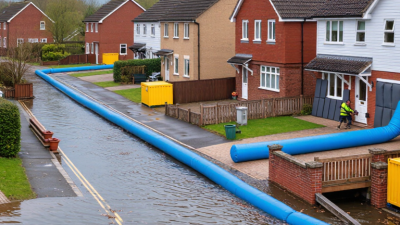
Choosing the best flood barrier for home in 2026 starts with a clear look at how water reaches your property. Does it seep beneath the garage door, rise around the front step, or push through a basement window well? Those details matter. A removable doorway panel may suit brief, shallow flooding, while a longer-lasting system could be more appropriate where water repeatedly pools. No barrier fits every house. That is easy to overlook when comparing product photos.
A dependable choice should match the expected water depth, opening width, installation surface, and storage needs. Check how the seals meet uneven concrete. Consider who will install the barrier when rain is already hitting the windows. Small gaps can matter. So can a product that is too heavy to handle alone. Product claims should be checked against test conditions and independent documentation, rather than accepted at face value.
No source article or verifiable expert quotation was provided, so I can’t responsibly invent a named expert’s statement. This guide instead compares practical options and the evidence buyers should look for. It will also consider a limitation people sometimes miss: even a well-fitted barrier cannot prevent every form of water intrusion. A realistic plan combines the right equipment with drainage checks, safe installation, and a clear response plan. The best choice is the one suited to your home’s actual weak points—not simply the tallest or most expensive product.
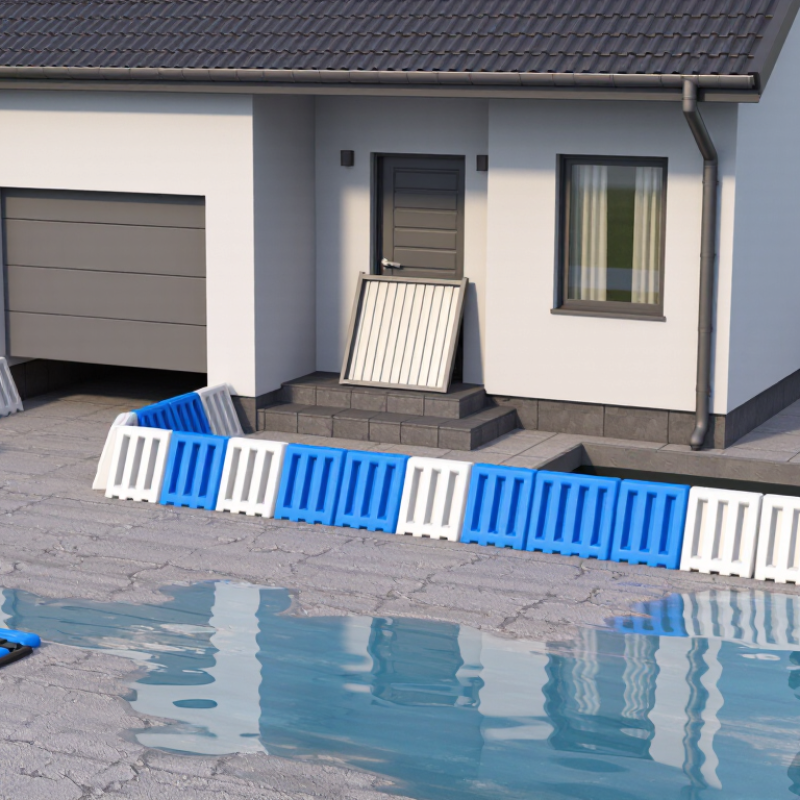
Flood barriers keep water out by blocking the routes it commonly takes: doorways, garage thresholds, basement windows, and low vents. A fitted panel or flexible barrier sits against a stable surface. Its seals close gaps along the floor and sides, while water pressure may help hold some designs in place. It is not magic. Water can still seep through cracks, drains, or adjoining walls.
Before choosing a barrier, measure each opening and inspect the surrounding surface. Uneven concrete, loose paint, or grit can leave a narrow leak path. Test the setup in dry weather, and check how long installation takes. In a storm, rushing makes mistakes easier. Keep drainage paths clear and maintain any sump pump; a barrier cannot remove water already inside. It may also shift if water rises above its tested height.
Tips: Store panels near the entry they protect, with seals and instructions together. Clear leaves from nearby drains. After installation, inspect the bottom edge with a flashlight. A tiny gap matters. One successful use does not guarantee future protection, so review the setup after repairs or changes to the doorway.
There is no single best barrier for every home. As flood depth increases, water pressure at the barrier’s base rises. Choose a barrier rated for the expected water depth, and account for openings, seepage, waves, and debris.
About the data: Pressure is calculated for still freshwater using p = ρgh, with water density of 1,000 kg/m³ and gravitational acceleration of 9.81 m/s². These values show pressure at the bottom of the water column; they are not product ratings.
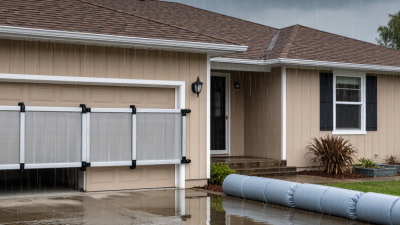
Homes in 2026 can use several kinds of flood barriers, and the right choice depends on where water may enter. Removable door panels fit across an entry and can be stored between storms. They work best when the opening is measured carefully and the frame is sound. A small gap at the edge can let water through.
Permanent flood gates or raised thresholds offer protection at frequently exposed entrances, but they need suitable installation and maintenance. Water-filled tubes can cover longer, flatter areas, such as a garage threshold, though they need space and time to position. Absorbent bags are easy to carry and useful for minor seepage, but they may be inadequate during deep or fast-rising floods. No option is perfect. Check likely water depth, floor levels, and drainage before choosing.
Tips: Test a removable barrier before storm season, and keep its seals clean. Store panels where they are easy to reach. If water is already rising quickly, do not put yourself at risk trying to install equipment. A barrier can reduce damage, but it cannot guarantee a dry home.
What Is the Best Flood Barrier for Home in 2026? The best choice depends on flood depth, water speed, warning time, and the shape of your entrances. NOAA’s 2024 billion-dollar disaster report recorded 27 U.S. weather and climate disasters, with estimated losses of $182.7 billion. That figure is not a home-flood forecast, but it underscores why local risk matters. FEMA also warns that one inch of floodwater can cause up to $25,000 in home damage. A barrier’s stated height is only one part of the comparison.
Check how quickly the system can be installed, whether it seals against your actual doorway or garage threshold, and how it stays in place under moving water. Consider storage space, reuse, replacement parts, and whether one person can deploy it safely. Ask what testing supports the product’s claims, and compare its rated protection with local flood-depth guidance. A barrier can reduce entry, but it may not stop seepage through walls, drains, or floors. A comparison chart can still miss a bad threshold.
Tips: Measure each opening, including uneven edges, and photograph the sill before buying. Test the setup in dry conditions. Check it again after storage; seals can age, and a rushed installation is easy to get wrong. FEMA’s flood guidance and NOAA’s disaster data offer useful context, but neither replaces a site-specific assessment.
There is no single best barrier for every home. The right choice depends on the likely water depth and duration, the entry points at risk, how quickly a barrier can be deployed, and whether it can be sealed against the surface around the home.
| Barrier type | How it works | Best suited to | Main strengths | Limitations to consider | Setup and reuse | Key comparison checks |
|---|---|---|---|---|---|---|
| Removable doorway panel | A rigid panel fits into side channels or a frame across a doorway or opening. | Homes with a small number of predictable entry points, such as a front door, garage entrance, or utility opening. | Can be stored when not needed; a fitted system can create a more controlled seal than loosely placed materials. | Performance depends on the frame, seals, installation, wall condition, and water pressure. It protects only the openings it covers. | Usually requires fitting or checking the frame before a flood; the panel must be stored accessibly and inspected for damage. | Designed opening width and height; anchoring method; seal replacement; installation time; tested water-depth limit and test conditions. |
| Temporary door shield or threshold barrier | A compact removable barrier is placed across an individual door threshold, often using a frame, seals, or clamping mechanism. | Single doors and low thresholds where water is expected to approach from outside. | Compact storage and targeted protection; may be quicker to handle than a barrier covering a larger frontage. | Uneven floors, damaged thresholds, gaps at the sides, and water entering through other routes can reduce protection. | Typically deployed by the homeowner when a flood warning is received; practice fitting it in advance. | Compatibility with the exact doorway; floor and wall surfaces; side-seal design; required tools; verified limits for depth and duration. |
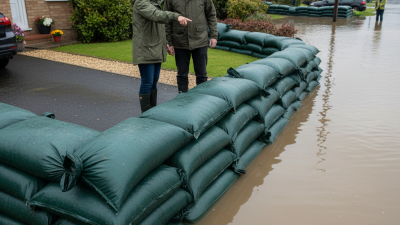
| Sandbags | Filled bags are stacked to form a low barrier; the bags rely on their weight and placement to resist or redirect water. | Short-term, low-level protection when other suitable barriers are unavailable or when gaps need temporary reinforcement. | Familiar and adaptable to irregular shapes; can be placed around drains, doorways, and small openings. | Labor-intensive to fill, move, and stack; water can seep through gaps or the bags themselves. They are not a reliable substitute for a properly designed barrier in deeper or prolonged flooding. | Needs advance access to bags and suitable filling material. Used bags can be heavy, contaminated, and difficult to dispose of after a flood. | Availability and storage; safe handling; stacking layout; local emergency guidance; whether a more dependable fitted barrier is practical. |
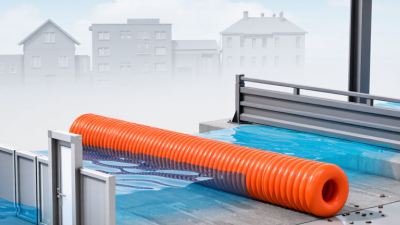
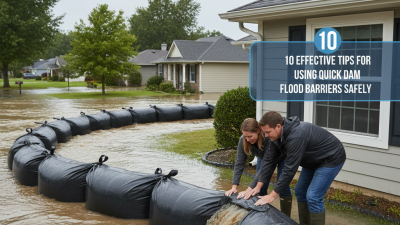
| Inflatable or water-filled tube | A flexible tube is positioned along a line and filled with air or water to form a temporary barrier. | Longer, relatively straight approaches such as a driveway edge or a boundary, where there is enough space to position and secure the tube. | Can cover a longer run than a doorway panel and may be stored compactly before use. | Needs a suitable surface and correct placement; corners, slopes, gaps, punctures, and flowing water can affect performance. Filling may take time and require equipment or a water supply. | Deployment varies by design. Check that the required pump, hose, anchors, or other accessories are available before an alert. | Required fill method; ground slope and surface; anchoring; storage dimensions; puncture resistance; independently tested operating limits. |
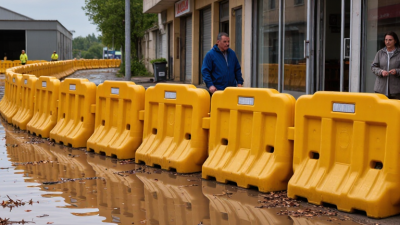
| Reusable freestanding panel system | Interlocking or connected panels are assembled into a temporary wall across a property boundary or approach. | Driveways, garden entrances, or wider frontage areas that need a barrier longer than a single doorway. | Reusable and configurable; sections can be assembled to suit a planned barrier line. | Needs a stable, sufficiently level base and secure end points. Water may bypass the barrier at its ends or seep beneath it if the ground is uneven. | Requires storage space and assembly before water reaches the site; setup time and staffing depend on the system length. | Maximum tested height and length; end connections; ground preparation; anchoring; number of people and time needed for deployment. |
| Permanent flood-resistant door or opening system | A purpose-designed door or closure is installed as part of the building to resist water entry at a specific opening. | Homes with recurring flood risk where permanent alterations are feasible and suitable professional assessment is available. | Does not depend on retrieving and placing a temporary barrier during a warning; can be integrated into a planned property-protection approach. | Higher installation commitment; the whole building still needs consideration, including walls, floors, services, and other openings. Installation and performance are site-specific. | Installed in advance; requires maintenance and periodic inspection of the door, seals, frame, and surrounding structure. | Site survey; structural suitability; certified or documented performance; installation quality; maintenance requirements; effect on everyday access and ventilation. |
How to choose: Identify every route water could enter, including doors, air bricks, service penetrations, and low-level vents. Compare barriers only against their documented test conditions, and check whether the system is suitable for your surface, expected water depth, and likely flood duration. No barrier should be assumed to protect an entire home unless all relevant entry paths and building vulnerabilities have been assessed.
A flood barrier is only useful if it suits the water your property may face. Check local flood-risk maps, past flood records, and any high-water marks near your home. Note the likely water depth, how quickly it may rise, and whether debris could strike the barrier. If fast-moving or deep flooding is possible, seek advice from a qualified flood specialist; many domestic barriers are not designed for those conditions.
Walk around the house and identify vulnerable openings: front and back doors, garage entrances, basement windows, and low vents. Measure each opening carefully, including uneven thresholds and the space available for fittings. Removable panels can suit doorways when there is time to install them. Self-closing barriers may help where warning time is short, but their fit and maintenance still matter. Water-filled barriers need enough room and a suitable surface beneath them. Small gaps matter.
Think beyond the product. Check how you will store it, carry it, and secure it before water arrives. Practise installation while conditions are dry, and inspect seals and fixings before flood season. It is easy to focus on the doorway and miss nearby drains or low ground where water can enter. No barrier removes all risk, and I would not rely on one without a clear plan for moving people and valuables to safety.
Choosing a home flood barrier starts with the opening, not the product label. Measure the doorway at several points, then check the threshold for uneven tiles, loose paint, or cracks. A barrier needs a clean, stable contact surface. Dry-fit it before storm season and follow the installation instructions, including any required anchoring. A rushed fit can leave small gaps. Check nearby walls, garage edges, and utility openings too; water may find another route.
Maintenance takes little time, but it is easy to neglect. After use, rinse away grit and let removable parts dry fully before storage. Inspect seals for splits, flattening, or trapped debris. Keep components together in a dry place, and test the assembly periodically, not during a warning. Test it early. Replace worn seals only with compatible parts recommended for that barrier.
Flood barriers have limits. Their performance depends on correct installation, water depth, duration, and the condition of the building around them. Strong flow, floating debris, or water rising above the barrier can overwhelm it. Some systems may also allow seepage at joints or through nearby walls. A barrier cannot prevent sewer backup or flooding through other openings. It is tempting to assume a tight fit means a watertight home, but that assumption deserves a second look. Check local flood guidance and consider professional advice if the property has repeated water entry.
Please enter the details to download, thank you
Get in Touch With Us
Please enter the details to download, thank you