How to Choose the Best Flood Barrier for Your Home
Floodwater rarely arrives as a neat line at the front door. It may push beneath a garage door, seep through a basement window, or pool against a low threshold while rain keeps falling. Choosing a flood barrier for home use means matching the product to those real entry points, not simply buying the tallest barrier on display.
The risk is substantial. FEMA’s National Flood Insurance Program reports that just one inch of floodwater can cause about $25,000 in damage to a home. NOAA’s 2023 U.S. Billion-Dollar Weather and Climate Disasters report recorded 28 disasters with losses of at least $1 billion each; flooding contributed to several. These figures describe different kinds of risk, but both make preparation difficult to dismiss. FEMA calls flooding “the most common and costly natural disaster in the United States.” Dr. Oliver Wing, a flood-risk researcher whose work examines flood exposure, has highlighted how risk can vary significantly from one location to another. That local variation matters.
A useful barrier must suit the expected water depth, the width of each opening, and the time available for installation. Some systems need careful anchoring. Others rely on a flat surface, which a rough driveway may not provide. Setup can be awkward. Test it before storm warnings appear. This guide compares removable panels, door shields, sandless barriers, and permanent options, while noting their limits. No barrier makes a home flood-proof. Choosing carefully—and planning where water could still enter—can make the decision more reliable.
Assess Your Home’s Flood Risk and Vulnerable Entry Points
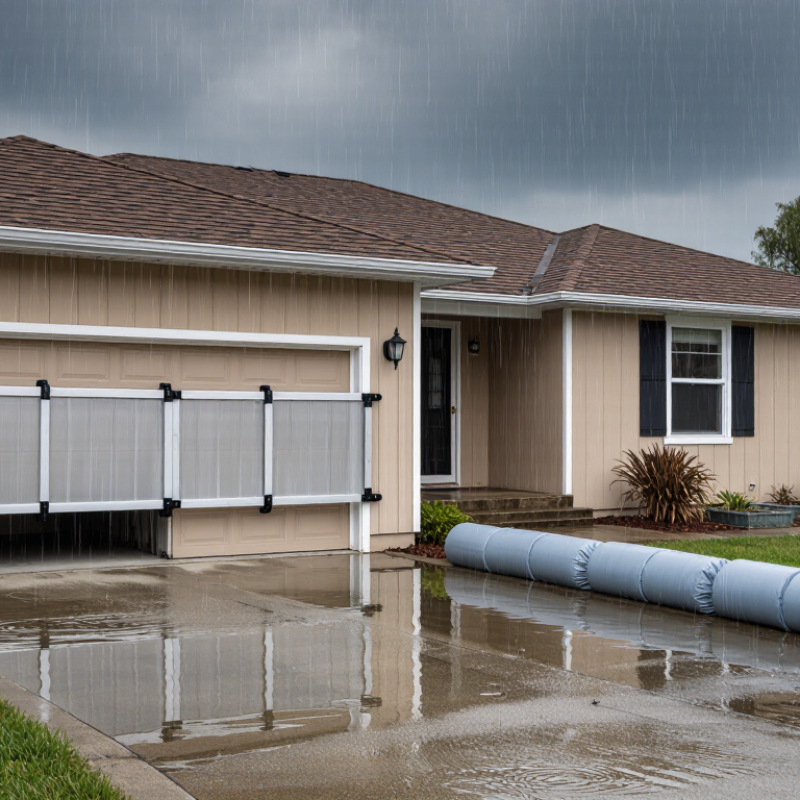
Before choosing a flood barrier, look for how water could reach your home. Check local flood maps and ask your municipal flood office about past events. These sources help, but they cannot predict every storm or blocked drain.
Walk around the house after rain, when runoff paths are easier to see. Notice low doors, garage openings, basement windows, and vents close to ground level. Look for water stains, peeling paint, damp smells, or mud caught along walls. A gap beneath a side door may seem minor. During heavy rain, it can become a steady stream. Check where the driveway slopes, too; water may collect near the garage instead of flowing away.
Make a simple sketch of these entry points and note their height above the surrounding ground. Measure door openings and check whether the frame is uneven or the threshold is damaged. Barriers need a suitable fit, and one size may not protect every opening. If you have seen water enter before, record where it appeared and how deep it became. Memory gets fuzzy, honestly. A neighbor’s account can add context, but conditions may differ from one lot to the next. For uncertain drainage or recurring seepage, ask a qualified flood or drainage professional to inspect the property before selecting a barrier.
Understand the Main Types of Residential Flood Barriers
Residential flood barriers differ in how they block water, how quickly they can be installed, and which openings they protect. Sandbags are flexible and familiar, but they require many bags, careful stacking, and dry storage. Gaps can leak, and soaked bags are awkward to move. Simple, but heavy.
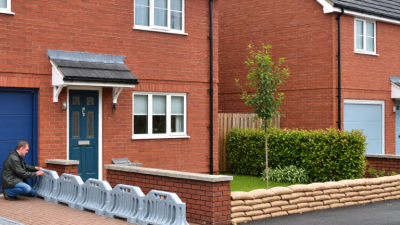
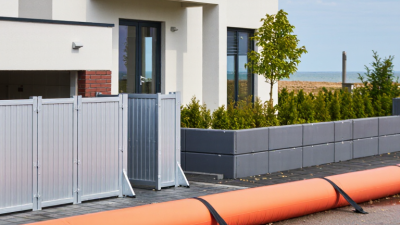
Doorway barriers include removable panels, inflatable tubes, and water-filled barriers. Panels usually fit across a door or garage opening and need accurate measurements and secure anchors. Inflatable or water-filled options can be easier to store, but may shift on uneven ground. Test the setup before storm season. A hurried first attempt is rarely ideal.
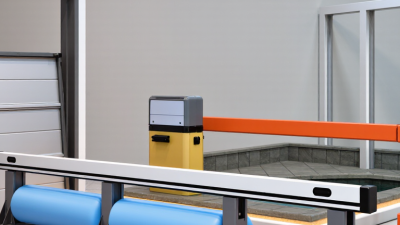
Automatic barriers rise as water reaches them, while permanent floodwalls or raised thresholds offer more fixed protection. Automatic systems need suitable drainage and maintenance; debris can interfere with moving parts. Permanent structures may redirect water toward neighboring areas or leave other entry points exposed. No single barrier protects every home. Check likely water depth, ground slope, and basement drains, and ask a qualified flood professional to assess your property before choosing.
Compare Barrier Materials, Heights, and Water Resistance
A flood barrier should match the water depth your home may face, not just its doorway width. FEMA’s Homeowner’s Guide to Retrofitting (FEMA P-312, 2014) identifies the design flood elevation as an important planning reference. Measure from the ground outside to that level, then allow for uneven pavement and gaps beneath doors. A barrier that is too short can fail even when its material is strong.
Material changes the trade-offs. Aluminum panels are relatively light and reusable, while steel is stronger but heavier to handle. Flexible polymer barriers can suit uneven surfaces, but their seals need careful inspection. Sandbags are familiar, yet gaps between bags can let water seep through. Height matters, too. Using standard hydrostatic calculations, water weighing about 62.4 pounds per cubic foot creates roughly 125 pounds per square foot of pressure at the base of a two-foot barrier. USACE engineering guidance on retaining and flood walls accounts for this increasing water load. Check the barrier’s tested depth rating, sealing method, and anchoring instructions; then practice fitting it before storm season. Small leaks matter. I would still question any setup that depends on a perfect, dry surface—real doorways rarely cooperate.
Check Measurements, Installation Needs, and Storage Requirements
Measure the opening before comparing flood barriers. Record its width at the top, middle, and bottom; older doorways are not always square. Measure the height of the threshold, too, and note nearby drains, steps, or uneven paving. A gap of only a few millimetres can affect how firmly some systems sit. Check the barrier’s stated fitting range, rather than relying on a rough visual estimate. Small details matter.
Installation needs vary. Some barriers press into place, while others require tracks or fixed fittings. Check whether the surface is suitable and whether installation would obstruct a door or escape route. Lay out the parts and practise fitting the barrier on a dry day. Use the supplied instructions, and ask a qualified installer if the fixing method is unclear. A rushed first attempt during heavy rain is a poor test. I would also check whether one person can handle the barrier safely; that part is easy to overlook.
Storage deserves a plan before purchase. Measure a dry, accessible space, such as a garage shelf or utility cupboard, and check the barrier’s packed size. Keep seals and small fittings together, away from sharp tools and direct sunlight. Label the components. It sounds fussy, but missing clips are frustrating when time is short. Inspect stored seals and fittings periodically, and replace damaged parts before relying on them. A barrier that fits the doorway but cannot be found or assembled quickly is not much help.
Evaluate Safety Standards, Maintenance, and Total Cost
A flood barrier should match the water your home may face, not just the doorway’s width. Check its tested water depth, expected exposure time, and performance around corners or uneven floors. Look for clear test documentation and safety guidance, then compare those details with local flood-risk advice. A barrier is not a guarantee; fast-rising water or debris can exceed its limits.
Tips: Measure the opening twice. Photograph gaps and floor changes. Keep the instructions nearby.
Maintenance affects reliability and cost. Ask how often seals, fasteners, and panels need inspection, and whether parts are easy to replace. After heavy use, check for cracks, corrosion, or warped edges, even if the barrier looks fine. Storage matters too: a bulky system may be hard to reach when warnings arrive. That’s easy to overlook.
Compare the full cost, not only the purchase price. Include installation, storage, routine checks, replacement parts, and likely service life. A lower-cost barrier may need more upkeep; a permanent system may require professional fitting. Get written estimates where possible, and confirm what installation work is included. I’d leave room for uncertainty: flood conditions differ, and a tidy specification sheet cannot predict every weak point around a home.