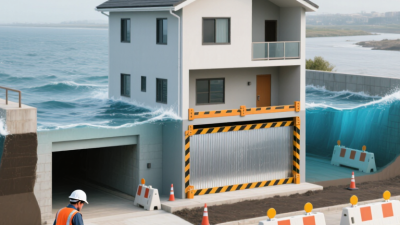
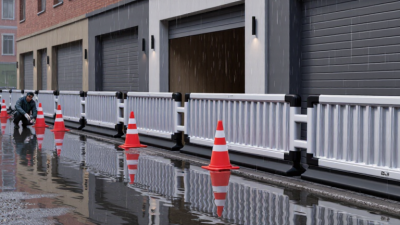
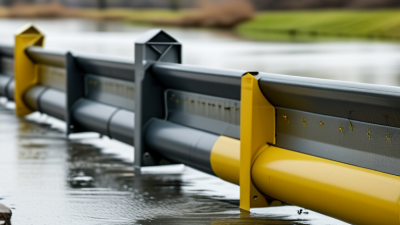
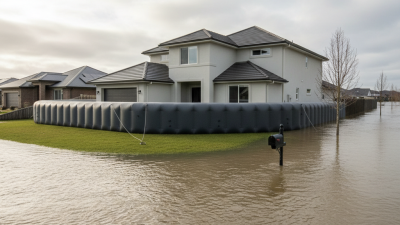
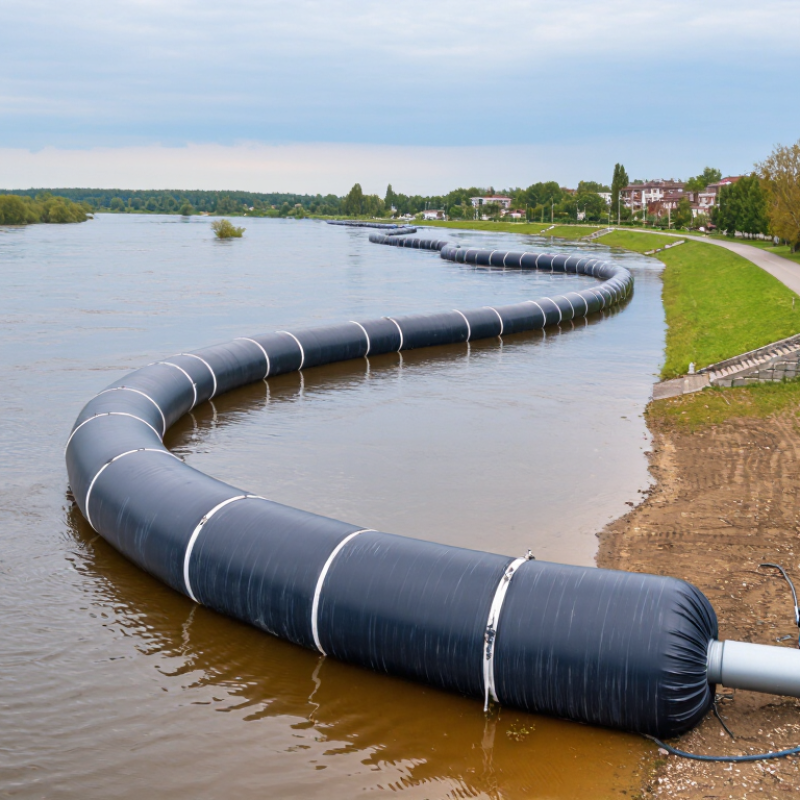
An inflatable flood barrier is a temporary flood-defense system that uses air or water pressure to create a continuous protective wall. Unlike sandbags, it can cover longer distances with fewer gaps. Some models contain air-filled chambers, while others use water-filled tubes that gain stability from their own weight.
The working principle is simple, but not effortless. A water-filled barrier is placed on prepared ground before rising water reaches the site. Pumps fill its inner chambers, and friction keeps the tube from sliding. As water presses against one side, the barrier redirects part of that force through its base and connected sections. Technical director David Butler of Flood Control International describes the purpose clearly: “A flood barrier must control water, but it cannot remove the need for planning.”
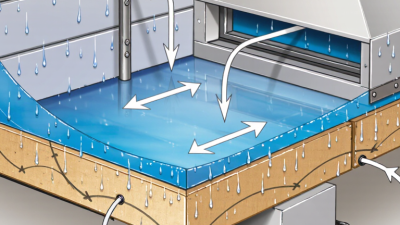
That warning matters. An inflatable flood barrier is not a magic wall. Uneven soil, sharp debris, poor anchoring, or late deployment can reduce its performance. Operators should inspect seams, valves, connectors, and pump capacity before an emergency. The protected area also needs a plan for seepage and trapped water. A small leak may seem harmless, yet pressure can change quickly as flood levels rise.
This article explains the main barrier types, their construction, and the forces acting on them. It also considers practical limits, including storage, maintenance, setup time, and site conditions. The simple picture is useful. It is also incomplete. Real flood protection depends on measured risk, trained users, and decisions made before the rain becomes dangerous.
What Is an Inflatable Flood Barrier and How Does It Work?
Definition and Main Components of an Inflatable Flood Barrier
An inflatable flood barrier is a temporary structure designed to redirect or hold back shallow floodwater. It usually contains a strong outer sleeve, an inner air chamber, and reinforced seams. Some models use water ballast instead of air, while others combine both systems. The barrier rests on a flexible base mat, which helps reduce seepage and movement. Anchor straps, end closures, and connecting sections keep the line stable.
A valve controls inflation, and a portable pump fills the internal chamber. As pressure rises, the barrier forms a firm tube or wall. Incoming water then presses against its broad outer surface. The base spreads that force across the ground, while ballast improves traction. On uneven surfaces, however, performance can change quickly. Small gaps, sharp stones, or poor alignment may allow water underneath.
Effective installation requires more than rapid deployment. Workers should inspect the ground, clear debris, check valves, and secure every connection. They should also monitor pressure during changing weather. A barrier can look fully inflated but still lack proper contact with the surface. That detail is easy to miss. Regular inspections help identify punctures, shifting, and leaking joints before conditions worsen. In my view, the most reliable systems are treated as engineered equipment, not emergency toys. Their limits should be measured against flood depth, flow speed, ground slope, and expected exposure time.
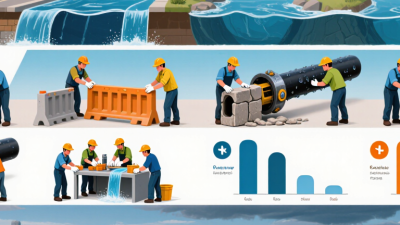
An inflatable flood barrier uses a flexible sealed bladder, anchoring system, ballast or ground apron, valves, and an inflation pump to create a temporary water-resistant wall. The chart shows how hydrostatic pressure increases with water depth.
How it works: As floodwater rises, pressure increases approximately according to p = ρgh, where water density is 1,000 kg/m³ and gravitational acceleration is 9.81 m/s². A stable barrier must distribute this pressure through its inflated body, anchors, and base support.
An inflatable flood barrier is a flexible tube system that rises when filled with air or water. Its purpose is simple: redirect shallow floodwater from doors, garages, roads, or equipment. NOAA reported 28 billion-dollar weather and climate disasters in 2023, showing why temporary flood protection deserves careful planning. It is not a substitute for drainage design or evacuation decisions.
The process begins with a site inspection. Technicians remove sharp stones, measure the protected opening, and check nearby slopes. Small gaps can become serious weaknesses. The barrier is then unfolded along the expected water path. Anchoring straps, end seals, and connection points are secured before inflation starts. A blower fills the chambers, while operators watch pressure indicators and fabric movement. Some systems use internal water ballast, which increases stability but requires a dependable water supply.
As water rises, hydrostatic pressure pushes against the barrier. The wider base transfers that force into the ground through friction, ballast, and anchors. Operators should inspect the barrier repeatedly for shifting, punctures, and water passing underneath. Field performance can differ from laboratory results. Mud, uneven pavement, and debris often reduce contact. FEMA’s National Risk Index separates riverine, coastal, and flash flooding, reminding users that each hazard creates different flow conditions. After the threat declines, water must be removed safely, pressure released gradually, and the material dried completely. That final step is easy to overlook.
What Is an Inflatable Flood Barrier and How Does It Work?
Inflatable flood barriers use air-filled chambers to redirect or hold back rising water. They are usually made from coated PVC, reinforced rubber, or layered synthetic fabric. These materials resist moisture, tearing, and repeated handling. A barrier unfolds across a doorway, driveway, or low wall. Once inflated, its broad base presses against the ground. Water pressure then helps stabilize the structure, rather than moving it away.
Different designs suit different risks. Tube barriers are flexible and useful for temporary protection around homes or entrances. Pillow-style barriers spread across wider surfaces and can cover uneven ground. Some systems combine inflatable tubes with water-filled sleeves, adding weight without heavy equipment. Reinforced fabric improves puncture resistance, while rubber provides flexibility in changing temperatures. However, no material is perfect. Sharp gravel, poor anchoring, or a slow leak can reduce protection quickly.
Tips: Check the surface before deployment. Remove glass, branches, and sharp stones. Inflate the barrier gradually and inspect every seam. Leave a small gap only where drainage is intentionally planned. Store it completely dry, because trapped moisture may weaken fabric layers. Test the pump and repair kit before storm season. A barrier can look secure but still fail at one uncovered corner. Regular practice matters.
An inflatable flood barrier uses air or water pressure to create a temporary wall against rising water. Installation begins with a clear, firm surface. Remove sharp stones, oil, branches, and loose debris. Lay the barrier according to the site plan, keeping joins flat and correctly aligned. Anchors, straps, or ballast may be required where flow pressure is strong. A small gap can become a serious leak path.
Deployment should follow a written flood response procedure. Trained staff should check weather alerts, inspect valves, and confirm access routes before inflation. Use the specified pump and monitor pressure during setup. For water-filled systems, clean water and a suitable filling point are essential. Keep people away from moving equipment and unstable floodwater. In practice, plans often look cleaner than real ground conditions. Allow extra time for uneven surfaces and poor visibility.
Tips: Store the barrier dry, shaded, and away from chemicals. Inspect seams, valves, anchors, and storage bags after every use. Record damage with photographs and dates. Clean off mud before packing it away. Replace worn parts promptly. A yearly trial deployment can reveal problems that routine visual checks miss. Maintenance records should identify the responsible person, inspection date, and corrective action. Consult qualified flood protection personnel when water depth, current speed, or ground conditions exceed the system’s tested limits.
An inflatable flood barrier is a temporary system that blocks or redirects rising water. It usually contains air-filled tubes, reinforced fabric, and anchoring points. Workers place it across doorways, roads, or site boundaries, then inflate it with a pump. Some designs use water ballast for added stability. Once deployed, the barrier creates a flexible wall that reduces water flow and limits entry.
The main advantage is speed. A trained team can transport, unfold, and install many systems without heavy machinery. They also require less storage space than rigid barriers when deflated. Reusable materials can reduce waste during repeated seasonal flooding. Setup matters. A clean, reasonably level surface improves contact with the ground and reduces leakage beneath the barrier.
Limitations deserve equal attention. Sharp debris, animal damage, or excessive friction can puncture the outer fabric. Fast-moving water may also shift an incorrectly anchored barrier. Uneven pavement creates gaps, while prolonged sunlight can weaken some materials. Not every site qualifies. Regular inspection is essential, especially near seams, valves, and anchor points. These barriers commonly protect garages, underground entrances, construction areas, warehouses, and temporary access routes. They work best as part of a wider flood plan, alongside drainage control, pumps, warning procedures, and evacuation decisions. In practice, performance depends heavily on installation quality, local ground conditions, and realistic water-depth expectations.
Please enter the details to download, thank you
Get in Touch With Us
Please enter the details to download, thank you