Choosing the best water barrier in 2026 is not simply a matter of selecting the thickest sheet or lowest price. Global buyers face different climates, substrates, transport conditions, and installation skills. A product that performs well on a dry commercial roof may fail beside a tropical façade or below-grade wall.
This guide compares leading water barrier materials through practical performance criteria. These include hydrostatic pressure resistance, water absorption, vapor permeability, UV exposure, puncture strength, temperature stability, and installation tolerance. We also consider technical documentation, third-party testing, warranty clarity, and local supply reliability. A strong specification must survive both laboratory testing and a rainy jobsite.
Building scientist Joseph Lstiburek, Ph.D., offers a useful principle: “The perfect wall is a wall that has all of the control layers on the exterior of the structure.” His observation reminds buyers that a water barrier cannot work alone. Drainage planes, flashing, sealants, joints, and workmanship all influence final performance.
No material wins everywhere. That assumption is too easy.
Polymer membranes may provide excellent flexibility, while cementitious coatings can suit rigid mineral surfaces. Bituminous systems may offer proven protection, but heat and installation conditions require careful review. Some newer products appear impressive, yet long-term field evidence remains limited. This article therefore balances innovation with documented experience. Buyers should verify regional standards, supplier support, and project-specific risks before making a final decision. The best water barrier is the one that matches the building, climate, installer, and maintenance plan.
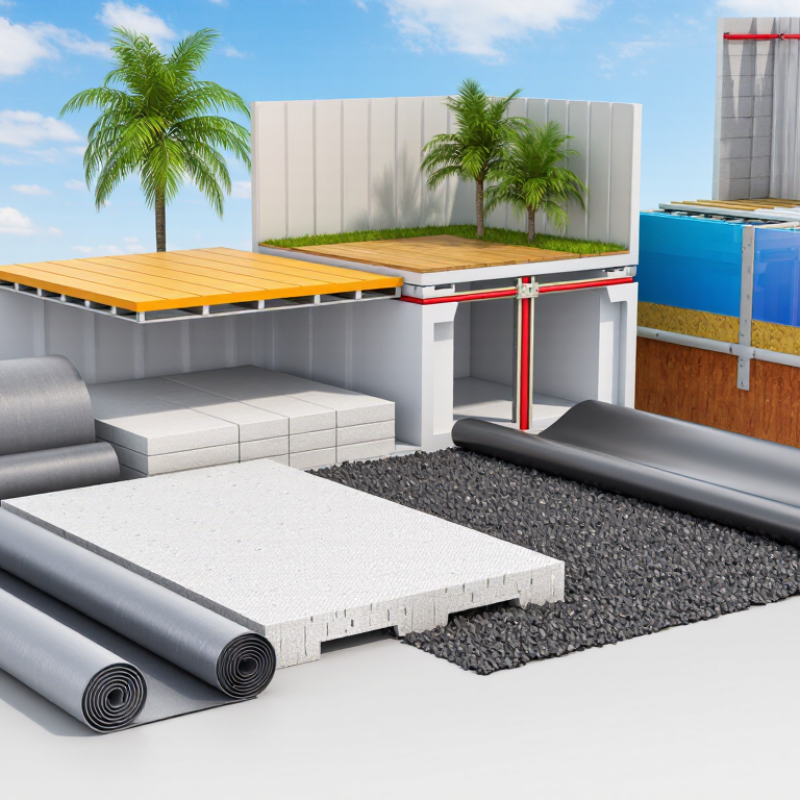
Water barrier materials are not interchangeable. Membranes create continuous protection across roofs, basements, and tunnels. Coatings form a bonded film on concrete or metal. Sheets provide controlled thickness and fast coverage. Sealants close joints, penetrations, and irregular edges.
According to Grand View Research, the global waterproofing membranes market exceeded USD 10 billion in 2023. Its forecast indicates steady expansion through 2030, driven by urban construction and infrastructure renewal. MarketsandMarkets also identifies rising demand for liquid-applied systems, especially where complex surfaces make sheet installation difficult. These figures suggest growth, but they do not guarantee performance on every project.
For global buyers, selection should follow exposure conditions. A polymer membrane may suit buried walls, while a cementitious coating can work inside damp concrete tanks. Sheet materials need carefully prepared overlaps. Sealants need verified movement capacity and adhesion.
Check elongation, tensile strength, water pressure resistance, temperature range, and aging data. Ask for independent test reports, not only a product brochure.
Installation experience remains decisive. Dusty concrete can weaken an excellent coating. A small joint left untreated can defeat an entire system. I have seen material comparisons focus on price while ignoring surface preparation and repair access. That approach needs reconsideration. The cheapest barrier may create higher labor costs later. Regional climate, shipping temperature, local workmanship, and maintenance plans should enter the purchasing decision before any specification is finalized.
Water barrier selection begins with numbers, not marketing claims. For global buyers in 2026, two measurements deserve close attention: WVTR and hydrostatic pressure. During supplier reviews, I treat WVTR as a breathing test. It measures vapor passing through one square meter in 24 hours, reported as g/m²·day. Lower values usually indicate stronger vapor resistance. That sounds simple. Yet temperature, humidity, film thickness, and test method can change the result. Ask for full test conditions, not only the headline number.
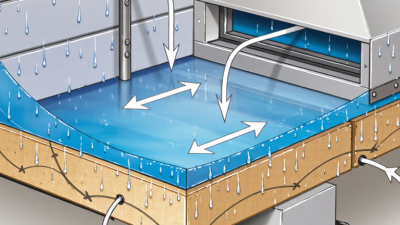
Hydrostatic pressure measures resistance to liquid water under increasing pressure. The result is commonly reported in kPa. A material rated at 30 kPa may suit light exposure, while demanding outdoor assemblies may require much more. The correct target depends on seams, punctures, surface design, and installation quality. A perfect sheet can fail around a badly sealed edge. Small details matter.
I once compared two samples with similar WVTR values. One performed better in a controlled chamber, but weakened after folding. This reminded me that laboratory data is useful, not complete. Request conditioning data, thickness records, repeat tests, and failure photographs. Check whether pressure testing uses a ramp or a fixed load. Test the finished assembly when possible. Real rain is rarely as polite as a laboratory spray.
2026 Best Water Barrier Materials for Global Buyers?
In 2026, material selection should follow exposure, movement, and installation conditions. Bitumen remains practical for foundations and roofs, especially where trained applicators are available. However, heat can soften it, while cold weather may cause cracking. PVC and TPO offer consistent factory-made sheets with heat-welded seams. They suit large roofs, but seam quality still depends on careful workmanship.
EPDM handles sunlight, ozone, and temperature changes well. Its flexibility is useful around irregular roof details. PU coatings create seamless protection around pipes, corners, and complex surfaces. Yet they require a dry, prepared substrate. Bentonite works differently. It swells when hydrated and can seal small gaps in below-grade construction. Poor drainage or uncontrolled water may reduce its reliability. No material wins everywhere.
Tips: Ask for test data, installation records, and resistance results for your climate. Check tensile strength, elongation, water pressure, UV exposure, and chemical contact. Inspect sample seams by hand. They should look even, clean, and fully bonded. I would not choose the lowest quote alone. In real projects, unclear surface preparation often causes failure. One limitation remains: laboratory performance cannot perfectly predict every jobsite. Soil movement, local skills, and repair access deserve equal attention.
Material comparison of bitumen, PVC, TPO, EPDM, PU, and bentonite
The chart uses a typical comparative performance index from 1 to 5, based on commonly reported material behavior in waterproofing applications. Higher scores indicate stronger general performance. Actual results vary with formulation, thickness, substrate preparation, joint detailing, climate, and installation quality.
A water barrier is only as reliable as its test method. ASTM E96 measures water vapor transmission under defined temperature and humidity conditions. ISO 15106 also evaluates vapor transmission, but procedures and reporting details may differ. Results are not automatically interchangeable. A material showing excellent performance in one report may perform differently in a humid warehouse, cold roof, or coastal installation.
Relevant EN standards depend on the application. EN 1931 is commonly used for flexible waterproofing sheets, while EN 14891 applies to liquid-applied products beneath ceramic tiling. Buyers should check the exact product category, thickness, test climate, and declared unit.
Ask for full laboratory reports, not only marketing tables. I have seen purchasing decisions based on one impressive number. That was a mistake. Joint design, punctures, surface dust, and installation temperature can reduce real protection.
Compare ASTM E96, ISO 15106, and applicable EN results using the same units and conditions. Confirm whether testing used dry-cup or wet-cup methods. Request VOC test data, safety documentation, and regional limit references before shipment. VOC requirements may differ across countries and building applications. A low VOC result is useful, but ventilation and curing time still matter. Keep a sample on site. Test adhesion after exposure to water, heat, and handling. This small check can reveal problems earlier than a polished certificate.
For global buyers, water barriers should be selected against a 20–50-year service-life target. ISO 15686-1 recommends assessing exposure, maintenance, repair access, and uncertainty. A laboratory test alone is not a field guarantee. Buyers should request aging data, crack-bridging results, vapor-permeance values, and documented performance on similar substrates. The cheapest membrane can become expensive after one failed detail.
Climate fit matters as much as material chemistry. The IPCC Sixth Assessment Synthesis Report states that heavy precipitation has increased across many monitored land regions. The WMO also reported a global mean sea-level rise rate of 4.62 millimeters per year during 2013–2022. Coastal, monsoon, and freeze-thaw projects therefore need different barrier strategies. A flexible sheet may suit movement, while a cementitious system may fit mineral substrates. That judgment is not always obvious.
Installed cost must include substrate preparation, primer, labor, detailing, protection boards, inspection, and future access. The UNEP 2024 Global Status Report for Buildings and Construction attributes 32% of global energy use and 34% of global carbon emissions to buildings and construction. Durable detailing can reduce repeated repair work and related emissions. Still, a 50-year target may be false precision without a maintenance plan. Buyers should compare cost per service year, not cost per square meter. Require climate-specific references, independent test reports, and a written failure-response procedure.
| Material System | Typical Applications | Typical Design-Life Target* | Indicative Installed Cost (USD/m²) |
Hydrostatic Water Resistance | Climate and Exposure Fit | Temperature / Movement Considerations | Substrate and Installation Requirements | Key Procurement Risks | Best-Fit Buyer Profile |
|---|---|---|---|---|---|---|---|---|---|
| High-Density Polyethylene (HDPE) Geomembrane | Landfill liners, reservoirs, canals, below-grade structures, containment basins and tunnels | 30–50 years when correctly specified, welded, protected and covered; longer service is possible in suitable conditions | $12–35 | Excellent | Strong fit for wet climates, aggressive soil, chemical exposure and buried applications; exposed use requires UV-stabilized grade and inspection | High thermal expansion and contraction; detailing must accommodate movement. Cold-weather welding requires controlled procedures | Requires smooth, prepared substrate, qualified hot-wedge or extrusion welding, seam testing and protection against puncture | Weld quality, punctures, poor subgrade preparation, inadequate anchoring and damage during backfilling | Large infrastructure projects prioritizing low permeability and long-term containment performance |
| PVC or TPO Flexible Sheet Membrane | Roofing, podium decks, tunnels, tanks, foundations and below-grade waterproofing | 25–40 years, depending on formulation, exposure, detailing and maintenance | $18–45 | Excellent | Good for humid, rainy and freeze–thaw climates; UV resistance varies by formulation. TPO is commonly selected for reflective roofing surfaces | Flexible over a broad temperature range; movement joints, penetrations and laps require careful detailing | Heat-welded seams, compatible accessories, clean substrate and protection board where abrasion or construction traffic is expected | Incompatible accessories, membrane puncture, poor seam welding and inadequate detailing at penetrations | Buyers seeking a prefabricated, inspectable system with relatively fast installation |
| EPDM Rubber Membrane | Low-slope roofs, ponds, reservoirs, foundations and landscape water features | 30–50 years in many roofing and water-retention applications when properly detailed and maintained | $20–50 | Excellent | Very good UV, ozone and weathering resistance; suitable for hot, cold and high-rainfall environments | Excellent elasticity and crack-bridging capability; seams are adhesive- or tape-based and must be carefully prepared | Requires compatible primers, seam tapes or adhesives, secure perimeter detailing and puncture protection | Adhesive failure, incompatible sealants, poor seam preparation and damage from sharp substrates | Projects where weathering resistance and flexibility are more important than the lowest initial cost |
| Liquid-Applied Polyurethane Membrane | Balconies, terraces, podiums, wet rooms, roofs and complex geometries with many penetrations | 20–30 years with correct thickness, UV protection, drainage and maintenance | $22–55 | Excellent | Good for complex details and moderate-to-high rainfall; UV stability depends on the system and topcoat | Good crack-bridging performance; application is sensitive to temperature, humidity and substrate moisture | Requires dry, clean substrate, primer, controlled wet-film thickness and adequate curing conditions | Blistering from trapped moisture, insufficient thickness, poor curing and pinholes at complex details | Renovation and detail-intensive projects where a seamless membrane reduces joint complexity |
| Liquid-Applied PMMA or Methyl-Methacrylate Membrane | Fast-track roofs, balconies, car parks, bridges and refurbishment projects | 20–30 years when properly installed and protected | $35–80 | Excellent | Suitable for projects requiring rapid return to service; performance is generally good across hot and cold climates | Rapid curing allows low-temperature work, but application can be sensitive to wind, moisture and mixing accuracy | Requires trained applicators, mechanical preparation, primer and strict control of resin-to-hardener ratios | Higher material cost, odor and vapor management, mixing errors and limited availability of trained labor | Buyers valuing rapid installation, short shutdowns and seamless detailing |
| Cementitious Crystalline Waterproofing | Concrete basements, tanks, foundations, water-treatment structures and below-grade concrete walls | 20–40 years when integrated with sound concrete and protected from structural movement | $10–30 | Very good | Strong fit for buried concrete and permanently damp environments; less suitable for moving joints or highly cracked substrates without complementary detailing | Rigid system with limited crack-bridging; requires movement-joint and active-leak treatment | Concrete must be sound, clean and properly prepared; curing and moisture conditions are important | Use on cracked or moving concrete, inadequate curing, hydrostatic pressure beyond the system rating and poor joint treatment | Cost-sensitive below-grade projects with stable concrete and limited substrate movement |
| Bentonite Geosynthetic Clay Liner | Below-grade walls, foundations, tunnels, landfill caps, ponds and containment structures | 30–50 years when confined, hydrated correctly and protected from premature drying or erosion | $15–40 | Very good | Effective in buried and confined conditions; not intended for long-term exposed use or locations subject to continuous flowing water before confinement | Self-sealing properties help with small punctures; performance depends on confinement and suitable groundwater chemistry | Requires adequate confinement, overlap detailing, protection from rain before cover and control of sodium-sensitive groundwater conditions | Premature hydration, inadequate confinement, high-salinity groundwater and damage before backfilling | Below-grade buyers seeking a comparatively simple installation with self-sealing capability |
| Modified Bituminous Sheet Membrane | Foundations, basements, roofs, podium decks and horizontal concrete slabs | 20–35 years, depending on polymer modification, exposure, detailing and maintenance | $15–40 | Very good | Good for temperate, hot and wet climates; exposed surfaces require suitable granules, coatings or protective surfacing | Good tolerance of minor substrate movement; cold temperatures can reduce flexibility, while high temperatures can soften some formulations | Torch-applied, self-adhered or mechanically fastened options; requires dry substrate, compatible primer and careful lap treatment | Open laps, torch damage, trapped moisture, poor termination and insufficient protection during backfill | Projects with established local labor capacity and a need for familiar, widely available systems |
| Silane/Siloxane Penetrating Water Repellent | Concrete façades, bridges, parking structures and masonry exposed to rain or de-icing salts | 10–20 years per treatment cycle; normally requires periodic reapplication and is not a standalone hydrostatic barrier | $4–15 | Limited | Excellent for rainwater absorption control and freeze–thaw durability; unsuitable as the primary barrier against standing or pressurized water | Does not significantly bridge cracks or joints; substrate must remain vapor-permeable and absorptive | Requires clean, dry, absorbent substrate and controlled application rate; test patches are recommended | Misapplication to dense or painted surfaces, unrealistic expectations and untreated cracks or joints | Buyers needing economical façade protection rather than full waterproofing |

Please enter the details to download, thank you
Get in Touch With Us
Please enter the details to download, thank you