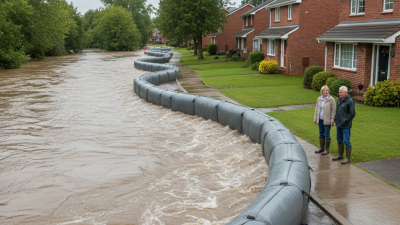
Choosing the right flood control barrier begins with understanding the water, not simply comparing product prices. Flood depth, flow speed, debris impact, ground conditions, and warning time all influence the correct solution. A barrier that works beside a calm doorway may fail beside a fast-moving river. Small details matter.
Floodplain-management pioneer Gilbert F. White famously wrote, “Floods are acts of God, but flood losses are largely acts of man.” His observation remains valuable today. A reliable flood control barrier should match the site’s measured risk, expected water height, available storage space, and installation time. Consider whether trained staff can deploy it during heavy rain. Check seals, connectors, anchoring points, and manufacturer testing records. Ask how the system performs after repeated use.
Do not choose based on photographs alone. Visit an installed project when possible. Examine whether the barrier leaves gaps around uneven paving, drains, gates, or wall joints. Confirm maintenance needs and replacement-part availability. Independent certification can strengthen confidence, but certification does not replace a site assessment. That point is easy to overlook.
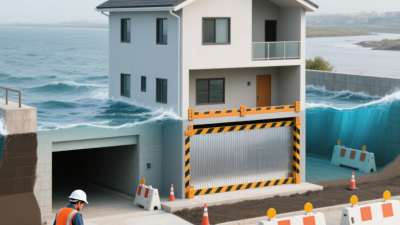
There is no universal barrier. Temporary water-filled systems may suit broad access routes, while modular panels may provide stronger protection at entrances. Permanent defenses can offer convenience, yet they often require greater planning and construction. The best decision balances protection, deployment speed, cost, staff capability, and future flood conditions. Even experienced teams can misjudge risk. Recheck the plan after every serious flood.
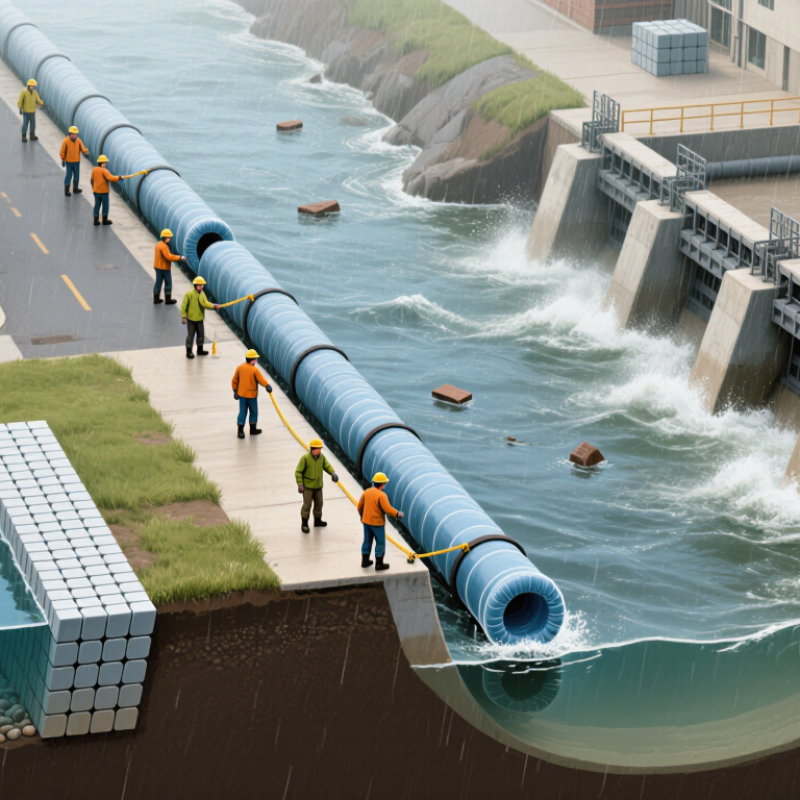
Choosing a flood control barrier starts with defining the actual flood risk. Check local flood maps, drainage records, and previous water levels. Speak with emergency planners or a qualified flood engineer. Do not rely on rainfall forecasts alone. Water may enter through doors, drains, garages, and low garden walls. A street that appears safe can still direct fast-moving water toward a property.
Measure the expected water depth, flow direction, warning time, and possible debris. A shallow, slow flood may need a different barrier from deep water carrying branches or vehicles. Record the lowest openings around the building. Include a safety margin above the estimated flood level. Consider the barrier’s length, corner connections, anchoring, and resistance to seepage. It must also fit the available storage space.
Deployment time matters. If warnings arrive only one hour before flooding, a complex system may be unsuitable. Test installation with the people who will use it. Check whether doors can open, vehicles can leave, and drainage remains controlled. Inspect seals and joints after every event. A neat-looking barrier can still fail when the ground is uneven. I would rather revise the plan than trust an optimistic estimate. Some assessments will be incomplete, especially where flood records are limited. That uncertainty should lead to stronger protection and regular review.
| Flood-Risk Dimension | Indicative Screening Data | Protection Requirement | Barrier Selection Implication | Information to Verify Before Design |
|---|---|---|---|---|
| Flood Source | River, coastal surge, surface water, groundwater, or dam-related flooding | Identify the source, expected flood pathway, and whether multiple sources can occur at the same time. | Use a system designed for the relevant water exposure, including possible wave action, seepage, or fast surface runoff. | Flood maps, hydraulic studies, historical event records, drainage plans, and site surveys. |
| Design Flood Level | Flood level for the selected probability, such as 1% annual exceedance probability, plus freeboard | Barrier crest elevation should exceed the design water level by an appropriate freeboard allowance. | Specify the required barrier height from surveyed ground level to the design crest. Include uneven ground and local low points. | Water-level model, local flood authority requirements, finished-floor levels, and an agreed freeboard value. |
| Expected Water Depth | Less than 0.30 m; 0.30–0.60 m; 0.60–1.00 m; or above 1.00 m | Define the maximum retained water depth at doors, entrances, roads, loading bays, and other openings. | Low-depth nuisance flooding may suit temporary doorway protection. Greater depths require engineered anchorage, continuous sealing, and structural verification. | Detailed level survey, predicted flood depth, barrier length, and the strength of adjacent walls or slabs. |
| Flow Velocity | Low: slow or ponded water; Moderate: moving water; High: rapidly flowing water | Assess hydraulic forces, sliding, overturning, uplift, and the risk of scour beneath or around the barrier. | Rapid flow generally requires a professionally engineered system with positive anchorage and verified resistance to dynamic loads. | Two-dimensional hydraulic modelling, flow direction, velocity data, ground conditions, and scour assessment. |
| Flood Duration | Under 6 hours; 6–24 hours; 1–3 days; or longer | Barrier materials, joints, seals, and foundations must remain stable and watertight for the full exposure period. | Long-duration flooding favors systems with durable water-contact materials, dependable seals, and provisions for seepage management. | Predicted inundation duration, drainage recovery time, groundwater conditions, and pumping arrangements. |
| Debris and Impact Exposure | Minimal debris; floating vegetation; vehicles, containers, or structural debris | Consider impact loads, blocked drainage, abrasion, and damage caused by floating objects. | Sites exposed to significant debris need impact-resistant construction, protected joints, and an inspection or replacement plan. | Upstream land use, riverbank conditions, nearby storage areas, emergency routes, and previous flood damage. |
| Warning and Deployment Time | More than 24 hours; 6–24 hours; less than 6 hours; or no reliable warning | Define how quickly the barrier must be installed, who will install it, and how access remains available during deployment. | Short-warning sites require permanently installed, rapidly deployable, or passive systems rather than labor-intensive equipment. | Warning lead time, staffing, storage location, access routes, training, and documented deployment procedures. |
| Protected Opening Geometry | Single doorway; multiple aligned openings; vehicle entrance; long perimeter | All gaps, corners, changes in level, service penetrations, and interfaces with walls must be protected continuously. | Modular barriers may suit straight openings, while corners and vehicle access points require compatible posts, seals, ramps, or gates. | Accurate opening dimensions, photographs, threshold details, wall alignment, and access requirements. |
| Ground and Foundation Conditions | Concrete slab; asphalt; masonry; compacted soil; permeable or uneven ground | Confirm load transfer, anchorage capacity, leakage control, and resistance to settlement or erosion. | Uneven or permeable surfaces may require a prepared sill, ground beam, sealing system, or permanent foundation works. | Geotechnical information, slab thickness, soil bearing capacity, drainage paths, and underground utilities. |
| Protection Objective | Life safety; property protection; business continuity; critical infrastructure resilience | Set acceptable residual risk and identify which assets must remain operational during flooding. | Critical facilities typically require higher reliability, redundancy, backup power, controlled access, and documented maintenance. | Business-impact assessment, critical equipment locations, evacuation plan, recovery targets, and continuity requirements. |
| Maintenance and Reuse | One-time emergency use; seasonal use; frequent or permanent use | Define inspection intervals, cleaning, storage, seal replacement, corrosion control, and post-event checks. | Frequent-use locations benefit from durable, accessible systems with clear inspection records and readily available spare parts. | Expected deployment frequency, storage environment, maintenance resources, manufacturer instructions, and inspection records. |
| Residual Flood Risk | Water entering through unprotected routes, seepage, sewer surcharge, or barrier failure | Plan for internal drainage, sump pumps, non-return valves, alarms, emergency access, and a safe failure response. | A barrier should be treated as one part of a flood-resilience system, not as the sole control measure. | Drainage network assessment, pump capacity, power resilience, sewer data, emergency procedures, and inspection results. |
Screening values are for preliminary planning only. Final barrier height, structural resistance, anchorage, freeboard, and flood probability should be confirmed by a qualified flood-risk or structural engineer using site-specific survey and hydraulic data.
Choosing the right flood control barrier starts with comparing how each system behaves under pressure, water, and time. Sandbags remain affordable and familiar, but they require many workers, absorb water, and may collapse when placed unevenly. They are useful around doorways, drains, and short-term gaps. They are not ideal for protecting a long property boundary.
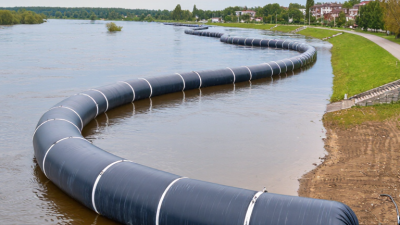
Water-filled barriers are faster to deploy. A hose, level ground, and regular inspection are usually enough. Their flexible shape can follow paved surfaces, but sharp stones may puncture the outer material. Cold weather, poor storage, and fast-moving water can reduce their performance. They also need safe removal after the water recedes.
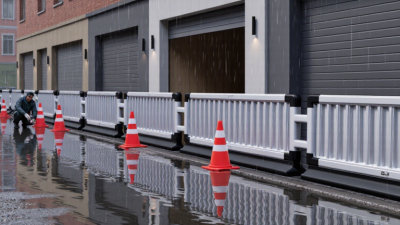
Modular flood barriers offer stronger control and cleaner installation. Interlocking panels can protect entrances, roads, or larger openings, while reusable components reduce repeated preparation. However, they cost more and demand accurate measurements. A small gap at a joint can become a serious failure point.
Permanent flood walls provide dependable protection, yet they require planning, drainage design, and professional assessment. They may also redirect water toward neighboring areas, which deserves careful review.
In practice, the best choice depends on flood depth, expected flow speed, ground conditions, storage space, and available labor. A barrier that works well on concrete may perform poorly on soft soil. I would not choose by price alone. That shortcut often creates expensive problems later.
How to Choose the Right Flood Control Barrier?
Evaluate Barrier Materials, Strength, and Durability
When choosing a flood control barrier, examine more than its advertised height. Material selection affects weight, flexibility, corrosion resistance, and service life. Aluminum systems are light and resist rust, but thin panels may deform under strong water pressure. Steel can provide greater rigidity, yet it needs protective coatings and regular checks for corrosion. Reinforced polymer barriers may handle moisture well, although sunlight and temperature changes can weaken some products.
Water pressure rises as flood depth increases. Debris can also strike the barrier with surprising force. Ask for documented test results showing load limits, impact resistance, and connection strength. A strong panel is not enough if anchors loosen or joints leak. Check whether the ground is concrete, asphalt, soil, or uneven paving. Each surface requires a different anchoring approach.
Durability depends on care, too. Inspect seals, fasteners, hinges, and protective coatings before every flood season. Store removable sections away from direct sunlight and standing water. No barrier is perfect. A system chosen only for low cost may fail when installation takes too long or maintenance is ignored. Site conditions can also change, so reassess the barrier after construction, drainage changes, or a previous flood event. Reliability comes from tested materials, correct installation, and honest attention to weak points.
Choosing a flood control barrier requires more than comparing height and price.
Installation details often decide whether protection works. The UNDRR and CRED report that floods represented 44% of recorded disasters from 2000 to 2019. That frequency demands practical planning, not optimistic assumptions. Measure doorways, ramps, drains, and uneven ground before ordering. A barrier needs firm contact with the surface. Small gaps matter.
Check the real installation time. Can two trained workers place it safely during heavy rain? Are tools, anchors, or pumps required? FEMA estimates that one inch of floodwater can cause about $25,000 in damage to a home. Storage therefore deserves equal attention. Keep components in a dry, labeled location above possible flood levels. Avoid direct sunlight, chemicals, and cramped stacking. A missing connector can become an expensive delay.
Maintenance should follow a written schedule, not memory. Inspect seals for cracking, frames for corrosion, and fasteners for distortion. Test the barrier before flood season. Then test it again after removal. Field teams often discover problems only when equipment is needed. That is a weakness worth admitting. Record inspection dates, photographs, repairs, and replacement parts. FEMA guidance also emphasizes regular inspection and maintenance of flood-protection measures. A barrier that installs quickly but stores poorly is not ready protection. Neither is one that passes inspection once and then gets forgotten.
Choosing a flood control barrier starts with the site, not the catalogue price. A low-cost unit may fail when water carries branches, vehicles, or heavy sediment. The UNDRR Global Assessment Report 2019 recorded floods as 43% of all reported disasters from 1998 to 2017. That scale makes careful planning essential.
Measure expected water depth, flow direction, warning time, and available storage space. A temporary barrier may suit a shop with several hours of warning. A permanent system may better protect a basement entrance or critical facility. Check ground slope, wall strength, drainage points, and access for emergency vehicles. These details affect both performance and installation cost.
Budget for more than the purchase. Include transport, setup labor, training, inspection, replacement parts, and post-flood cleaning. FEMA’s 2023 National Risk Index shows that flood risk depends on hazard, exposure, and community vulnerability, not rainfall alone. This matters when comparing locations. A cheaper barrier may require more staff and storage space. That hidden cost is easy to miss.
Keep a small contingency fund. Conditions change. A barrier rated for shallow water may not handle fast-moving flow. Independent testing, installation records, and maintenance logs improve reliability. Still, no barrier removes all risk. I would reassess the design after every flood, especially if water reached unexpected doors, drains, or weak joints.
Select a barrier that matches the expected flood depth, available installation space, reuse requirements, and budget. The chart shows representative protection-height ranges for common non-branded barrier categories.
The ranges are manufacturer-independent planning values commonly used for preliminary comparison. Actual performance depends on ground conditions, water flow, installation quality, certification, and the selected system. Confirm final specifications with a qualified flood-protection professional.
Please enter the details to download, thank you
Get in Touch With Us
Please enter the details to download, thank you