Choosing the best flood gate for home protection in 2026 starts with the opening, not the product label. A low doorway, garage threshold, and wide patio entrance need different barrier designs. The right choice must match the expected water depth, opening width, and speed of deployment. A gate that fits poorly can leave a narrow but damaging path for water.
The risk is measurable. NOAA’s 2024 Billion-Dollar Weather and Climate Disasters report recorded 27 U.S. disasters, with estimated losses of $182.7 billion. FEMA warns that just one inch of floodwater can cause about $25,000 in damage to an average home. Those figures describe broad risks, not the performance of any single gate. They do make careful selection worthwhile. Floodplain-management expert Gilbert F. White famously wrote, “Floods are ‘acts of God,’ but flood losses are largely acts of man.” His point still matters: preparation can reduce avoidable damage, but no barrier guarantees a dry home.
This guide compares removable panels, automatic barriers, and permanent systems by fit, sealing, setup time, durability, and upkeep. Look for clear installation instructions and tested performance claims. Check where water could bypass the barrier, including side channels and uneven floors. And test the system before storm season. A sturdy-looking gate may still leak at its corners; that detail is easy to overlook, and worth reconsidering before you buy.

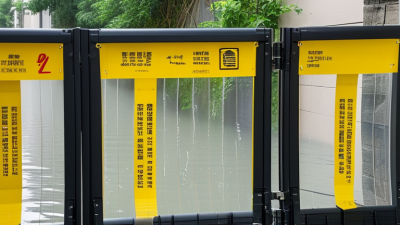
A residential flood gate is a barrier fitted across an opening such as a doorway, garage entrance, or basement window. Unlike a permanent wall, many gates can be removed when flood risk passes. Side channels or floor-mounted brackets hold the panel in place, while seals press against the frame to limit leaks. Some designs rely on manual fitting; others use water pressure to help seat the barrier. The details matter.
When rising water reaches a gate, the barrier must resist pressure pushing inward and downward. Anchors transfer that force into the surrounding wall or floor, so weak masonry, uneven thresholds, and gaps can undermine performance. FEMA’s National Flood Insurance Program guidance estimates that one inch of floodwater can cause up to $25,000 in home damage. Even shallow water can be costly. A gate helps protect one opening; it does not stop water entering through drains, vents, or other weak points.
FEMA also reports that more than 20 percent of flood insurance claims come from outside high-risk flood areas. That is a useful reminder: a home’s apparent elevation is not a guarantee. Before choosing a gate, measure the opening at several points and check the manufacturer’s stated water depth and installation requirements. Seals can wear, and a gate that looks snug may still leak at the corners. Testing it before storm season is sensible, though it cannot predict every real flood condition.
A useful flood-gate decision starts with the water, not the product. Check FEMA’s Flood Map Service Center and National Risk Index, then compare those findings with the home’s elevation, drainage, and past water entry. FEMA’s National Risk Index supports community-level screening; it cannot predict water depth at one doorway. NOAA recorded 28 U.S. billion-dollar weather and climate disasters in 2023, with combined losses of about $92.9 billion. That total covers multiple hazards, not floods alone, but it shows why local exposure deserves careful checking.
Walk the exterior during rain if it is safe. Note whether water pools beside the foundation, slopes toward a garage, or reaches basement window wells. Inspect the lowest doors, vents, utility openings, and gaps around pipes. Small gaps matter. Photographing these spots can help compare water levels later, though memory is an imperfect measuring tool. For each opening, estimate likely water depth, flow direction, and how long water may remain. A removable barrier may suit a doorway with a clear, sound frame; a garage or uneven threshold may need a different design. Ask a qualified flood-control professional to assess anchoring, seal contact, and pressure exposure before choosing a gate. A map is a starting point, not a guarantee.
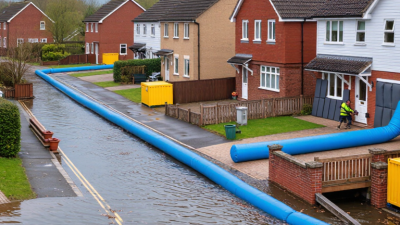
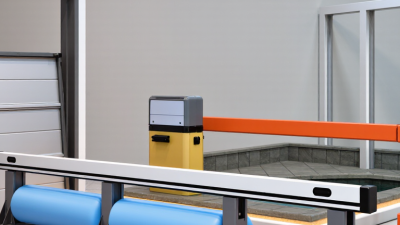
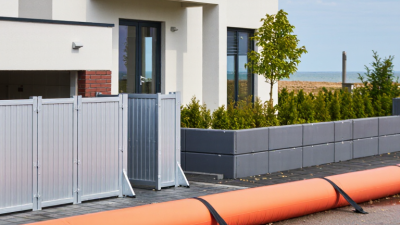
Home flood gates in 2026 generally fall into removable, hinged, and self-closing designs. Removable panels fit doorways or garage openings and can be stored between storms. They are practical only if someone can install them quickly and correctly. Every minute matters. Hinged gates stay attached and swing across an entrance, which may suit openings exposed to frequent flooding. Self-closing barriers use rising water to engage a seal, but debris or uneven floors can interfere.
Material choice affects weight, corrosion resistance, maintenance, and repeated-use performance. Aluminum is lightweight and easier to handle, though the frame and locking points still need to be sturdy. Stainless steel offers strength and corrosion resistance, but it is heavier and may cost more. Engineered polymer and composite panels can resist rust and reduce weight; stiffness and durability vary by design. Rubber seals do quiet work. Check for cracks and compression loss.
Compare the clear opening width, threshold height, expected water depth, and storage needs. Ask how the gate anchors, what maintenance it requires, and whether its performance has been tested under stated conditions. A well-made barrier may still leak against an out-of-square doorway, an easy detail to overlook. Measure twice. One awkward reality is that selecting the gate can be easier than preparing the opening properly.
The best home flood gate is not simply the tallest or heaviest option. Compare its stated water-depth limits, expected exposure time, and sealing method. Water pressure rises with depth, so a barrier suited to brief, shallow pooling may not protect against deeper flooding. Check whether the product has been tested under conditions similar to your doorway. Small gaps matter.
Fit can decide whether a gate works at all. Measure the opening at several points, including the floor, where tiles or old thresholds may slope. Check the jambs, available side clearance, and whether the door swings into the barrier. A few millimeters can affect a tight seal. Follow the installation instructions, and avoid assuming that a quick fit means a secure one. Test it dry.
Maintenance should be part of the comparison, not an afterthought. Look for accessible seals and clear guidance on cleaning, storage, and replacement parts. Before storm season, inspect the barrier for cracks, warped panels, loose fasteners, or hardened seals. A gate can look reassuring in its packaging; confidence is better earned with a careful test in place. Even then, household conditions can change, so recheck the fit after repairs or threshold changes.
| Flood-Protection Option | Typical Home Use | Protection and Key Limits | Fit and Site Requirements | Installation and Setup | Maintenance and Storage | Best Suited For |
|---|---|---|---|---|---|---|
| Removable doorway flood barrier | Doors, patio entrances, and other openings with suitable side supports. | Can block water at a specific opening when correctly installed. Maximum water depth and leakage performance vary by design and must be checked in the product’s test data. | Requires accurate opening measurements and compatible, sound jambs or mounting surfaces. Uneven floors and gaps can reduce sealing. | Usually fitted into brackets, tracks, or compression points. A practice installation helps confirm that parts are present and seals are seated correctly. | Clean and inspect seals, fasteners, and panels after use. Store removable parts dry and where they can be reached quickly. | Homes needing reusable protection for one or a few door openings. |
| Permanent hinged or swing-up flood gate | Frequently exposed entrances, low garage openings, or other locations where a fixed installation is practical. | Provides a ready-to-deploy physical barrier, but its rated depth and performance depend on the specific assembly, anchoring, and installation. | Needs a structurally suitable surface and enough clear space for the gate to move and seal. Threshold level and drainage details matter. | Typically requires professional measurement and anchoring. The gate should be tested periodically and kept clear of obstructions. | Check hinges, locking parts, seals, fixings, and corrosion or wear. Follow the installer’s inspection schedule. | Openings that need a durable, quickly accessible barrier and can accommodate permanent hardware. |
| Inflatable flood barrier | Temporary protection across selected doorways or other relatively smooth, suitable surfaces. | Performance depends on inflation, surface contact, anchoring, and the model’s stated limits. Punctures, movement, or uneven ground can compromise protection. | Needs adequate space and a surface compatible with the barrier’s sealing method. Check the required clearance and placement instructions. | Must be positioned and inflated as directed, which may require a pump and access to the equipment. Allow time for setup before water arrives. | Dry fully before storage. Inspect for leaks, abrasion, damaged valves, and punctures; store away from sharp objects and excessive heat. | Users seeking a portable option for occasional use on appropriate surfaces. |
| Water-filled temporary barrier | Temporary control along selected ground-level approaches or around vulnerable areas. | Effectiveness depends on correct placement, ground conditions, and the unit’s design. It is not a substitute for a tested building-level flood strategy. | Requires room for deployment and access to water for filling. Slopes, soft ground, debris, or gaps may affect stability and contact. | Position before filling and follow the specified filling and joining sequence. Setup can be time-consuming and may require more than one person. | Drain and dry as directed before storage. Inspect the material and connectors for leaks, tears, or wear. | Temporary protection where there is enough space and a suitable surface for deployment. |
| Sandbags | Short-term, localized diversion or reinforcement where a formal barrier is unavailable. | Can help redirect shallow flows when properly arranged, but gaps and seepage are common. Sandbags are not a reliably watertight seal and may be unsuitable for significant or fast-moving water. | Need a stable base and enough bags to build the planned layout. Doorways and irregular openings can be difficult to seal. | Labour-intensive to fill, carry, and stack. Prepare supplies in advance; never enter floodwater to place them. | Used bags may be heavy and contaminated. Handle and dispose of them according to local public-health guidance. | As a limited, temporary measure—not as a guaranteed replacement for a properly selected flood gate. |
| Garage threshold or driveway barrier | Garage doors, driveways, and broad ground-level openings, depending on the barrier design. | Some systems are designed for wider spans, but allowable water depth and leakage performance are product-specific. A garage door or surrounding structure may still be vulnerable. | Measure the full span and check floor slope, surface condition, drainage, and side-wall support. Wide openings may need a specifically engineered system. | May be removable or permanently mounted. Larger or anchored systems often need professional assessment and installation. | Clear debris from the contact area. Inspect seals, joints, anchors, and moving parts; keep removable components accessible. | Homes where the garage or a wide opening is a known flood-entry point. |
Selection note: Compare the tested water depth, leakage criteria, opening-width limits, anchoring requirements, and installation instructions for the exact model. No barrier can eliminate all flood risk; use local flood guidance and consider water entry through walls, drains, utilities, and other openings as well.
What Is the Best Flood Gate for Home in 2026?
How to Choose the Best Flood Gate for Your Home in 2026
Choosing a flood gate starts with the opening, not the product label. Measure the clear width, threshold height, and likely water depth. Check whether the doorway has a level surface and sturdy sides for the gate to seal against. Small gaps matter. FEMA estimates that just one inch of floodwater can cause about $25,000 in damage to a home. That estimate is a warning, not a prediction for every house. A gate’s height and seal should match the exposure shown on local flood maps and observed at the property.
For a frequently exposed entrance, a fixed system may be practical; for occasional risk, a removable barrier may suit the space better. Compare installation requirements, storage, setup time, and whether one person can secure it correctly. Look for secure side channels and a replaceable seal, then test the fit with the manufacturer’s specified method. Test it yearly. The National Institute of Building Sciences’ 2019 Natural Hazard Mitigation Saves report estimated that federal mitigation grants avoided an average of $6 in future disaster losses for every dollar spent. That supports careful preparation, but it does not prove one gate will prevent all damage. Water can still enter through other openings, and a poorly fitting threshold can undermine an otherwise solid barrier.
Compare the water pressure a flood gate may face at different water depths.
How to use this: Pressure at the base increases with water depth. These values are calculated for still freshwater using p = ρgh (density 1,000 kg/m³; gravity 9.81 m/s²). When choosing a gate, check its rated protection depth and installation requirements; site conditions and moving water can affect performance.
Please enter the details to download, thank you
Get in Touch With Us
Please enter the details to download, thank you