What Are the Top Water Filled Flood Barrier Types in 2026?

Flood protection is a practical choice, not a product ranking exercise. A water filled flood barrier must match the site, expected water depth, ground surface, and available setup time. In 2026, buyers will encounter tube-style barriers, linked modular units, and freestanding water-filled panels. Their performance depends on installation and conditions—not appearance alone.

NOAA’s 2024 U.S. Billion-Dollar Weather and Climate Disasters report recorded 27 events, with estimated losses of $182.7 billion. That figure covers multiple hazard types, not flood barriers specifically. It does, however, show why preparedness deserves careful attention. Floodplain scholar Gilbert F. White wrote, “Floods are ‘acts of God,’ but flood losses are largely acts of man.” This is a broad flood-risk principle, not a product endorsement or a claim about any barrier type.

A useful comparison should examine capacity, stability, deployment time, reuse, and manufacturer test conditions. Check whether testing reflects flowing water, uneven pavement, or debris; those details matter beside a doorway or along a garage threshold. One limitation is easy to miss: published product ratings may not be directly comparable. The ground can be rough. Installation still matters. This guide compares common barrier types and explains what their specifications can—and cannot—tell you.
What Are the Top Water Filled Flood Barrier Types in 2026?

What Water-Filled Flood Barriers Are and How They Work

What Are the Top Water Filled Flood Barrier Types in 2026?

What Water-Filled Flood Barriers Are and How They Work

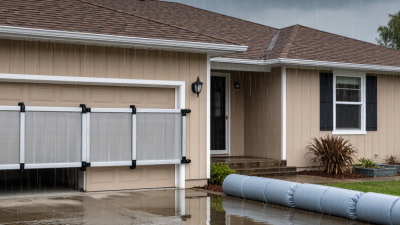
Water-filled flood barriers are temporary tubes or linked cells that use water as ballast. Crews position them across an entry, driveway, or low perimeter, then fill them on site. Their weight and shape help resist moving floodwater; connected sections reduce gaps. Some designs use multiple chambers, which can help limit water loss if one chamber is damaged. They are practical, but not magic.

Performance depends on more than the barrier itself. A firm, reasonably level surface helps prevent water from slipping beneath it, while secure connections reduce weak points. FEMA’s flood guidance notes that just one inch of water in a home can cause about $25,000 in damage. That figure shows why even shallow seepage matters. Still, a temporary barrier cannot guarantee a dry building, especially under fast currents, uneven ground, or water deeper than its rated capacity. Check manufacturer test data and site conditions before deployment.

Tips: Clear gravel, branches, and loose debris from the line. Fill and inspect each section before water rises. Watch the edges; small leaks can grow. If the ground is soft, anchoring may need extra attention. Some setups look sturdy but shift under pressure. That deserves a second look.
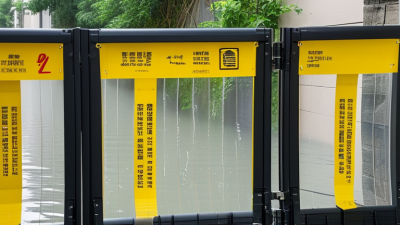

The Main Types of Water-Filled Flood Barriers in 2026

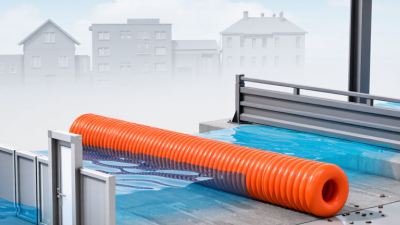
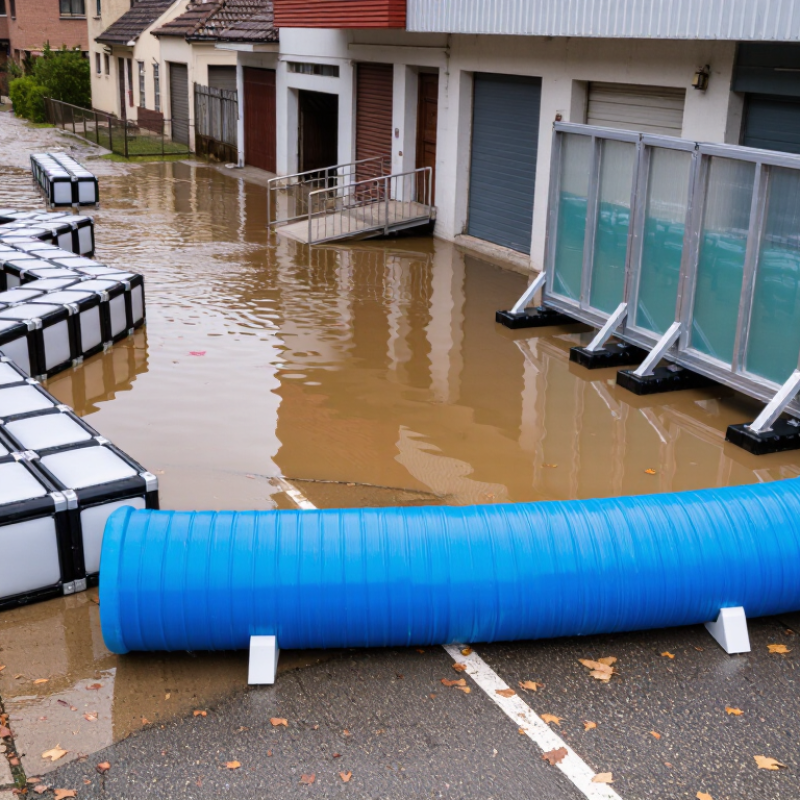
Water-filled flood barriers generally fall into three practical types. Long tubular barriers use flexible sleeves filled on site, creating a low, continuous wall along roads or open ground. Modular units connect side by side, making it easier to turn corners or protect a doorway. Larger bladder-style barriers can cover wider areas, but they need more space and careful placement. The best choice depends on flood depth, ground slope, and how quickly crews can fill and secure each section.

Tips: Check the surface before setup. Gravel, sharp debris, and uneven pavement can damage fabric or leave gaps. Follow the maker’s fill and anchoring instructions, and keep access to pumps and hoses clear. A small trial setup helps reveal problems.

Water-filled barriers are not interchangeable. Tubes can shift on sloped or fast-moving water, while connected units may leak at joints if they are poorly aligned. Inspect seams, connectors, and the ground beneath the barrier before rain arrives. Leave room for water to flow safely away from buildings, and never assume a temporary barrier can withstand every flood condition. Real sites are messy; a neat plan may still need adjustment.

How Barrier Design Affects Flood Protection

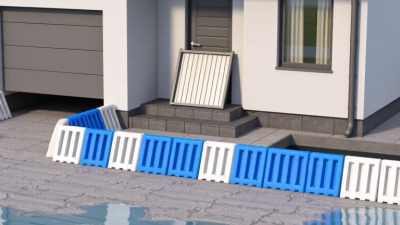
Water-filled flood barriers in 2026 include tubular, pillow-shaped, and linked-cell designs. Their shape affects how they sit, connect, and respond to moving water. Long tubes suit straight runs, such as along a driveway. Linked cells can follow gentle curves more easily. Small details matter. A barrier that leaves gaps at a doorway or uneven paving may let water pass beneath it.

Design also affects stability and setup. Wider bases and connected sections can help resist shifting, but performance depends on fill level, ground texture, water depth, and flow speed. On smooth concrete, a thin layer of silt may reduce grip. On gravel, small stones can create leak paths. Check the manufacturer’s tested limits and inspect seams before use. No design is suitable for every site, and a water-filled barrier should not be assumed to withstand fast, deep water. Even a sensible choice can disappoint if the site was assessed poorly.

Tips: Measure the protected area, including corners and entrances. Test connections before a storm. Keep the surface clear of leaves and loose debris. After installation, look for movement or seepage; a small leak may signal a larger fit problem.

What Are the Top Water Filled Flood Barrier Types in 2026? - How Barrier Design Affects Flood Protection
Barrier type Typical design How design affects protection Deployment and site fit Key limitations and checks
Single-tube barrier A flexible, water-filled tube laid along the flood-facing edge; commonly made from coated fabric or another reinforced flexible material. The water adds weight and helps the tube resist movement. A broader contact area can improve stability on suitable ground, while seams and end closures remain important potential weak points. Useful for temporary, relatively straight runs where filling access and a reasonably even surface are available. Usually needs a pump and a dependable water source. Uneven ground, sharp objects, flow around the ends, and inadequate anchoring can reduce effectiveness. Check the intended water depth, ground conditions, connections, and manufacturer’s installation guidance.
Twin-tube or nested-tube barrier Two connected or closely arranged tubes, often with one tube supporting or stabilizing the other. The wider footprint and linked components can improve resistance to rolling or displacement compared with a single tube, depending on geometry, fill level, surface friction, and anchoring. Can suit longer temporary defenses or locations where a wider base is practical. Requires more setup space and careful alignment at joints and ends. Greater width does not guarantee a particular flood height or protection level. Inspect interconnections, prevent gaps, and account for water pressure and possible seepage beneath the barrier.
Multi-tube or stacked-tube system Several water-filled tubes arranged in layers or in a designed configuration to create a higher or broader temporary barrier. Layering can increase barrier height and distribute load across a larger base when the system is designed and assembled correctly. The resulting stability depends on the arrangement, restraint, and foundation. Potentially useful where a single tube is not tall enough and the site can accommodate a larger footprint, additional filling, and a more involved installation. Incorrect stacking, weak restraints, uneven settlement, or poorly protected joints may cause movement or leakage. Use only configurations specified for the system; do not assume layers can be added safely without design guidance.
Water-filled bladder or pillow barrier A broad, low-profile flexible reservoir that expands as it fills and forms a temporary barrier or weighted seal. Its broad shape can spread weight over a wider area and may help conform to some surfaces. Protection depends on its filled profile, placement, seams, and the way water is prevented from passing underneath or around it. Can be considered for low-profile applications and selected openings or ground-level areas where its shape fits the site. Needs room to unfold and access for filling. Not every bladder design is intended to resist deep or fast-moving floodwater. Check allowable use, fill instructions, puncture protection, and the need for additional edge sealing or anchoring.
Rigid-frame barrier with water ballast A reusable frame or panel that uses water-filled chambers, containers, or connected reservoirs as ballast or as part of its barrier assembly. The frame provides a defined barrier shape, while water ballast adds stabilizing weight. Panel connections, frame strength, base contact, and anchoring determine how loads are transferred to the ground. May suit sites that need a more regular alignment or repeated temporary installation. Assembly and water supply requirements vary with the design. Rigid components can be less adaptable to irregular terrain. Verify panel joints, base sealing, ballast requirements, ground capacity, and the design’s stated limits for water depth and flow conditions.
Selection note: No barrier type is universally best. Actual protection depends on flood depth and flow, ground slope and condition, seepage, end treatment, anchoring, installation quality, and the system’s tested or specified limits. For significant flood risk, use site-specific engineering advice and follow the product’s installation instructions.

Comparing Setup, Capacity, Reuse, and Storage

Water-filled flood barriers trade quick deployment for dependence on a nearby water source. Long tubular barriers usually unroll along a straight path, then fill through large openings. A two-person crew may manage short sections, but heavy hoses and uneven ground slow installation. Measure the route before filling.

Linked bladder-style barriers can cover broader areas and follow gentle curves. Their connected sections reduce gaps, though joints need careful placement and inspection. Modular water-filled units are easier to arrange around doorways or equipment. They may take longer to position. Capacity varies with unit size, fill level, and how firmly the barrier sits against the ground; published figures are not a substitute for site assessment.

Reuse and storage often decide the practical winner. Drainable fabric barriers fold compactly, but need cleaning and complete drying to limit mildew and material wear. Rigid modules resist rough handling better, yet occupy more storage space.

Not always an easy choice.

Check seams, valves, and connectors after each use, and replace damaged parts before the next deployment. A barrier can look substantial while still being unsuitable for fast-moving water, steep slopes, or prolonged exposure. Test the setup on a small section, and keep the drainage plan in view.

Choosing and Deploying the Right Barrier for a Site

Choosing and Deploying the Right Barrier for a Site

Water-filled flood barriers commonly come as flexible tubes, linked modular cells, or larger berm-style units. Tubes suit long, relatively straight runs; linked cells fit corners and changing layouts. Berms can protect broader openings, but need room, firm ground, and reliable water access. Match the system to expected water depth, flow, site slope, and the time available for filling. A barrier that looks substantial on level pavement may shift on soft soil.

Site details matter. Check low points, doorways, drains, vehicle routes, and where water could flow around the ends. NOAA’s 2024 U.S. billion-dollar disaster report recorded 27 weather and climate events, with estimated losses of $182.7 billion. That figure is not a product-performance measure, but it underscores why site plans should account for costly, recurring hazards. Ask for independent test results and clear limits on depth, flow, anchoring, and reuse. Walk the perimeter after placement. Gaps can be easy to miss. I would not treat a practice setup as proof of performance; real sites often have uneven surfaces and awkward corners.

Tips: Measure the route, mark the barrier ends, and confirm water access before deployment. Keep pumps and connectors ready. Photograph the setup, then inspect seams and ground contact as filling begins. A dry-weather walkthrough may still miss a drain or soft patch.